The suppressor is a crucial component in ion - chromatography equipment, playing a significant role in enhancing the performance and accuracy of the analysis. As a reputable chromatography equipment supplier, we understand the importance of each part in the ion - chromatography system, and the suppressor stands out as a key element that can greatly impact the results.
Basic Principles of Ion - Chromatography
Before delving into the role of the suppressor, it's essential to understand the basic principles of ion - chromatography. Ion - chromatography is a technique used for the separation and analysis of ions in a sample. It works by passing a sample through a separation column, where different ions are retained for different periods based on their interactions with the stationary phase of the column. The separated ions then pass through a detector, which measures their concentrations.
The mobile phase, also known as the eluent, is a critical part of the ion - chromatography process. It is usually an aqueous solution containing an electrolyte, which helps to carry the ions through the column. However, the high conductivity of the eluent can interfere with the detection of the analyte ions, especially when using conductivity detection, which is a common method in ion - chromatography.
The Role of the Suppressor
1. Reducing Background Conductivity
One of the primary roles of the suppressor is to reduce the background conductivity of the eluent. In ion - chromatography, the eluent typically contains a high concentration of ions, which can generate a high background signal in the conductivity detector. This high background signal can make it difficult to detect the analyte ions accurately, especially for low - concentration samples.
The suppressor achieves this by replacing the ions in the eluent with less - conductive ions. For example, in anion - chromatography, a common eluent is sodium carbonate or sodium hydroxide. The suppressor can convert the sodium ions in the eluent to hydrogen ions by ion - exchange reactions. When sodium carbonate is used as the eluent, the suppressor reaction can be represented as follows:
[Na_2CO_3 + 2H^+\rightarrow H_2CO_3+2Na^+]
The carbonic acid ((H_2CO_3)) formed is a weak acid and has a much lower conductivity compared to the sodium carbonate eluent. This significant reduction in background conductivity allows for more sensitive detection of the analyte anions.
2. Enhancing Signal - to - Noise Ratio
By reducing the background conductivity, the suppressor effectively enhances the signal - to - noise ratio of the detector. A higher signal - to - noise ratio means that the detector can more easily distinguish the analyte signals from the background noise. This is particularly important for trace analysis, where the concentration of the analyte ions may be very low.
A better signal - to - noise ratio enables more accurate quantification of the analyte ions. It allows for lower detection limits, which is crucial in many applications such as environmental monitoring, where the presence of trace amounts of pollutants needs to be detected. For instance, in the analysis of heavy metal anions in water samples, the ability to detect low - concentration analytes can help in ensuring the safety of drinking water.
3. Improving Selectivity
The suppressor can also improve the selectivity of the ion - chromatography system. In some cases, the eluent may contain ions that can interfere with the detection of the analyte ions. The suppressor can remove or reduce the concentration of these interfering ions, thereby improving the separation and detection of the target analytes.
For example, in the analysis of organic acids in a sample, the presence of inorganic anions in the eluent may cause interference. The suppressor can selectively remove these inorganic anions, allowing for a more accurate analysis of the organic acids. This improved selectivity is beneficial in complex sample matrices, where multiple types of ions are present.
Types of Suppressors
There are different types of suppressors used in ion - chromatography, each with its own advantages and limitations.
1. Chemical Suppressors
Chemical suppressors use a chemical reagent to perform the ion - exchange reactions. They typically consist of a column filled with an ion - exchange resin. The eluent passes through the suppressor column, where the ion - exchange reactions take place.
One advantage of chemical suppressors is their simplicity. They are relatively easy to operate and maintain. However, they require a continuous supply of the chemical reagent, which can be a drawback in terms of cost and convenience.
2. Membrane Suppressors
Membrane suppressors are more commonly used in modern ion - chromatography systems. They use a semi - permeable membrane to separate the eluent stream from a regenerant stream. The ion - exchange reactions occur across the membrane.


Membrane suppressors offer several advantages over chemical suppressors. They are more efficient in reducing background conductivity and can operate continuously without the need for frequent replacement of reagents. They also have a longer lifespan and require less maintenance. However, they are generally more expensive than chemical suppressors.
Impact on Different Applications
The role of the suppressor has a significant impact on various applications of ion - chromatography.
1. Environmental Analysis
In environmental analysis, ion - chromatography is widely used to detect and quantify pollutants in water, soil, and air samples. For example, the analysis of anions such as chloride, nitrate, and sulfate in water samples is crucial for assessing water quality. The suppressor allows for the sensitive detection of these anions, even at low concentrations.
In air quality monitoring, ion - chromatography can be used to analyze acidic gases such as sulfur dioxide and nitrogen oxides, which are converted to anions in aqueous solutions. The suppressor helps in accurately detecting these anions, providing valuable information for environmental protection agencies.
2. Pharmaceutical Analysis
In the pharmaceutical industry, ion - chromatography is used for the analysis of impurities, counter - ions, and active pharmaceutical ingredients (APIs). The suppressor plays an important role in ensuring the accuracy and sensitivity of these analyses. For example, in the analysis of anionic impurities in a drug formulation, the suppressor can help in detecting low - level impurities that may affect the quality and safety of the drug.
3. Food and Beverage Analysis
Ion - chromatography is also used in the food and beverage industry to analyze various components such as organic acids, amino acids, and inorganic ions. The suppressor is essential for accurate analysis, especially for the detection of low - concentration components. For example, in the analysis of citric acid and malic acid in fruit juices, the suppressor can enhance the detection sensitivity, providing information about the quality and authenticity of the products.
Related Chromatography Techniques
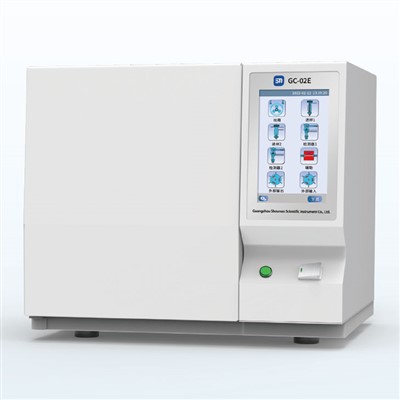
While ion - chromatography with a suppressor is a powerful analytical technique, there are other related chromatography techniques that are also widely used. Gas Chromatography is another important chromatography method. It is mainly used for the separation and analysis of volatile organic compounds. GC Machine and GC Analyzer are key components in gas - chromatography systems, which operate based on different principles compared to ion - chromatography.
Conclusion
In conclusion, the suppressor is an indispensable component in ion - chromatography equipment. Its ability to reduce background conductivity, enhance the signal - to - noise ratio, and improve selectivity makes it possible to achieve accurate and sensitive analysis of ions in various samples. Whether in environmental analysis, pharmaceutical research, or food and beverage testing, the suppressor plays a crucial role in ensuring the reliability of the analytical results.
As a chromatography equipment supplier, we offer a wide range of high - quality suppressors and other chromatography components. Our products are designed to meet the diverse needs of different applications. If you are interested in purchasing ion - chromatography equipment or need more information about our products, please feel free to contact us for further discussions and procurement negotiations.
References
- Small, H., Stevens, T. S., & Bauman, W. C. (1975). Ion chromatography. Analytical Chemistry, 47(10), 1801 - 1809.
- Weiss, J. (2017). Ion Chromatography. Wiley - VCH.
- Paull, B., & Jones, P. (Eds.). (2003). Ion Chromatography: Principles and Applications. Elsevier.