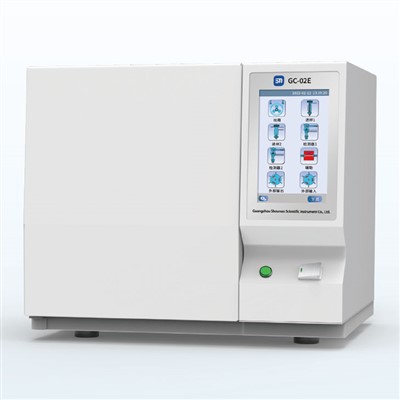
Peak tailing is a common and troublesome issue in gas chromatography (GC). As a trusted Gas Chromatography supplier, we've encountered numerous cases of peak tailing and have delved deep into understanding its causes. In this blog, we'll explore the various factors that can lead to peak tailing in gas chromatography and discuss how our Chromatography Equipment can help mitigate these problems.
1. Column - Related Causes
1.1 Column Contamination
One of the primary causes of peak tailing is column contamination. Over time, non - volatile compounds such as polymers, high - molecular - weight hydrocarbons, and biological materials can accumulate on the column stationary phase. These contaminants can interact with the analytes, causing them to adsorb and desorb slowly, resulting in peak tailing.
For example, in environmental analysis, samples may contain particulate matter and high - boiling - point organic compounds. If these samples are injected directly into the GC without proper pre - treatment, they can deposit on the column. Our GC - 05E Gas Chromatograph is designed with advanced inlet systems that can reduce the risk of column contamination. The inlet can be easily cleaned and maintained, ensuring that only clean samples enter the column.
1.2 Column Degradation
Column degradation can also lead to peak tailing. High temperatures, oxidative conditions, and chemical reactions with the analytes can cause the stationary phase to break down. As the stationary phase deteriorates, its ability to separate analytes evenly is compromised, leading to asymmetric peaks.
Silicone - based stationary phases are commonly used in GC columns. Prolonged exposure to high temperatures can cause the silicone bonds to break, resulting in the loss of the stationary phase and changes in its surface properties. Our GC - 06E Gas Chromatograph allows for precise temperature control, which helps to extend the lifespan of the column and reduce the risk of degradation.
1.3 Column Overloading
When too much sample is injected into the column, it can cause overloading. In a normal situation, the analytes interact with the stationary phase in a linear fashion. However, when the column is overloaded, the interaction becomes non - linear, and the analytes start to elute in an asymmetric manner, leading to peak tailing.
The capacity of a column to handle a sample depends on its dimensions and the type of stationary phase. Our technical support team can assist you in determining the appropriate sample volume for your specific column and application, ensuring that you avoid column overloading.
2. Sample - Related Causes
2.1 Sample Solvent Effects
The choice of sample solvent can have a significant impact on peak shape. If the solvent has a high boiling point or a strong interaction with the stationary phase, it can cause peak tailing. For example, if a polar solvent is used with a non - polar stationary phase, the solvent may interact strongly with the column, delaying the elution of the analytes and causing tailing.
It's important to choose a solvent that is compatible with the column and the analytes. Our experts can provide guidance on selecting the most suitable solvent for your GC analysis, helping you to achieve sharp and symmetric peaks.
2.2 Sample Matrix Interference
The sample matrix can also contribute to peak tailing. In complex samples, such as biological fluids or environmental samples, there may be many components that can interact with the analytes or the column. These interactions can cause the analytes to elute in an irregular manner, resulting in peak tailing.
Our Chromatography Equipment can be equipped with various sample pre - treatment devices, such as solid - phase extraction cartridges or derivatization kits. These devices can help to remove interfering substances from the sample matrix, improving the quality of the chromatographic separation.
3. Instrument - Related Causes
3.1 Inlet Problems
The inlet is the first part of the GC system where the sample enters. Any problems with the inlet, such as a dirty liner or incorrect injection technique, can cause peak tailing. A dirty inlet liner can adsorb the analytes, leading to slow desorption and peak tailing.
Our GC systems are designed with easily replaceable inlet liners. Regularly replacing the liners can prevent contamination and ensure proper sample introduction. Additionally, our training programs can teach you the correct injection techniques to minimize the risk of peak tailing.
3.2 Detector Issues
Detector problems can also manifest as peak tailing. If the detector response is slow or non - linear, it can distort the peak shape. For example, in a flame ionization detector (FID), if the hydrogen and air flow rates are not properly adjusted, the detector may not respond accurately to the analytes, resulting in tailing peaks.
Our detectors are carefully calibrated during the manufacturing process, and we provide detailed instructions on how to maintain and optimize their performance. Our technical support team is always available to assist you in troubleshooting any detector - related issues.


4. How Our Equipment Can Help
As a Gas Chromatography supplier, we understand the importance of achieving high - quality chromatographic separations. Our Chromatography Equipment, including the GC - 05E Gas Chromatograph and the GC - 06E Gas Chromatograph, is designed with advanced features to minimize the risk of peak tailing.
Our columns are made from high - quality materials and are carefully manufactured to ensure uniform stationary phase distribution. This helps to reduce the likelihood of column - related peak tailing. Our inlet systems are designed to handle a wide range of sample types and volumes, and they can be easily maintained to prevent contamination.
In addition, our detectors are highly sensitive and responsive, providing accurate and reliable peak detection. We also offer comprehensive technical support, including installation, training, and troubleshooting services. Our team of experts can help you optimize your GC method to achieve the best possible peak shapes.
5. Contact Us for Purchase and Consultation
If you're experiencing peak tailing in your gas chromatography analysis or are looking to upgrade your existing GC equipment, we're here to help. Our products are designed to meet the highest standards of quality and performance, and we're committed to providing excellent customer service.
Whether you're a research institution, a pharmaceutical company, or an environmental testing laboratory, our Gas Chromatography solutions can help you achieve accurate and reliable results. Contact us today to discuss your specific needs and to learn more about how our products can benefit your analysis.
References
- McMaster, M. C. (2006). Gas Chromatography: A Practical User's Guide. Wiley - Interscience.
- Snyder, L. R., Kirkland, J. J., & Glajch, J. L. (1997). Practical HPLC Method Development. Wiley - Interscience.
- Poole, C. F. (2003). The Essence of Chromatography. Elsevier.