

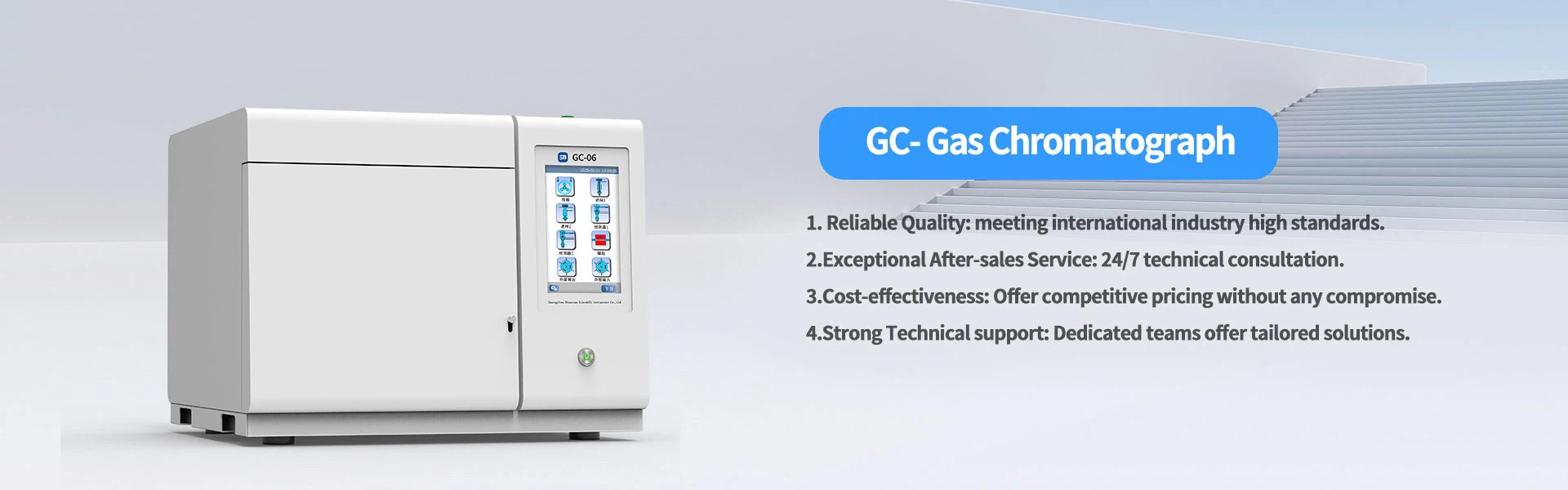


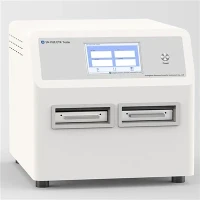
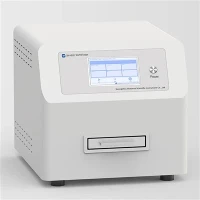
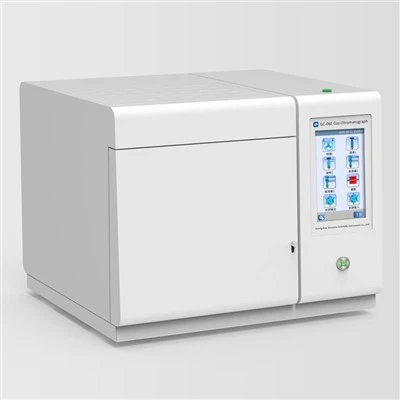
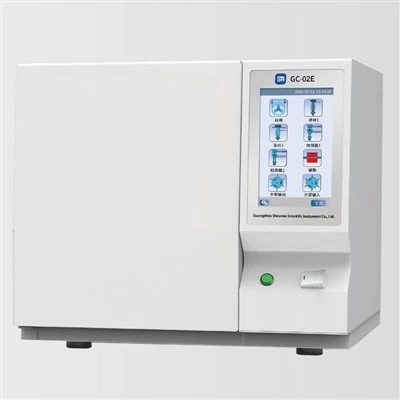
GC
Our goal is to become your true partner in the field of GC(Gas Chromatograph) in China. Guangzhou Shounuo Scientific Instrument Co., LTD. founded in 2011, is a high-tech enterprise integrating research and development, production, sales and service of flexible packaging testing instruments. We have a skilled engineering team dedicated to refining every stage, from product development and process improvement to production oversight, ensuring every product delivered meets rigorous quality and performance standards. The price is competitive and the product is quality-assured, which is a good choice for your long-term cooperation.



Why Choose Us
Product application
Our products include electronic tensile testing machine, water vapor transmission rate tester, OTR tester, gas transmission rate tester, etc. These products are widely used in drug testing, quality inspection, colleges and universities, pharmaceutical packaging and other fields.
Production market
We use high-quality products and services to open up the international market. For many years, we have continued to provide high-quality products to overseas customers in dozens of countries and regions such as Europe, the United States, and Southeast Asia, and have been widely recognized by domestic and foreign customers.
Our services
In the pre-sales stage, our team of experts will recommend the most suitable products according to the needs of customers and provide detailed technical consultation. During the sales period, we ensure timely delivery and provide installation guidance. For after-sales, we provide long-term technical support, warranty services and spare parts to help customers maximize the use of products and get reliable maintenance during use.
Advantages of Gas Chromatograph
High sensitivity
Can detect compounds at very low concentrations.
Separation efficiency
Capable of resolving complex mixtures.
Versatility
Suitable for a wide range of volatile and semi-volatile compounds.
Speed
Many analyses can be completed in minutes.
Automation
Modern systems allow for high-throughput analysis with minimal operator intervention.

Gas Chromatograph Specification
|
Product Name |
Gas Chromatograph |
|
Hydrogen flame detector FID detection limit |
Mt≤1*10-13g/s(nC16) |
|
Programmed temperature rate |
0.1 ~ 25℃/min |
|
Quantitative repeatability RSD |
≤1% |
|
Power |
AC220V/50Hz |
|
Carrier gas |
Nitrogen (N2), purity ≥99.99% |
|
Fuel gas |
Hydrogen (H2), purity ≥99.99% |
|
Auxiliary gas |
Air after purification and oil removal |
|
Stability(FID) |
Baseline drift ≤0.2MV/0.5h, noise ≤0.2MV |
|
Thermal conductivity cell |
Sensitivity S value ≥2500mV.ml/mg(benzene) |
|
Stability (TCD) |
Baseline drift ≤25μV/0.5h,noise ≤10μV |
|
Cooling rate of column box |
≤9min(from 300℃ to 70℃) |
|
Temperature control range of column box |
Room temperature +5℃~300℃ |
Types of Gas Chromatograph
| Capillary gas chromatography | Utilizes a narrow-bore column allowing for high-resolution separations. |
| Packed column gas chromatography | Employs a wider column filled with packing material, suitable for larger sample volumes. |
| Gc-ms (gas chromatography-mass spectrometry) | Integrates mass spectrometry for enhanced identification of components. |
| Pyrolysis gas chromatography | Analyzes solid samples by decomposing them through heat, then separating the resulting gases. |
Features of Gas Chromatograph
Chromatographic workstation can be connected, and the experimental results are intuitive and clear. User-Friendly Software – Intuitive interface for method setup, real-time monitoring, and data analysis (e.g., peak integration, calibration curves).
Flexible filling gas chromatography column and capillary column inlet design, can be selected according to the actual situation; The wide column box provides convenience for complex analytical tasks and the use of multiple columns to broaden the range of samples analyzed.
The use of microcomputer control, man-machine dialogue to draw a variety of required temperature column box temperature control range (room temperature +10℃)-300℃, temperature control accuracy of 0.1%. Gas leak detection, over-temperature protection, and automatic shutdown in critical conditions.
Applications of Gas Chromatograph
Environmental monitoring
Analyzing pollutants in air, water, and soil samples.
01
Pharmaceutical industry
Quality control of drugs and identification of impurities.
02
Food and beverage analysis
Determining flavor compounds and contaminants.
03
Petrochemical industry
Analyzing complex hydrocarbon mixtures.
04
Forensic science
Identifying drugs and toxins in biological samples.
05
Injector
The injector vaporizes the sample and introduces it into the carrier gas stream. It ensures the sample enters the column as a narrow band to maintain separation efficiency.
Column
The heart of the gas chromatograph, the column contains the stationary phase where separation occurs. Columns can be either packed or capillary, each with its own advantages.
Detector
As separated compounds elute from the column, the detector generates an electrical signal proportional to the quantity of each component. Various types of detectors are available, each suited for different applications.
Carrier gas system
This system provides a constant flow of inert gas (such as helium, nitrogen, or hydrogen) to carry the sample through the column.
Oven
The column is housed in a temperature-controlled oven, allowing for precise control of the separation conditions.
Data system
Modern gas chromatographs are equipped with computerized data systems for instrument control, data acquisition, and analysis.
Packing and Shipping of Gas Chromatograph
|
Packing |
Wooden box |
|
Shipping |
Shipped by road, sea, rail |