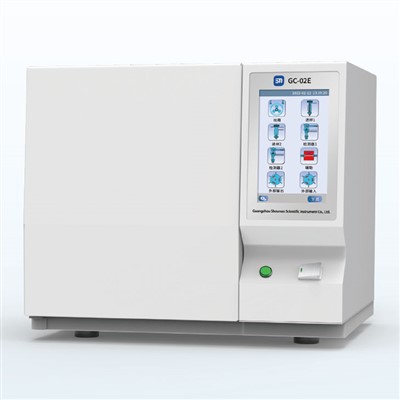
In the realm of food analysis, the Gas Chromatography System (GC) has emerged as an indispensable tool, revolutionizing the way we understand and ensure the quality, safety, and authenticity of the food we consume. As a supplier of state-of-the-art Gas Chromatography Systems, I am thrilled to delve into the multifaceted role of these systems in food analysis.
The Basics of Gas Chromatography
Gas Chromatography is a powerful analytical technique used to separate and analyze volatile compounds in a sample. The process involves injecting a sample into a heated injection port, where it is vaporized and carried by an inert gas (the mobile phase) through a column packed with a stationary phase. Different components in the sample interact differently with the stationary phase, causing them to separate based on their physical and chemical properties. As the components exit the column, they are detected and recorded, producing a chromatogram that provides valuable information about the composition of the sample.
Role in Food Quality Control
One of the primary roles of Gas Chromatography Systems in food analysis is in quality control. These systems are used to detect and quantify various compounds that can affect the quality and safety of food products. For example, they can be used to analyze the presence of pesticides, herbicides, and other contaminants in food. By accurately measuring the levels of these substances, food manufacturers can ensure that their products meet regulatory standards and are safe for consumption.
Gas Chromatography Systems are also used to analyze the flavor and aroma compounds in food. These compounds play a crucial role in determining the sensory properties of food, such as taste and smell. By identifying and quantifying these compounds, food manufacturers can optimize the flavor and aroma of their products, enhancing consumer satisfaction. For instance, in the production of wine, Gas Chromatography can be used to analyze the volatile compounds responsible for the wine's aroma and flavor profile. This information can be used to improve the winemaking process and produce wines with more desirable sensory characteristics.
Role in Food Authentication
Another important role of Gas Chromatography Systems in food analysis is in food authentication. With the increasing prevalence of food fraud, it has become essential to verify the authenticity of food products. Gas Chromatography can be used to analyze the chemical composition of food products and compare it to known standards. This can help detect the presence of adulterants, such as the addition of cheaper ingredients or the mislabeling of products.
For example, in the case of olive oil, Gas Chromatography can be used to analyze the fatty acid profile of the oil. Different types of olive oil have distinct fatty acid profiles, and by comparing the profile of a sample to that of a known standard, it is possible to determine the authenticity of the oil. Similarly, in the case of honey, Gas Chromatography can be used to analyze the volatile compounds present in the honey. These compounds can provide information about the floral source of the honey and can be used to detect the presence of adulterants, such as the addition of sugar syrup.


Role in Food Shelf-Life Studies
Gas Chromatography Systems are also used in food shelf-life studies. These studies are used to determine the stability of food products over time and to identify the factors that can affect their shelf-life. By analyzing the changes in the chemical composition of food products during storage, Gas Chromatography can provide valuable information about the degradation processes that occur and can help develop strategies to extend the shelf-life of food products.
For example, in the case of packaged foods, Gas Chromatography can be used to analyze the headspace gases inside the package. These gases can provide information about the presence of oxygen, carbon dioxide, and other gases that can affect the quality and safety of the food. By monitoring the changes in the headspace gases over time, it is possible to determine the optimal storage conditions for the food product and to develop packaging materials that can help extend its shelf-life.
Our Gas Chromatography Systems
At our company, we offer a range of high-quality Gas Chromatography Systems that are designed to meet the diverse needs of the food industry. Our GC-06E Gas Chromatograph is a state-of-the-art instrument that offers high sensitivity, accuracy, and reliability. It is equipped with advanced features such as a programmable temperature control system, a high-resolution detector, and a user-friendly interface, making it easy to operate and maintain.
Our GC-02E Gas Chromatograph is another popular choice among food analysts. It is a compact and cost-effective instrument that offers excellent performance and versatility. It is suitable for a wide range of applications, including the analysis of volatile compounds in food, environmental samples, and industrial products.
In addition to our Gas Chromatographs, we also offer a range of Chromatography Equipment and accessories, including columns, detectors, injectors, and software. Our team of experts is available to provide technical support and training to ensure that our customers get the most out of their Gas Chromatography Systems.
Conclusion
In conclusion, Gas Chromatography Systems play a crucial role in food analysis, from quality control and authentication to shelf-life studies. These systems provide valuable information about the composition and quality of food products, helping to ensure their safety and authenticity. As a supplier of Gas Chromatography Systems, we are committed to providing our customers with the highest quality products and services. If you are interested in learning more about our Gas Chromatography Systems or have any questions about food analysis, please do not hesitate to contact us. We look forward to working with you to meet your analytical needs.
References
- Ettre, L. S. (1993). Gas chromatography: Principles and practice. CRC Press.
- McNair, H. M., & Miller, J. M. (2009). Basic gas chromatography. Wiley.
- Snyder, L. R., Kirkland, J. J., & Glajch, J. L. (2010). Introduction to modern liquid chromatography. Wiley.