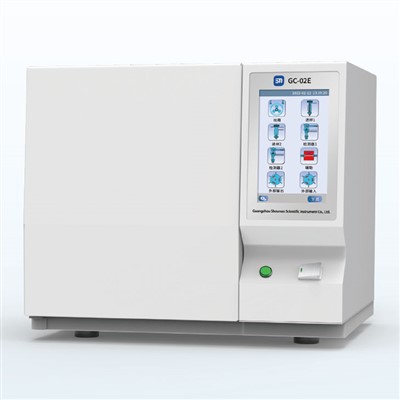
Gas chromatography (GC) is a powerful analytical technique widely used in various industries, including environmental monitoring, food and beverage analysis, pharmaceutical research, and petrochemical exploration. As a leading supplier of Gas Chromatography Systems, we are committed to providing high-quality instruments and comprehensive solutions to meet the diverse needs of our customers. In this blog, we will delve into the principle of Gas Chromatography Systems, exploring how they work and their significance in modern analytical chemistry.


The Basic Principle of Gas Chromatography
At its core, gas chromatography is a separation technique that separates volatile compounds based on their differential partitioning between a stationary phase and a mobile phase. The mobile phase, also known as the carrier gas, is an inert gas such as helium, nitrogen, or hydrogen that carries the sample through the chromatographic column. The stationary phase is a thin layer of liquid or solid coating on the inner wall of the column, which interacts with the sample components as they pass through the column.
The separation process in gas chromatography can be divided into several steps:
- Sample Introduction: The sample is introduced into the gas chromatograph using a sample injector, which vaporizes the sample and mixes it with the carrier gas. The sample can be in the form of a liquid, gas, or solid, depending on the nature of the analysis.
- Separation in the Column: The vaporized sample is carried by the carrier gas through the chromatographic column, where the components of the sample interact with the stationary phase. The interaction between the sample components and the stationary phase is based on various factors, such as solubility, polarity, and molecular size. As a result, different components of the sample will have different retention times in the column, leading to their separation.
- Detection: After passing through the column, the separated components are detected by a detector, which generates a signal proportional to the amount of each component. The most common detectors used in gas chromatography include flame ionization detectors (FID), thermal conductivity detectors (TCD), and mass spectrometers (MS).
- Data Analysis: The detector signals are recorded and analyzed using a data system, which generates a chromatogram showing the retention times and peak areas of the separated components. The chromatogram can be used to identify the components of the sample and quantify their concentrations.
The Components of a Gas Chromatography System
A typical Gas Chromatography System consists of several components, each playing a crucial role in the separation and analysis process. These components include:
- Carrier Gas Supply: The carrier gas is supplied from a gas cylinder or a gas generator. The carrier gas must be pure and free of contaminants to ensure accurate and reproducible results.
- Sample Injector: The sample injector is used to introduce the sample into the gas chromatograph. There are several types of sample injectors available, including split/splitless injectors, on-column injectors, and headspace injectors. The choice of injector depends on the nature of the sample and the analysis requirements.
- Chromatographic Column: The chromatographic column is the heart of the gas chromatograph. It is a narrow tube coated with a stationary phase that separates the components of the sample. There are two main types of columns: packed columns and capillary columns. Packed columns are filled with a stationary phase packed into a tube, while capillary columns are made of a thin capillary tube coated with a stationary phase on the inner wall.
- Detector: The detector is used to detect the separated components of the sample. As mentioned earlier, there are several types of detectors available, each with its own advantages and disadvantages. The choice of detector depends on the nature of the sample and the analysis requirements.
- Data System: The data system is used to record and analyze the detector signals. It generates a chromatogram showing the retention times and peak areas of the separated components. The data system can also be used to perform quantitative analysis and generate reports.
The Significance of Gas Chromatography in Modern Analytical Chemistry
Gas chromatography is a versatile and powerful analytical technique that offers several advantages over other separation techniques. Some of the key advantages of gas chromatography include:
- High Sensitivity: Gas chromatography can detect trace amounts of analytes, making it suitable for the analysis of complex samples with low concentrations of target compounds.
- High Resolution: Gas chromatography can separate closely related compounds with high resolution, allowing for the accurate identification and quantification of individual components in a sample.
- Wide Range of Applications: Gas chromatography can be used to analyze a wide range of volatile and semi-volatile compounds, including hydrocarbons, alcohols, esters, and pesticides. It is widely used in various industries, including environmental monitoring, food and beverage analysis, pharmaceutical research, and petrochemical exploration.
- Automation: Gas chromatography systems can be automated, allowing for high-throughput analysis and reducing the need for manual intervention. This makes gas chromatography a cost-effective and efficient analytical technique.
Our Gas Chromatography Systems
As a leading supplier of Gas Chromatography Systems, we offer a wide range of high-quality instruments and comprehensive solutions to meet the diverse needs of our customers. Our Gas Chromatography Systems are designed to provide accurate and reproducible results, with features such as high sensitivity, high resolution, and ease of use.
Some of our popular Gas Chromatography Systems include:
- Chromatography Equipment: Our chromatography equipment is designed to provide high-performance separation and analysis of volatile and semi-volatile compounds. It includes a range of columns, detectors, and sample injectors to meet the diverse needs of our customers.
- GC Analyzer: Our GC Analyzer is a powerful and versatile instrument that can be used for a wide range of applications, including environmental monitoring, food and beverage analysis, and pharmaceutical research. It features high sensitivity, high resolution, and ease of use, making it an ideal choice for both novice and experienced users.
- GC-06E Gas Chromatograph: Our GC-06E Gas Chromatograph is a compact and reliable instrument that is suitable for a wide range of applications. It features a user-friendly interface, high sensitivity, and high resolution, making it an ideal choice for both laboratory and field applications.
Contact Us for Purchase and Consultation
If you are interested in purchasing a Gas Chromatography System or have any questions about our products and services, please feel free to contact us. Our team of experts will be happy to assist you in selecting the right instrument for your needs and providing you with comprehensive support and training.
References
- Snyder, L. R., Kirkland, J. J., & Glajch, J. L. (1997). Practical HPLC method development. Wiley.
- McMaster, M. C. (2008). Gas chromatography: A practical approach. Royal Society of Chemistry.
- Poole, C. F. (2003). The Essence of Chromatography. Elsevier.