In the realm of analytical chemistry, gas chromatography (GC) stands as a cornerstone technique, enabling scientists and researchers to separate and analyze complex mixtures with remarkable precision. At the heart of this powerful method lies the concept of retention time, a fundamental parameter that plays a crucial role in the identification and quantification of analytes. As a leading [Your Company's Position] in the field of gas chromatography, I am excited to delve into the intricacies of retention time and its significance in the world of chromatography.
Understanding Retention Time
Retention time is defined as the time it takes for a particular analyte to travel through the gas chromatography column from the point of injection to the detector. It is a characteristic property of each compound and is influenced by a variety of factors, including the nature of the analyte, the stationary phase of the column, the temperature of the column, and the flow rate of the carrier gas.
When a sample is injected into the gas chromatograph, it is vaporized and carried through the column by the carrier gas. As the sample components interact with the stationary phase of the column, they are retained to different extents based on their chemical properties. Compounds that have a stronger affinity for the stationary phase will spend more time in the column and will therefore have a longer retention time, while those with a weaker affinity will elute more quickly and have a shorter retention time.


Factors Affecting Retention Time
1. Nature of the Analyte
The chemical structure and properties of the analyte play a significant role in determining its retention time. Compounds with higher molecular weights and greater polarity tend to have longer retention times because they interact more strongly with the stationary phase. For example, polar compounds such as alcohols and amines will have longer retention times on a polar stationary phase compared to non - polar compounds like hydrocarbons.
2. Stationary Phase
The stationary phase is a crucial component of the gas chromatography column, and its properties have a profound impact on the retention time of analytes. Different stationary phases have different selectivities, which means they interact differently with various types of compounds. For instance, a non - polar stationary phase like polydimethylsiloxane is commonly used for separating non - polar compounds, while a polar stationary phase such as polyethylene glycol is better suited for separating polar compounds.
3. Column Temperature
The temperature of the column is another important factor that affects retention time. As the column temperature increases, the vapor pressure of the analytes increases, and they move more quickly through the column. This results in shorter retention times. Conversely, lower column temperatures lead to longer retention times as the analytes have more time to interact with the stationary phase.
4. Carrier Gas Flow Rate
The flow rate of the carrier gas also influences the retention time. A higher flow rate will carry the analytes through the column more quickly, resulting in shorter retention times. On the other hand, a lower flow rate allows the analytes more time to interact with the stationary phase, leading to longer retention times.
Importance of Retention Time in Gas Chromatography
1. Compound Identification
Retention time is a valuable tool for identifying unknown compounds in a sample. By comparing the retention time of an unknown compound with the retention times of known standards under the same chromatographic conditions, analysts can determine the identity of the unknown compound. This is often done using a retention time library, which contains the retention times of a wide range of compounds.
2. Quantification
Retention time is also essential for the quantification of analytes in a sample. In gas chromatography, the area under the peak corresponding to a particular analyte is proportional to the amount of that analyte in the sample. By accurately measuring the retention time and the peak area, analysts can determine the concentration of the analyte in the sample.
3. Method Development
Understanding retention time is crucial for developing effective gas chromatography methods. By adjusting the column temperature, carrier gas flow rate, and stationary phase, analysts can optimize the separation of analytes and achieve better resolution. This is particularly important when analyzing complex mixtures, where the separation of closely related compounds can be challenging.
Our Gas Chromatography Solutions
As a trusted [Your Company's Position] of gas chromatography equipment, we offer a wide range of high - quality products designed to meet the diverse needs of our customers. Our Chromatography Equipment is engineered with the latest technology to provide accurate and reliable results.
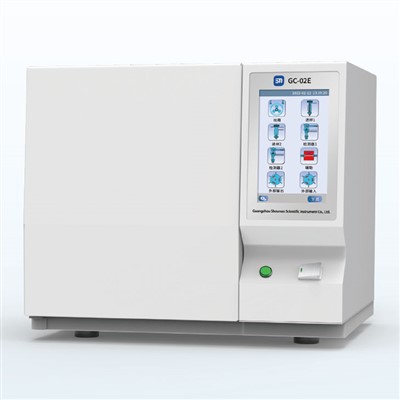
One of our flagship products is the GC - 02E Gas Chromatograph. This state - of - the - art instrument offers excellent sensitivity and resolution, making it ideal for a variety of applications, including environmental analysis, food and beverage testing, and pharmaceutical research.
Another popular product in our lineup is the GC - 05E Gas Chromatograph. This versatile instrument is designed for ease of use and provides precise control over chromatographic conditions, allowing for accurate and reproducible results.
Contact Us for Your Gas Chromatography Needs
If you are in the market for high - quality gas chromatography equipment, we invite you to contact us to discuss your specific requirements. Our team of experts is dedicated to providing you with the best solutions and support to help you achieve your analytical goals. Whether you are a research institution, a quality control laboratory, or a manufacturing facility, we have the products and expertise to meet your needs.
References
- Snyder, L. R., Kirkland, J. J., & Glajch, J. L. (1997). Practical HPLC Method Development. Wiley - Interscience.
- McMaster, M. C. (2008). Gas Chromatography Basics. Wiley.
- Harris, D. C. (2010). Quantitative Chemical Analysis. W. H. Freeman and Company.