Chromatography is a powerful analytical technique that has found applications in various fields, including pharmaceuticals, environmental science, and food analysis. As a Chromatography Equipment supplier, I often receive inquiries about whether our equipment can be used for agricultural product analysis. In this blog post, I will explore the potential of chromatography equipment in agricultural product analysis and highlight its benefits.
Understanding Chromatography in Agricultural Product Analysis
Chromatography is a separation technique that is used to separate and analyze the components of a mixture. It works by passing the mixture through a stationary phase, which selectively retains different components based on their physical and chemical properties. The components are then eluted from the stationary phase at different times, allowing for their identification and quantification.
In the context of agricultural product analysis, chromatography can be used to analyze a wide range of compounds, including pesticides, herbicides, fertilizers, mycotoxins, and nutrients. These compounds can have a significant impact on the quality and safety of agricultural products, and their analysis is essential for ensuring compliance with regulatory standards and maintaining consumer confidence.
Types of Chromatography Equipment for Agricultural Product Analysis
There are several types of chromatography equipment that can be used for agricultural product analysis, including gas chromatography (GC), liquid chromatography (LC), and high-performance liquid chromatography (HPLC). Each type of equipment has its own advantages and disadvantages, and the choice of equipment depends on the specific analytes of interest and the sample matrix.

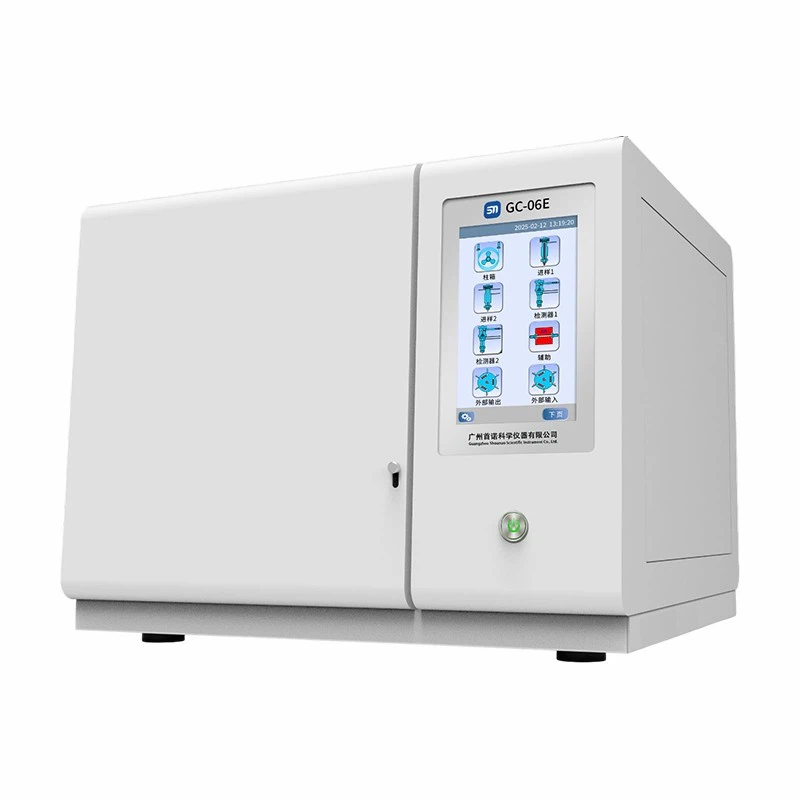
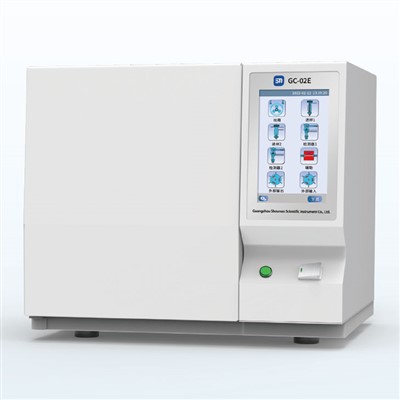
- Gas Chromatography (GC): GC is a powerful analytical technique that is commonly used for the analysis of volatile and semi-volatile compounds. It works by vaporizing the sample and injecting it into a column filled with a stationary phase. The components of the sample are then separated based on their volatility and affinity for the stationary phase. GC is particularly useful for the analysis of pesticides, herbicides, and other organic compounds in agricultural products. Our GC-02E Gas Chromatograph is a high-performance instrument that is designed for the analysis of volatile and semi-volatile compounds in a wide range of samples, including agricultural products.
- Liquid Chromatography (LC): LC is a separation technique that is used for the analysis of non-volatile and thermally labile compounds. It works by passing the sample through a column filled with a stationary phase and a mobile phase. The components of the sample are then separated based on their affinity for the stationary phase and the mobile phase. LC is particularly useful for the analysis of mycotoxins, nutrients, and other polar compounds in agricultural products. Our GC Analyzer is a versatile instrument that can be used for both GC and LC analysis, making it a valuable tool for agricultural product analysis.
- High-Performance Liquid Chromatography (HPLC): HPLC is a more advanced form of LC that uses high pressure to force the sample through the column. This results in faster separation times and higher resolution than traditional LC. HPLC is particularly useful for the analysis of complex mixtures and trace-level analytes in agricultural products. Our Chromatography Equipment includes a range of HPLC instruments that are designed for the analysis of a wide range of compounds in agricultural products.
Benefits of Using Chromatography Equipment for Agricultural Product Analysis
There are several benefits of using chromatography equipment for agricultural product analysis, including:
- High Sensitivity and Selectivity: Chromatography equipment is capable of detecting and quantifying trace levels of analytes in complex matrices. This makes it a valuable tool for the analysis of pesticides, herbicides, mycotoxins, and other contaminants in agricultural products.
- Accurate and Precise Results: Chromatography equipment provides accurate and precise results, which are essential for ensuring compliance with regulatory standards and maintaining consumer confidence. The results obtained from chromatography analysis can be used to make informed decisions about the quality and safety of agricultural products.
- Versatility: Chromatography equipment can be used to analyze a wide range of compounds in different types of agricultural products. This makes it a versatile tool for agricultural product analysis, as it can be used to analyze everything from fruits and vegetables to grains and livestock products.
- Efficiency: Chromatography equipment is capable of analyzing multiple samples simultaneously, which makes it a time-efficient and cost-effective tool for agricultural product analysis. This is particularly important for large-scale agricultural operations, where high-throughput analysis is required.
Applications of Chromatography Equipment in Agricultural Product Analysis
Chromatography equipment has a wide range of applications in agricultural product analysis, including:
- Pesticide and Herbicide Residue Analysis: Chromatography equipment can be used to detect and quantify pesticide and herbicide residues in agricultural products. This is important for ensuring compliance with regulatory standards and protecting consumer health.
- Mycotoxin Analysis: Mycotoxins are toxic compounds produced by fungi that can contaminate agricultural products. Chromatography equipment can be used to detect and quantify mycotoxins in grains, nuts, and other agricultural products. This is important for ensuring the safety of food and feed products.
- Nutrient Analysis: Chromatography equipment can be used to analyze the nutrient content of agricultural products, including vitamins, minerals, and amino acids. This is important for ensuring the nutritional value of food and feed products.
- Quality Control: Chromatography equipment can be used to monitor the quality of agricultural products during processing and storage. This is important for ensuring the consistency and quality of food and feed products.
Conclusion
In conclusion, chromatography equipment is a powerful tool for agricultural product analysis. It offers high sensitivity, selectivity, accuracy, and precision, making it a valuable tool for the analysis of pesticides, herbicides, mycotoxins, nutrients, and other compounds in agricultural products. Our Chromatography Equipment is designed to meet the needs of agricultural product analysis, and we are committed to providing our customers with the highest quality products and services.
If you are interested in learning more about our chromatography equipment or would like to discuss your specific analytical needs, please contact us. We would be happy to provide you with more information and help you find the right solution for your agricultural product analysis needs.
References
- Snyder, L. R., Kirkland, J. J., & Glajch, J. L. (2010). Introduction to Modern Liquid Chromatography. Wiley.
- McMaster, M. C. (2012). Gas Chromatography Basics. Wiley.
- Shewry, P. R., & Hey, S. J. (2015). Wheat Grain Quality: An Introduction. Wiley.