Hey there, folks! I'm in the business of supplying tearing meters, and I often get asked some really interesting questions. One question that popped up lately is, "Can a tearing meter measure the tearing strength of ceramic fibers?" Well, let's dive right into this topic and find out.
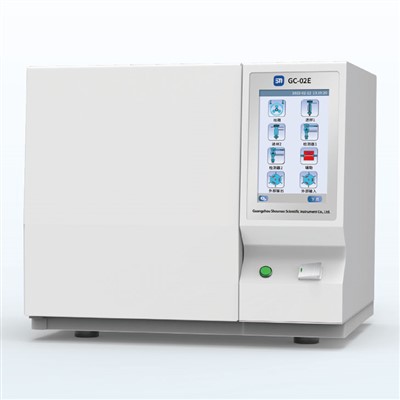
First off, let's talk a bit about tearing meters. As a tearing meter supplier, I know that these gadgets are pretty handy. They're designed to measure the force needed to tear through a material. We've got different types in our lineup, like the High-Precision Tear Strength Analyzer, the Digital Tearing Strength Tester, and the SN-S Electronic Tear Tester. Each of these has its own features and is suitable for different materials and testing requirements.
Now, what about ceramic fibers? Ceramic fibers are amazing materials. They have high-temperature resistance, good chemical stability, and low thermal conductivity. You'll find them being used in all sorts of industries, like aerospace, insulation, and even in some high - tech manufacturing processes. But can we use a tearing meter to measure their tearing strength?
Let's start with the basic principles of how a tearing meter works. Most tearing meters operate by clamping a sample of the material and then applying a force to initiate and propagate a tear. The meter then records the force required to tear the sample. Sounds simple, right? But when it comes to ceramic fibers, things get a bit tricky.
Ceramic fibers are very different from common materials like paper or fabric. They're incredibly brittle and have a unique structure. Unlike flexible materials, ceramic fibers don't deform much before breaking. When you try to apply a tearing force, instead of gradually tearing, they might just shatter suddenly.
One of the challenges with using a tearing meter for ceramic fibers is the sample preparation. With other materials, you can easily cut a standard - sized sample for testing. But ceramic fibers are often in a form of mats or woven fabrics, and getting a clean, uniform sample can be a headache. Also, the fibers are so brittle that handling them during sample preparation can cause damage and affect the test results.
Another issue is the nature of the tearing force. Tearing meters are typically calibrated for materials that have a more ductile or flexible behavior. When we talk about tearing a piece of paper, for example, the paper can stretch and deform as the tear propagates. Ceramic fibers, on the other hand, don't have that property. The force - displacement curve for ceramic fibers will look very different from what the tearing meter is used to dealing with.
However, that doesn't mean it's completely impossible. With some modifications and careful testing procedures, we might be able to use a tearing meter to get some useful data about the tearing strength of ceramic fibers.
For example, we could adjust the clamping mechanism of the tearing meter. Since ceramic fibers are so brittle, using a gentle clamping force can prevent the fibers from breaking prematurely during the clamping process. We might also need to use a slower testing speed to give the fibers time to react to the tearing force in a more controlled way.
We can also play around with the sample geometry. Instead of using a standard rectangular sample, we could try a different shape that might be more suitable for ceramic fibers. Maybe a circular or oval - shaped sample could distribute the tearing force more evenly and give us more reliable results.
Let's consider the data we can actually get from a tearing meter. Even if the tearing behavior of ceramic fibers is different from what the meter is designed for, we can still measure the peak force required to start the tear. This value can give us an idea of the initial resistance of the ceramic fibers to tearing.
We can also look at the post - peak behavior. If the fiber mat or fabric has some kind of interlocking or binding between the fibers, the tearing meter can help us understand how the material behaves after the initial tear starts. This can be useful information for applications where the material might experience tearing during normal use.
Now, I want to emphasize that this kind of testing is still in the experimental stage when it comes to ceramic fibers. But as a tearing meter supplier, I'm always up for a challenge. If you're in the ceramic fiber industry and need to measure the tearing strength of your products, our tearing meters could potentially be adapted to your needs.
We've got a team of experts who can work with you to figure out the best testing setup. Whether it's adjusting the tearing meter settings, preparing the samples in a special way, or developing new testing protocols, we're here to help.
If you're interested in finding out more about how our tearing meters could be used for ceramic fiber testing, or if you just want to chat about your specific requirements, don't hesitate to reach out. Let's have a discussion and see if we can come up with a solution that works for you. Who knows, together we might unlock some new insights into the tearing strength of ceramic fibers!


References
- "Ceramic Fibers: Properties and Applications" - Journal of Advanced Materials Research
- "Tearing Mechanics of Composite Materials" - International Journal of Engineering Science