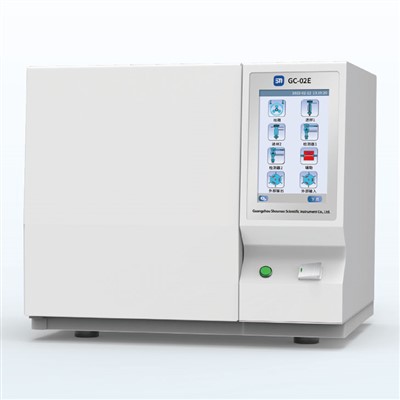
In the realm of analytical chemistry, chromatography stands as a cornerstone technique, enabling scientists to separate, identify, and quantify components within complex mixtures. At the heart of every chromatography setup lies a crucial component: the detector. As a leading supplier of Chromatography Equipment, I've witnessed firsthand the pivotal role that detectors play in the functionality and effectiveness of chromatography systems. In this blog post, I'll delve into the significance of detectors in chromatography equipment, exploring their types, functions, and impact on analytical results.
Understanding Chromatography Basics
Before we dive into the role of detectors, let's briefly review the fundamentals of chromatography. Chromatography is a separation technique that relies on the differential partitioning of analytes between a stationary phase and a mobile phase. The stationary phase is a fixed material, such as a solid adsorbent or a liquid coated on a solid support, while the mobile phase is a fluid that carries the analytes through the system. As the analytes travel through the stationary phase, they interact with it to varying degrees, leading to their separation based on their physical and chemical properties.
There are several types of chromatography, including Gas Chromatography, liquid chromatography, and ion chromatography, each with its own unique principles and applications. Regardless of the type, all chromatography systems share a common goal: to separate the components of a mixture and provide a means of detecting and analyzing them.
The Role of Detectors in Chromatography
The detector is the component of a chromatography system that is responsible for detecting and measuring the analytes as they elute from the column. Its primary function is to convert the presence of analytes into a measurable signal, which can then be recorded and analyzed. Without a detector, the separated components would pass through the system undetected, rendering the chromatographic separation useless.
The role of the detector can be broken down into several key aspects:


1. Detection Sensitivity
One of the most important functions of a detector is to provide high sensitivity, allowing it to detect even trace amounts of analytes in a sample. This is particularly crucial in applications such as environmental monitoring, pharmaceutical analysis, and forensic science, where the analytes of interest may be present at very low concentrations. A sensitive detector can help researchers detect and quantify these analytes accurately, providing valuable information for decision-making.
2. Selectivity
In addition to sensitivity, detectors must also be selective, meaning they can distinguish between different analytes based on their unique properties. This is important because many samples contain multiple components, and it's essential to be able to identify and quantify each one accurately. Selective detectors can help researchers differentiate between analytes that have similar chemical structures or physical properties, reducing the likelihood of false positives and improving the accuracy of the analysis.
3. Linearity
A detector should exhibit linearity, which means that the response of the detector is proportional to the concentration of the analyte in the sample. This is important because it allows researchers to accurately quantify the analytes based on the detector signal. A linear detector response ensures that the calibration curve is straight, making it easier to determine the concentration of unknown samples.
4. Response Time
The response time of a detector refers to the time it takes for the detector to respond to the presence of an analyte and reach a stable signal. A fast response time is important because it allows researchers to detect and analyze analytes as they elute from the column, providing real-time information about the separation process. A slow response time can lead to peak broadening and loss of resolution, making it more difficult to accurately identify and quantify the analytes.
5. Stability
Finally, a detector must be stable, meaning that its response remains consistent over time. This is important because it ensures that the results of the analysis are reproducible and reliable. A stable detector response reduces the variability in the data, making it easier to compare results from different samples and experiments.
Types of Detectors in Chromatography
There are several types of detectors used in chromatography, each with its own unique properties and applications. Some of the most common types of detectors include:
1. Flame Ionization Detector (FID)
The Flame Ionization Detector (FID) is one of the most widely used detectors in Gas Chromatography. It operates by burning the analytes in a hydrogen flame, which ionizes the carbon-containing compounds in the sample. The ions produced are then collected and measured as an electrical current, which is proportional to the concentration of the analytes in the sample. FIDs are highly sensitive and selective for organic compounds, making them ideal for applications such as environmental monitoring, food analysis, and pharmaceutical quality control.
2. Thermal Conductivity Detector (TCD)
The Thermal Conductivity Detector (TCD) is a universal detector that can be used to detect a wide range of compounds, including inorganic and organic compounds. It operates by measuring the change in thermal conductivity of a carrier gas as it passes through a sample cell containing the analytes. The change in thermal conductivity is proportional to the concentration of the analytes in the sample, allowing for their detection and quantification. TCDs are relatively simple and inexpensive, making them a popular choice for applications such as gas analysis and environmental monitoring.
3. Mass Spectrometer (MS)
The Mass Spectrometer (MS) is a powerful detector that can provide detailed information about the structure and identity of analytes. It operates by ionizing the analytes and separating them based on their mass-to-charge ratio (m/z). The ions are then detected and measured, and the resulting mass spectrum can be used to identify the analytes and determine their molecular weight. MS detectors are highly sensitive and selective, making them ideal for applications such as drug discovery, proteomics, and environmental analysis.
4. Ultraviolet-Visible (UV-Vis) Detector
The Ultraviolet-Visible (UV-Vis) Detector is a widely used detector in liquid chromatography. It operates by measuring the absorption of ultraviolet or visible light by the analytes as they pass through a flow cell. The absorption of light is proportional to the concentration of the analytes in the sample, allowing for their detection and quantification. UV-Vis detectors are highly sensitive and selective for compounds that absorb light in the UV or visible region, making them ideal for applications such as pharmaceutical analysis, food analysis, and environmental monitoring.
5. Fluorescence Detector (FLD)
The Fluorescence Detector (FLD) is a highly sensitive detector that can be used to detect compounds that fluoresce. It operates by exciting the analytes with a specific wavelength of light and measuring the emission of light at a longer wavelength. The intensity of the fluorescence emission is proportional to the concentration of the analytes in the sample, allowing for their detection and quantification. FLD detectors are highly sensitive and selective for fluorescent compounds, making them ideal for applications such as pharmaceutical analysis, environmental monitoring, and biotechnology.
Impact of Detectors on Analytical Results
The choice of detector can have a significant impact on the quality and accuracy of the analytical results. A detector that is not sensitive enough may fail to detect trace amounts of analytes, leading to false negatives. On the other hand, a detector that is too sensitive may produce false positives, leading to inaccurate results. Similarly, a detector that is not selective enough may not be able to distinguish between different analytes, leading to overlapping peaks and difficulty in identification and quantification.
In addition to sensitivity and selectivity, the linearity, response time, and stability of the detector can also affect the accuracy and reproducibility of the results. A detector that exhibits non-linear behavior may produce inaccurate calibration curves, leading to errors in quantification. A detector with a slow response time may cause peak broadening and loss of resolution, making it more difficult to accurately identify and quantify the analytes. Finally, a detector that is not stable may produce inconsistent results over time, leading to variability in the data and difficulty in comparing results from different samples and experiments.
Conclusion
In conclusion, the detector is a crucial component of chromatography equipment, playing a vital role in the detection and analysis of analytes. It provides the means of converting the presence of analytes into a measurable signal, allowing researchers to identify and quantify the components of a mixture accurately. The choice of detector depends on several factors, including the type of chromatography, the nature of the analytes, and the specific requirements of the application. By understanding the role of detectors in chromatography and choosing the right detector for the job, researchers can ensure the accuracy and reliability of their analytical results.
If you're in the market for high-quality Chromatography Equipment or Gas Chromatography System, we invite you to contact us to discuss your needs. Our team of experts can help you select the right equipment and detector for your application, ensuring that you get the most accurate and reliable results possible.
References
- Snyder, L. R., Kirkland, J. J., & Glajch, J. L. (2010). Practical HPLC Method Development. Wiley.
- McMaster, M. C. (2010). Gas Chromatography and Mass Spectrometry: A Practical Guide. Wiley.
- Poole, C. F. (2003). Chromatography Today. Elsevier.