

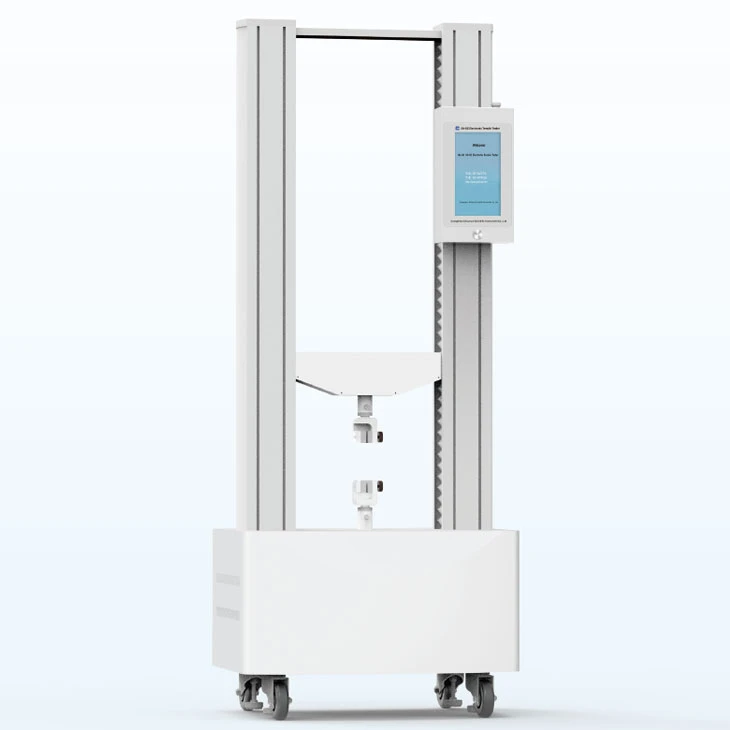
Temperature is a critical environmental factor that can significantly influence the performance of various instruments, and electronic tensile testers are no exception. As a leading supplier of electronic tensile testers, including the SN-DE Electronic Tensile Tester, SN-1SE Electronic Tensile Tester, and SN-1E Electronic Tensile Tester, we understand the importance of comprehending how temperature impacts the functionality and accuracy of these devices.
1. Thermal Expansion and Contraction
One of the primary ways temperature affects an electronic tensile tester is through thermal expansion and contraction. All materials expand when heated and contract when cooled, and the components of a tensile tester are no different. The load cell, which is a crucial part of the tester responsible for measuring the force applied during a test, can be affected by these dimensional changes.
When the temperature rises, the load cell may expand. This expansion can lead to changes in its internal structure, potentially altering its calibration. A mis - calibrated load cell will result in inaccurate force measurements. For example, if the load cell expands, it may produce a higher reading than the actual force being applied, leading to false results in tensile strength tests.
Conversely, in cold temperatures, the load cell contracts. This contraction can also disrupt the internal balance of the load cell, causing it to under - report the applied force. The frame of the tensile tester, typically made of metal, will also expand or contract with temperature changes. This can affect the alignment of the testing components, such as the grips that hold the test specimen. Misaligned grips can cause uneven stress distribution on the specimen, leading to inaccurate test results and potentially damaging the specimen in an abnormal way.
2. Impact on Electrical Components
Electronic tensile testers rely heavily on electrical components for their operation. Temperature can have a profound impact on the performance of these components.
2.1. Resistance Changes
Electrical resistors, which are fundamental components in the tester's circuitry, change their resistance values with temperature. According to the temperature coefficient of resistance formula, the resistance of a conductor changes linearly with temperature. For most metals, the resistance increases as the temperature rises. This change in resistance can affect the electrical signals within the tester, leading to errors in the measurement and control systems.
For example, in a strain - gauge - based load cell, the change in resistance of the strain gauges due to temperature can cause a drift in the output signal. This drift can be misinterpreted as a change in the applied force, resulting in inaccurate test results.
2.2. Semiconductor Performance
Semiconductor devices, such as transistors and integrated circuits, are also sensitive to temperature. High temperatures can cause an increase in the leakage current of transistors, which can disrupt the normal operation of the circuits. In addition, the mobility of charge carriers in semiconductors changes with temperature. At high temperatures, the mobility decreases, which can slow down the operation of the electronic circuits in the tensile tester. This can lead to delays in data acquisition and processing, affecting the real - time monitoring and control of the testing process.
Low temperatures can also be problematic for semiconductors. At extremely low temperatures, the conductivity of some semiconductors may decrease significantly, and the devices may even stop functioning properly. This can cause the tester to malfunction or produce unreliable results.
3. Effect on Lubricants and Moving Parts
Many electronic tensile testers have moving parts, such as lead screws and bearings, which require lubrication for smooth operation. Temperature can affect the properties of the lubricants used in these parts.

In high - temperature environments, lubricants can thin out. The reduced viscosity of the lubricant may not provide sufficient protection and lubrication for the moving parts. This can lead to increased friction between the parts, causing wear and tear at a faster rate. Excessive friction can also generate additional heat, further exacerbating the problem and potentially leading to mechanical failures.
In cold temperatures, lubricants can thicken. A thickened lubricant may not flow properly to the areas that need lubrication, resulting in increased resistance to movement. This can make the movement of the tester's components jerky and uneven, affecting the accuracy of the test. For example, if the lead screw that moves the cross - head of the tester is not properly lubricated due to thickened lubricant, the speed and smoothness of the cross - head movement will be affected, leading to inconsistent test conditions.
4. Influence on Material Properties of Test Specimens
Temperature not only affects the tensile tester itself but also the test specimens being evaluated. Different materials respond differently to temperature changes.
For polymers, high temperatures can cause them to become softer and more ductile. This means that the tensile strength of a polymer specimen will decrease at higher temperatures. When testing polymers at elevated temperatures using an electronic tensile tester, the results will show lower tensile strength values compared to tests conducted at room temperature.
Metals also exhibit changes in their mechanical properties with temperature. In general, as the temperature increases, the yield strength and ultimate tensile strength of metals decrease, while their ductility increases. This means that the test results obtained from a metal specimen at different temperatures will vary significantly. If the temperature of the testing environment is not controlled, it becomes difficult to compare test results from different specimens or different testing sessions.
5. Mitigating the Effects of Temperature
To ensure the accurate and reliable performance of electronic tensile testers, several measures can be taken to mitigate the effects of temperature.
5.1. Temperature - Controlled Environments
The most effective way to reduce the impact of temperature is to conduct tests in a temperature - controlled environment. This can be achieved by using a temperature - controlled testing chamber. By maintaining a constant temperature within the chamber, the tester and the test specimens are exposed to a stable environment, minimizing the effects of thermal expansion, electrical component changes, and lubricant property variations.
5.2. Temperature Compensation
Modern electronic tensile testers are often equipped with temperature compensation features. These features use sensors to measure the temperature of the load cell and other critical components. The tester's software then adjusts the measurement data based on pre - determined temperature - correction factors. This helps to maintain the accuracy of the force measurements even when the temperature changes.
5.3. Regular Calibration
Regular calibration of the tensile tester is essential, especially in environments where temperature fluctuations are common. Calibration ensures that the load cell and other measurement components are providing accurate readings. Calibration should be performed at different temperatures to account for any temperature - related changes in the tester's performance.
6. Conclusion
Temperature has a far - reaching impact on the performance of electronic tensile testers. From affecting the mechanical components through thermal expansion and contraction to altering the behavior of electrical components and lubricants, temperature can introduce significant errors in test results. Moreover, the material properties of test specimens are also influenced by temperature, further complicating the testing process.
As a supplier of high - quality electronic tensile testers, including the SN - DE Electronic Tensile Tester, SN - 1SE Electronic Tensile Tester, and SN - 1E Electronic Tensile Tester, we are committed to providing our customers with reliable solutions. We understand the importance of accurate testing results and offer products with advanced temperature compensation features and support for temperature - controlled testing environments.
If you are in the market for an electronic tensile tester or need more information on how to ensure accurate testing in different temperature conditions, we invite you to contact us for a detailed discussion. Our team of experts is ready to assist you in selecting the right tester for your specific needs and providing guidance on best practices for temperature - controlled testing.
References
- ASTM International. (20XX). Standard practices for temperature control in mechanical testing.
- Callister, W. D., & Rethwisch, D. G. (2011). Materials Science and Engineering: An Introduction. Wiley.
- Boylestad, R. L., & Nashelsky, L. (2012). Electronic Devices and Circuit Theory. Pearson.


