How to Choose the Right Column for a Gas Chromatograph
As a seasoned supplier of gas chromatographs, I've witnessed firsthand the critical role that column selection plays in achieving accurate and reliable analytical results. A gas chromatograph column is the heart of the system, separating the components of a sample based on their different affinities for the stationary phase within the column. In this blog post, I'll share some key considerations to help you choose the right column for your gas chromatograph.
Understanding the Basics of Gas Chromatography Columns
Before delving into the selection process, it's essential to understand the basic types of gas chromatography columns. There are two main types: packed columns and capillary columns.


Packed columns are filled with a solid support material coated with a liquid stationary phase. They are typically larger in diameter and have a higher sample capacity, making them suitable for analyzing complex mixtures with high concentrations of analytes. However, packed columns generally have lower efficiency and longer analysis times compared to capillary columns.
Capillary columns, on the other hand, are narrow-bore tubes coated with a thin layer of stationary phase on the inner wall. They offer higher efficiency, faster analysis times, and better resolution than packed columns. Capillary columns are further classified into two subtypes: wall-coated open tubular (WCOT) columns and support-coated open tubular (SCOT) columns. WCOT columns are the most commonly used type, as they provide excellent separation performance and are available in a wide range of stationary phases.
Factors to Consider When Choosing a Column
When selecting a column for your gas chromatograph, several factors need to be taken into account. These include the nature of the sample, the type of analysis, the required separation efficiency, and the compatibility with the detector.
Sample Nature
The first step in column selection is to understand the nature of the sample you'll be analyzing. Consider the volatility, polarity, and molecular weight of the analytes. Volatile compounds are best separated using columns with a non-polar or slightly polar stationary phase, while polar compounds require a polar stationary phase. For example, if you're analyzing a mixture of hydrocarbons, a non-polar column such as a 100% dimethylpolysiloxane column would be a suitable choice. On the other hand, if you're analyzing polar compounds like alcohols or acids, a polar column such as a polyethylene glycol column would be more appropriate.
The molecular weight of the analytes also plays a role in column selection. Higher molecular weight compounds may require a column with a thicker stationary phase to ensure adequate retention and separation. Additionally, if your sample contains high-boiling-point compounds, you may need to use a column with a high-temperature stability to prevent thermal degradation.
Type of Analysis
The type of analysis you're performing will also influence your column selection. For qualitative analysis, where the goal is to identify the components of a sample, a column with good separation efficiency and a wide range of stationary phases is desirable. This allows you to separate and identify a variety of compounds. For quantitative analysis, where the goal is to determine the concentration of specific analytes, a column with high reproducibility and linearity is essential.
If you're performing trace analysis, where the analytes are present at very low concentrations, you may need to use a column with a high sensitivity and low bleed. Low bleed columns are designed to minimize the release of stationary phase components into the detector, which can interfere with the analysis of trace analytes.
Separation Efficiency
Separation efficiency is a measure of how well a column can separate the components of a sample. It is typically expressed in terms of the number of theoretical plates (N) or the height equivalent to a theoretical plate (HETP). A higher number of theoretical plates indicates better separation efficiency.
The length, diameter, and stationary phase thickness of the column all affect the separation efficiency. Longer columns generally provide higher separation efficiency, but they also require longer analysis times. Smaller diameter columns offer better separation efficiency than larger diameter columns, but they have a lower sample capacity. The stationary phase thickness also affects the separation efficiency, with thinner stationary phases providing better separation for low-molecular-weight compounds and thicker stationary phases providing better separation for high-molecular-weight compounds.
Compatibility with the Detector
The column you choose must be compatible with the detector you're using. Different detectors have different requirements for the carrier gas flow rate, temperature, and stationary phase. For example, a flame ionization detector (FID) is compatible with most types of columns and carrier gases, while a mass spectrometer (MS) detector requires a column with low bleed and a carrier gas that is compatible with the ionization process.
Before selecting a column, make sure to check the manufacturer's specifications to ensure compatibility with your detector. Additionally, consider the detector's sensitivity and selectivity, as these factors can also influence the choice of column.
Our Recommended Columns
At our company, we offer a wide range of gas chromatograph columns to meet the needs of different applications. Here are some of our recommended columns:
-
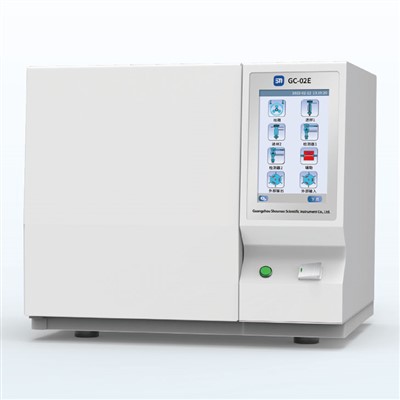
GC-02E Gas Chromatograph: This column is suitable for a variety of applications, including environmental analysis, food and beverage analysis, and pharmaceutical analysis. It features a high-efficiency WCOT column with a non-polar stationary phase, providing excellent separation of volatile compounds. Learn more about the GC-02E Gas Chromatograph
-
GC-05E Gas Chromatograph: This column is designed for trace analysis and high-resolution separations. It has a low-bleed WCOT column with a polar stationary phase, making it ideal for the analysis of polar compounds at low concentrations. Explore the GC-05E Gas Chromatograph
-
GC-06E Gas Chromatograph: This column is a versatile option for both qualitative and quantitative analysis. It offers a wide range of stationary phases and column dimensions, allowing you to customize the column to your specific needs. Discover the GC-06E Gas Chromatograph
Conclusion
Choosing the right column for your gas chromatograph is a crucial step in achieving accurate and reliable analytical results. By considering the nature of the sample, the type of analysis, the required separation efficiency, and the compatibility with the detector, you can select a column that meets your specific needs. At our company, we have a team of experts who can help you choose the right column for your application. If you have any questions or need further assistance, please don't hesitate to contact us. We look forward to working with you to find the perfect solution for your gas chromatography needs.
References
- McMaster, M. C. (2008). Gas Chromatography Columns: Selection, Installation, and Use. Wiley-Interscience.
- Snyder, L. R., Kirkland, J. J., & Glajch, J. L. (2010). Practical HPLC Method Development. Wiley-Interscience.
- Harris, D. C. (2016). Quantitative Chemical Analysis. W. H. Freeman and Company.