Hey there! As a supplier of heat seal testers, I often get asked about the maximum temperature these nifty machines can reach. It's a crucial question, especially for businesses that rely on heat sealing for their packaging needs. So, let's dive right in and explore this topic in detail.


First off, what exactly is a heat seal tester? Well, it's a device used to create a seal between two or more layers of material, usually plastic films, using heat. This process is essential in industries like food packaging, pharmaceuticals, and electronics, where a secure and airtight seal is required to preserve the product's quality and integrity.
Now, back to the main question: What's the maximum temperature a heat seal tester can reach? The answer isn't straightforward, as it depends on several factors, including the type of heat seal tester, the materials being sealed, and the specific application.
Types of Heat Seal Testers and Their Temperature Ranges
There are different types of heat seal testers available in the market, each with its own temperature capabilities.
High - Speed Heat Sealer
The High - Speed Heat Sealer is designed for high - volume production environments. These machines are built to work quickly, and they typically have a maximum temperature range of around 200°C to 300°C. This temperature range is sufficient for most common plastic films, such as polyethylene (PE) and polypropylene (PP). The high speed of these sealers allows for rapid sealing, but the temperature needs to be carefully controlled to ensure a proper seal without damaging the material.
SN - RF1E Heat Sealing Tester
The SN - RF1E Heat Sealing Tester is a versatile machine that can be used for various sealing applications. It can reach a maximum temperature of up to 350°C. This higher temperature range makes it suitable for sealing thicker or more heat - resistant materials. For example, if you're working with materials like polyester (PET), which has a higher melting point compared to PE and PP, the SN - RF1E can provide the necessary heat to create a strong seal.
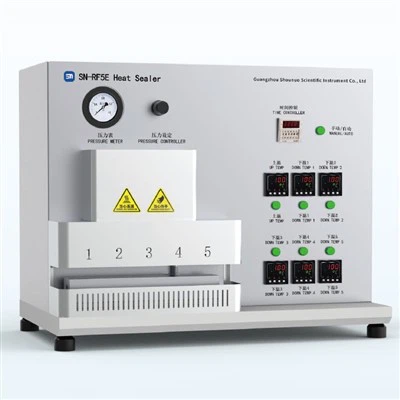
SN - RF5E 5 - Point Heat Sealing Tester
The SN - RF5E 5 - Point Heat Sealing Tester is another powerful option. It can reach a maximum temperature of approximately 400°C. This machine is often used in specialized applications where very high - temperature seals are required. For instance, in the electronics industry, where certain plastic materials used for component packaging need a high - temperature seal to ensure long - term stability and protection.
Factors Affecting the Maximum Temperature
It's not just the type of heat seal tester that determines the maximum temperature. Other factors also play a significant role.
Material Properties
The materials being sealed have a major impact on the required temperature. Different plastics have different melting points. For example, low - density polyethylene (LDPE) has a relatively low melting point of around 105°C - 115°C, while high - density polyethylene (HDPE) melts at around 120°C - 130°C. Polycarbonate (PC), on the other hand, has a much higher melting point, typically around 220°C - 230°C. So, if you're sealing a PC film, you'll need a heat seal tester that can reach a higher temperature compared to when sealing LDPE.
Seal Quality Requirements
The quality of the seal you need also affects the temperature. If you're looking for a strong, hermetic seal, you might need to increase the temperature slightly to ensure better molecular bonding between the materials. However, if the material is sensitive to heat, over - heating can cause issues like material degradation, discoloration, or even burning, which can compromise the seal quality.
Sealing Time
The time the heat is applied also interacts with the temperature. A shorter sealing time may require a higher temperature to achieve the same seal quality as a longer sealing time at a lower temperature. This relationship between time and temperature is something that needs to be carefully calibrated for each specific application.
Safety Considerations at High Temperatures
When dealing with heat seal testers that can reach high temperatures, safety is of utmost importance. High - temperature heat sealers can pose risks such as burns, fire hazards, and damage to the surrounding environment.
Most modern heat seal testers come with built - in safety features. These can include temperature sensors that automatically shut off the machine if the temperature exceeds a certain limit, heat shields to prevent accidental contact with hot surfaces, and emergency stop buttons. However, it's still essential for operators to follow proper safety procedures, such as wearing appropriate protective gear like heat - resistant gloves and using the machine in a well - ventilated area.
Choosing the Right Heat Seal Tester Based on Temperature Needs
When selecting a heat seal tester, it's crucial to consider the maximum temperature requirements of your application. Here are some tips:
- Know Your Materials: Identify the types of materials you'll be sealing and their melting points. This will give you a good starting point for determining the temperature range you need.
- Consider Your Production Volume: If you have a high - volume production line, a high - speed heat sealer with a suitable temperature range might be the best choice. But if you're working on smaller - scale or specialized projects, a more versatile machine like the SN - RF1E or SN - RF5E could be more appropriate.
- Think About Future Needs: Anticipate any changes in your production process or materials. It might be worth investing in a heat seal tester with a higher temperature range than you currently need to accommodate future growth or new materials.
Conclusion
So, to sum it up, the maximum temperature a heat seal tester can reach varies depending on the type of machine, the materials being sealed, and the specific application. From around 200°C for high - speed heat sealers to up to 400°C for specialized machines like the SN - RF5E, there's a wide range of options available.
If you're in the market for a heat seal tester and need help choosing the right one based on your temperature requirements, don't hesitate to reach out. We're here to assist you in finding the perfect solution for your business. Whether you're a small startup or a large - scale manufacturer, we have the expertise and the products to meet your needs. Let's have a chat and see how we can help you achieve the best heat sealing results.
References
- "Plastics Packaging Technology" by Andrew Brown
- "Heat Sealing of Polymers" by John M. Denning