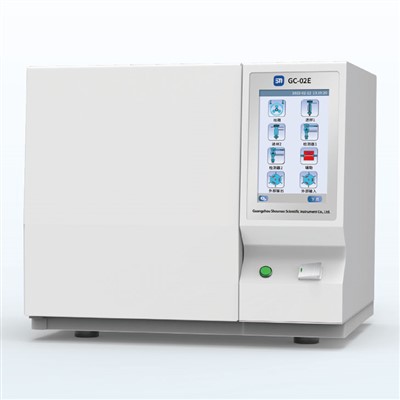
Temperature is a critical factor that significantly influences the performance and functionality of Gas Chromatograph (GC) machines. As a supplier of high - quality GC machines, including the GC - 05E Gas Chromatograph, GC - 06E Gas Chromatograph, and GC - 02E Gas Chromatograph, I have witnessed firsthand how temperature variations can impact these analytical instruments. In this blog, I will delve into the various ways temperature affects a GC machine and why it is essential to control it for accurate and reliable results.
Separation Efficiency
One of the primary functions of a GC machine is to separate different components in a sample. Temperature plays a crucial role in this separation process. The stationary phase in a GC column is designed to interact with the sample components differently based on their physical and chemical properties. When the temperature is too low, the sample components may not have enough energy to move through the column at an appropriate rate. This can lead to broad peaks in the chromatogram, making it difficult to distinguish between different components accurately. For example, if the boiling points of two components are close, a low - temperature setting may cause their peaks to overlap, reducing the resolution of the separation.
Conversely, when the temperature is too high, the sample components may move through the column too quickly. This can result in sharp but poorly resolved peaks, as the components do not have enough time to interact with the stationary phase properly. The ideal temperature for separation depends on the nature of the sample and the type of column being used. For instance, for samples with high - boiling - point compounds, a higher initial temperature or a programmed temperature increase may be required to ensure that these compounds elute from the column within a reasonable time frame.
Retention Time
Retention time is the time it takes for a particular component to travel through the GC column and reach the detector. Temperature has a direct impact on retention time. As the temperature increases, the vapor pressure of the sample components also increases, causing them to move more rapidly through the column. This leads to a decrease in retention time. On the other hand, a decrease in temperature will result in an increase in retention time.
Accurate determination of retention time is crucial for identifying the components in a sample. If the temperature is not properly controlled, the retention times may vary from one analysis to another, making it difficult to compare results. For example, in a quality control laboratory, where samples are analyzed regularly, inconsistent retention times due to temperature fluctuations can lead to false positives or negatives in the identification of compounds.
Column Performance
The column is the heart of a GC machine, and temperature can have a profound effect on its performance. Most GC columns are made of a stationary phase coated on a capillary tube. High temperatures can cause the stationary phase to degrade over time. This degradation can lead to a loss of column efficiency, increased baseline noise, and a decrease in peak symmetry. For example, if a column is repeatedly exposed to temperatures above its recommended maximum, the stationary phase may start to bleed, which can contaminate the detector and affect the accuracy of the analysis.
Low temperatures, on the other hand, can cause the stationary phase to become more viscous, reducing the mobility of the sample components. This can lead to longer analysis times and reduced sensitivity. Additionally, extreme temperature changes can cause the column to expand or contract, which may result in physical damage to the column, such as cracking or breaking.


Detector Response
The detector in a GC machine is responsible for detecting the separated components as they exit the column. Different types of detectors, such as flame ionization detectors (FID), thermal conductivity detectors (TCD), and mass spectrometers (MS), have different temperature requirements for optimal performance.
For example, in an FID, the detector operates at a high temperature to ensure complete combustion of the sample components. If the temperature is too low, the combustion process may be incomplete, leading to a decrease in detector response and sensitivity. In a TCD, temperature stability is crucial for accurate measurement of the thermal conductivity of the carrier gas and the sample components. Any temperature fluctuations can cause changes in the thermal conductivity, resulting in baseline drift and inaccurate results.
Temperature Programming
To optimize the separation of complex samples, many GC machines use temperature programming. Temperature programming involves increasing the temperature of the column at a controlled rate during the analysis. This allows for the separation of components with a wide range of boiling points.
By starting at a low temperature, the low - boiling - point components can be separated first. As the temperature increases, the higher - boiling - point components are then eluted from the column. Temperature programming can significantly improve the separation efficiency and reduce the analysis time. However, it requires careful control of the temperature ramp rate and the final temperature to ensure optimal results.
Importance of Temperature Control
Given the significant impact of temperature on a GC machine, it is essential to have precise temperature control. Modern GC machines are equipped with advanced temperature control systems that can maintain a stable temperature within a narrow range. These systems use heating elements and cooling mechanisms to adjust the temperature as needed.
In addition to maintaining a stable temperature during the analysis, it is also important to ensure that the temperature is consistent across different parts of the GC machine. For example, the injector, column oven, and detector should all be at the appropriate temperatures to ensure accurate and reproducible results.
Conclusion
Temperature has a far - reaching impact on the performance of a GC machine. It affects separation efficiency, retention time, column performance, and detector response. As a supplier of GC machines, we understand the importance of temperature control in achieving accurate and reliable analytical results. Our GC - 05E Gas Chromatograph, GC - 06E Gas Chromatograph, and GC - 02E Gas Chromatograph are designed with state - of - the - art temperature control systems to ensure optimal performance.
If you are in the market for a high - quality GC machine or need to upgrade your existing equipment, we invite you to contact us for a consultation. Our team of experts can help you select the right GC machine for your specific needs and provide you with the support and training you need to get the most out of your investment.
References
- Harris, D. C. (2016). Quantitative Chemical Analysis. W. H. Freeman and Company.
- McNair, H. M., & Miller, J. M. (1997). Basic Gas Chromatography. Wiley - Interscience.
- Skoog, D. A., West, D. M., Holler, F. J., & Crouch, S. R. (2013). Fundamentals of Analytical Chemistry. Cengage Learning.