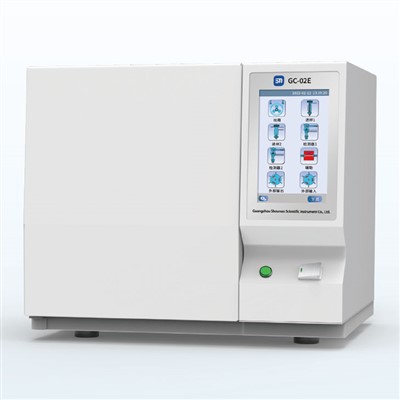
Flow rate is a critical parameter in chromatography, a technique widely used in various industries for separating and analyzing mixtures. As a leading supplier of Chromatography Equipment, we understand the importance of optimizing this parameter to achieve the best possible results. In this blog post, we will explore the effect of flow rate on chromatography equipment peak shape, delving into the scientific principles behind it and providing practical insights for users.
Understanding Chromatography and Peak Shape
Chromatography is a separation technique that relies on the differential distribution of components in a mixture between a stationary phase and a mobile phase. The mobile phase, which can be a gas in Gas Chromatography or a liquid in liquid chromatography, carries the sample through the stationary phase. As the components of the sample interact differently with the stationary phase, they separate and elute at different times, producing peaks in the chromatogram.
The shape of these peaks is crucial for accurate analysis. An ideal peak is symmetrical, with a narrow base and a well-defined apex. This indicates that the component has been well-separated from other components in the mixture and that the analysis is reliable. However, in real-world applications, peaks can often exhibit various forms of distortion, such as tailing, fronting, or broadening. These distortions can affect the accuracy of peak integration, quantification, and identification, leading to errors in the analysis.
The Role of Flow Rate in Peak Shape
Flow rate, defined as the volume of the mobile phase passing through the chromatography column per unit time, plays a significant role in determining the peak shape. It affects several key factors in the chromatographic process, including mass transfer, diffusion, and column efficiency.
Mass Transfer
Mass transfer refers to the movement of the sample components between the mobile phase and the stationary phase. At low flow rates, the sample components have more time to interact with the stationary phase, allowing for better separation. However, if the flow rate is too low, the components may become trapped in the stationary phase, leading to tailing peaks. This is because the components at the front of the peak have a higher probability of being retained by the stationary phase than those at the back, causing the peak to spread out towards the end.
On the other hand, at high flow rates, the sample components are carried through the column more quickly, reducing the time available for interaction with the stationary phase. This can result in poor separation and fronting peaks, where the front of the peak is broader than the back. Fronting occurs when the components are not fully equilibrated between the mobile and stationary phases, causing them to elute earlier than expected.
Diffusion
Diffusion is the random movement of molecules from an area of high concentration to an area of low concentration. In chromatography, diffusion can cause peak broadening, especially in the longitudinal direction (along the column). At low flow rates, the sample components have more time to diffuse in the mobile phase, leading to broader peaks. This is because the components at the center of the peak have a higher concentration than those at the edges, and they will diffuse outwards, causing the peak to widen.
At high flow rates, the effect of diffusion is reduced because the sample components are carried through the column more quickly. However, if the flow rate is too high, the mobile phase may not be able to provide sufficient time for the components to equilibrate between the mobile and stationary phases, leading to other forms of peak distortion.
Column Efficiency
Column efficiency is a measure of how well the chromatography column can separate the components of a sample. It is often expressed in terms of the number of theoretical plates (N), which is a mathematical concept that describes the separation efficiency of the column. A higher number of theoretical plates indicates better separation and narrower peaks.
Flow rate affects column efficiency by influencing the mass transfer and diffusion processes. At an optimal flow rate, the column can achieve the highest number of theoretical plates, resulting in sharp and well-separated peaks. However, if the flow rate is too low or too high, the column efficiency will decrease, leading to broader and distorted peaks.
Optimizing Flow Rate for Ideal Peak Shape
To achieve the best possible peak shape, it is essential to optimize the flow rate for each specific chromatographic application. This involves finding the balance between mass transfer, diffusion, and column efficiency. Here are some general guidelines for optimizing flow rate:
Start with the Manufacturer's Recommendations
Most chromatography equipment manufacturers provide recommended flow rates for their columns and systems. These recommendations are based on extensive testing and are a good starting point for optimizing the flow rate. However, it is important to note that these recommendations may need to be adjusted depending on the specific sample, stationary phase, and mobile phase used.
Conduct Preliminary Experiments
Once you have a starting point for the flow rate, it is recommended to conduct preliminary experiments to evaluate the effect of different flow rates on the peak shape. You can start by running a series of injections at different flow rates, keeping all other parameters constant. Analyze the resulting chromatograms and compare the peak shapes, separations, and resolutions. Look for the flow rate that provides the best combination of sharp, symmetrical peaks and good separation between components.
Consider the Column Dimensions
The dimensions of the chromatography column, such as the length, diameter, and particle size of the stationary phase, can also affect the optimal flow rate. Longer columns generally require lower flow rates to achieve good separation, while shorter columns can tolerate higher flow rates. Similarly, columns with smaller particle sizes require lower flow rates to minimize pressure drop and maintain column efficiency.
Monitor the Pressure
When adjusting the flow rate, it is important to monitor the pressure in the chromatography system. High flow rates can increase the pressure in the column, which can lead to column damage or other problems. Make sure to stay within the recommended pressure limits for your column and system.
Practical Examples of Flow Rate Optimization
Let's consider a practical example of optimizing the flow rate for a Gas Chromatography System used for the analysis of volatile organic compounds (VOCs). The initial flow rate recommended by the column manufacturer is 1 mL/min. However, when running the analysis at this flow rate, the peaks for some of the VOCs are tailing, indicating poor separation.
To optimize the flow rate, we decide to conduct a series of experiments at different flow rates, ranging from 0.5 mL/min to 2 mL/min. We keep all other parameters, such as the column temperature, injection volume, and detector settings, constant. After running the experiments, we find that the best peak shape and separation are achieved at a flow rate of 1.5 mL/min. At this flow rate, the peaks are sharp and symmetrical, and the separation between the VOCs is improved.
In another example, we are using a liquid chromatography system to analyze a complex mixture of pharmaceutical compounds. The initial flow rate is set at 0.5 mL/min, but the peaks are broad and poorly separated. By increasing the flow rate to 1 mL/min, we find that the peaks become narrower and more symmetrical, and the separation between the compounds is significantly improved.


Conclusion
Flow rate is a critical parameter in chromatography that can have a significant impact on the peak shape. By understanding the role of flow rate in mass transfer, diffusion, and column efficiency, users can optimize this parameter to achieve the best possible peak shape and separation. As a supplier of Chromatography Equipment, we are committed to providing our customers with the knowledge and tools they need to optimize their chromatographic analyses. If you are experiencing issues with peak shape or other aspects of your chromatography analysis, our team of experts is here to help. Contact us today to discuss your specific needs and explore how our chromatography equipment and solutions can help you achieve more accurate and reliable results.
References
- Snyder, L. R., Kirkland, J. J., & Glajch, J. L. (1997). Practical HPLC method development. John Wiley & Sons.
- Poole, C. F. (2003). The essence of chromatography. Elsevier.
- Neue, U. D. (1997). HPLC columns: theory, technology, and practice. John Wiley & Sons.