When it comes to ensuring the integrity of product packaging, sealing testers play a crucial role. As a leading supplier of sealing testers, I've witnessed firsthand the diverse needs of industries and the importance of choosing the right testing equipment. In this blog, we'll explore the differences between simple and high - end sealing testers, helping you make an informed decision for your business.

1. Functionality and Testing Capabilities
Simple Sealing Testers
Simple sealing testers are designed with basic functionality in mind. They are typically used for straightforward tasks such as detecting gross leaks in packages. These testers often rely on simple pressure - based or visual inspection methods. For example, a simple pressure - based sealing tester may work by applying a set pressure to a package and monitoring for a drop in pressure over a short period. If the pressure drops below a pre - determined threshold, it indicates a leak.
However, the capabilities of simple sealing testers are limited. They may not be able to detect small or micro - leaks, which can be a significant issue in industries where product quality and shelf - life are critical, such as the food and pharmaceutical industries. Additionally, they usually offer limited testing modes and may not be suitable for complex packaging designs.
High - End Sealing Testers
High - end sealing testers, on the other hand, offer a wide range of advanced testing capabilities. They can detect both gross and micro - leaks with high precision. For instance, some high - end testers use technologies like Vacuum Decay Seal Tester, which is highly sensitive to even the smallest leaks. This technology works by creating a vacuum around the package and measuring the rate of pressure change. Any deviation from the expected pressure curve indicates a leak.
High - end testers also support multiple testing modes, allowing them to adapt to different packaging materials and designs. They can test packages with various shapes, sizes, and sealing types, including flexible pouches, rigid containers, and blister packs. Moreover, these testers can perform additional tests such as determining the seal strength and analyzing the integrity of the entire packaging system.
2. Accuracy and Precision
Simple Sealing Testers
Simple sealing testers generally have lower accuracy and precision compared to their high - end counterparts. Due to their basic design and limited testing methods, they may produce false positives or negatives. For example, a simple pressure - based tester may misinterpret a normal pressure fluctuation in the package as a leak, leading to unnecessary product rejections. Similarly, it may fail to detect a small leak that could compromise the product's quality.
The accuracy of simple sealing testers is also affected by external factors such as temperature and humidity. They may not have the built - in compensation mechanisms to account for these variables, resulting in inconsistent test results.
High - End Sealing Testers
High - end sealing testers are engineered for high accuracy and precision. They use advanced sensors and algorithms to minimize errors and ensure reliable test results. For example, the sensors in a high - end Package Sealing Tester can detect even the slightest pressure changes, allowing for accurate leak detection.
These testers also incorporate temperature and humidity compensation features. This means that they can adjust the test parameters based on the environmental conditions, ensuring consistent and reliable results regardless of the testing environment. Additionally, high - end testers often come with calibration options, allowing users to fine - tune the equipment for maximum accuracy.
3. Automation and Ease of Use
Simple Sealing Testers
Simple sealing testers are usually manual or semi - automated. They require significant operator intervention, from loading the packages onto the tester to interpreting the test results. This can be time - consuming and prone to human error. For example, an operator may misread the pressure gauge or fail to follow the correct testing procedure, leading to inaccurate results.
The user interface of simple sealing testers is often basic, with limited options for data logging and analysis. Operators may need to record the test results manually, which can be a cumbersome process and may lead to data entry errors.
High - End Sealing Testers
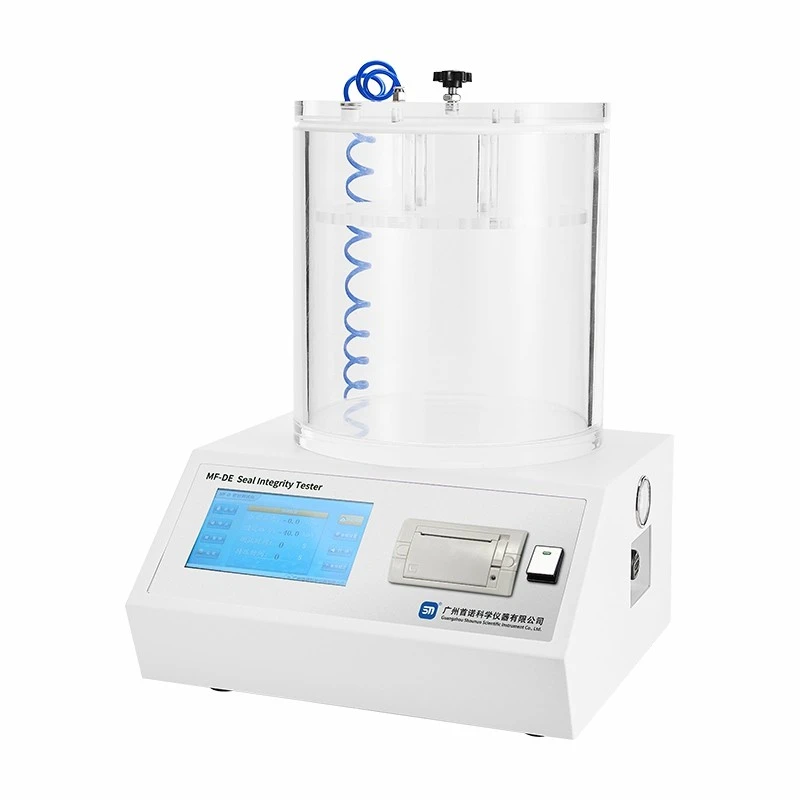
High - end sealing testers are highly automated, reducing the need for operator intervention. They can automatically load, test, and unload packages, increasing the testing efficiency. The user interface of these testers is intuitive and user - friendly, with touch - screen displays and graphical representations of the test results.
These testers also offer advanced data logging and analysis capabilities. They can store a large amount of test data, allowing users to track the performance of the packaging over time. The data can be exported in various formats, such as CSV or Excel, for further analysis. Additionally, high - end testers can generate detailed reports, including statistics on leak rates, seal strength, and test pass/fail ratios.
4. Durability and Maintenance
Simple Sealing Testers
Simple sealing testers are generally made from less expensive materials and have a simpler construction. While this may make them more affordable upfront, they may not be as durable as high - end testers. They may be more prone to mechanical failures and may require more frequent repairs.
Maintenance of simple sealing testers can also be a challenge. Since they are often less standardized, finding replacement parts can be difficult and costly. Additionally, the lack of advanced diagnostic features means that it may be harder to identify and troubleshoot problems.
High - End Sealing Testers
High - end sealing testers are built to last. They are made from high - quality materials and undergo rigorous quality control during the manufacturing process. This ensures that they can withstand the demands of continuous use in industrial environments.
These testers also come with advanced diagnostic features, which can help identify potential problems before they cause significant downtime. Maintenance is usually easier and more cost - effective, as the parts are more standardized and readily available. Many high - end testers also offer remote monitoring and support, allowing technicians to diagnose and resolve issues without having to be on - site.
5. Cost
Simple Sealing Testers
One of the main advantages of simple sealing testers is their low cost. They are a more affordable option for small businesses or those with limited budgets. However, it's important to consider the long - term costs. While the initial purchase price may be low, the cost of inaccurate test results, frequent repairs, and manual labor can add up over time.
High - End Sealing Testers
High - end sealing testers are more expensive upfront. However, they offer a better return on investment in the long run. Their high accuracy and efficiency can help reduce product waste and improve quality control, leading to cost savings in the production process. Additionally, their durability and ease of maintenance can minimize downtime and repair costs.
Conclusion
In conclusion, the choice between a simple and a high - end sealing tester depends on your specific needs and budget. If you have a small - scale operation with simple packaging requirements and a limited budget, a simple sealing tester may be sufficient. However, if you are in an industry where product quality and shelf - life are critical, or if you have complex packaging designs, a high - end sealing tester is a better investment.
As a leading supplier of Leak Tester for Packaging, we offer a wide range of sealing testers to meet the diverse needs of our customers. Whether you're looking for a simple and cost - effective solution or a high - end, advanced testing system, we can help you find the right equipment for your business.
If you're interested in learning more about our sealing testers or would like to discuss your specific requirements, please feel free to contact us. Our team of experts is ready to assist you in making the best choice for your packaging testing needs.
References
- ASTM International standards on packaging testing
- Industry whitepapers on sealing tester technologies
- Manufacturer's documentation on sealing tester features and specifications