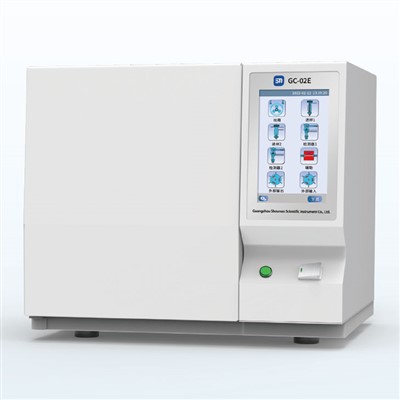
Hey there! As a supplier of Digital Melt Flow Indexers, I often get asked about how the resolution of these machines affects measurement accuracy. So, let's dive right into it and break down this important topic.
First off, what's a Digital Melt Flow Indexer? Well, it's a crucial piece of equipment used to measure the melt flow rate (MFR) or melt volume rate (MVR) of thermoplastic polymers. This data helps in determining the flow characteristics of the polymers, which is super important for quality control and product development in industries like plastics manufacturing. You can check out our Digital Melt Flow Indexer for more details on the product.
Now, let's talk about resolution. In the context of a Digital Melt Flow Indexer, resolution refers to the smallest increment that the machine can measure. For example, if a machine has a resolution of 0.01 g/10 min for MFR measurement, it means it can distinguish between two measurements that differ by as little as 0.01 g/10 min.
Higher resolution generally means better measurement accuracy. Why is that? Well, when you're measuring the melt flow of polymers, there can be very small variations in the flow rate. A high - resolution Digital Melt Flow Indexer can pick up these tiny differences, giving you a more precise measurement.
Let's say you're working with a polymer that has a relatively low melt flow rate. Even a small change in the flow rate can indicate a significant change in the polymer's properties. With a high - resolution machine, you can detect these changes accurately. For instance, if the actual MFR of a polymer sample changes from 2.00 g/10 min to 2.02 g/10 min, a machine with a resolution of 0.01 g/10 min can measure this change, while a machine with a lower resolution, say 0.1 g/10 min, might not even notice it.
On the other hand, a low - resolution Digital Melt Flow Indexer may round off small changes in the measurement. This can lead to inaccurate results, especially when dealing with polymers that have small variations in their melt flow characteristics. For example, if the true MFR of a sample is 3.03 g/10 min, a machine with a resolution of 0.1 g/10 min might report it as 3.0 g/10 min. This kind of inaccuracy can be a big problem in industries where precise quality control is essential.
But it's not just about the numerical resolution. The overall design and functionality of the Digital Melt Flow Indexer also play a role in measurement accuracy. Our SN - RR1E Melt Flow Index Tester and SN - RR2E Melt Flow Index Tester are designed with high - resolution sensors and advanced algorithms to ensure accurate measurements.
The temperature control of the machine is another factor that interacts with resolution. A Digital Melt Flow Indexer needs to maintain a stable temperature during the measurement process. If the temperature fluctuates, it can affect the melt flow of the polymer and thus the measurement results. A high - resolution machine can better account for these temperature - related changes. For example, if the temperature increases slightly during the measurement, a high - resolution sensor can detect the corresponding change in the melt flow rate and adjust the measurement accordingly.
In addition, the sampling rate of the machine is related to resolution. A higher sampling rate means the machine takes more measurements in a given time period. This can enhance the accuracy of the final result, especially when combined with high resolution. For example, if a machine samples the melt flow every second with a high resolution, it can capture more detailed information about the flow behavior of the polymer.
When it comes to choosing a Digital Melt Flow Indexer, you need to consider your specific needs. If you're working with polymers that have very consistent melt flow characteristics, a machine with a moderate resolution might be sufficient. However, if you're involved in research and development or dealing with high - precision applications, a high - resolution machine is a must.


We understand that making the right choice can be a bit overwhelming. That's why our team of experts is always here to help. Whether you have questions about the resolution, accuracy, or any other aspect of our Digital Melt Flow Indexers, we're just a message away.
If you're in the market for a reliable Digital Melt Flow Indexer and want to discuss your requirements further, we'd love to have a chat. Our products are designed to provide accurate and consistent measurements, and we're confident that we can find the right solution for your needs. So, don't hesitate to reach out and start the conversation about your next purchase.
In conclusion, the resolution of a Digital Melt Flow Indexer has a significant impact on measurement accuracy. Higher resolution allows for more precise detection of small changes in the melt flow rate, which is crucial for accurate quality control and product development. When choosing a machine, consider your specific application and requirements, and don't forget that we're here to assist you every step of the way.
References:
- ASTM D1238 - Standard Test Method for Melt Flow Rates of Thermoplastics by Extrusion Plastometer.
- ISO 1133 - Plastics - Determination of the melt mass - flow rate (MFR) and melt volume - flow rate (MVR) of thermoplastics.