As a supplier of GC Analyzers, I often encounter questions from customers about the capabilities of these instruments. One of the most common inquiries is whether a GC Analyzer can be used for gas - phase analysis only. In this blog post, I will explore this topic in detail and shed light on the diverse applications of GC Analyzers beyond just gas - phase analysis.
Understanding GC Analyzers
First, let's briefly understand what a GC Analyzer is. A Gas Chromatograph (GC) is an analytical instrument used to separate and analyze volatile compounds. The basic principle involves injecting a sample into a heated injector, where it is vaporized. The vaporized sample is then carried by an inert gas (the mobile phase) through a column (the stationary phase). Different components in the sample interact differently with the stationary phase, causing them to separate as they travel through the column. Detectors at the end of the column measure the amount of each component as it elutes, providing valuable information about the sample's composition.
Gas - Phase Analysis: The Traditional Application
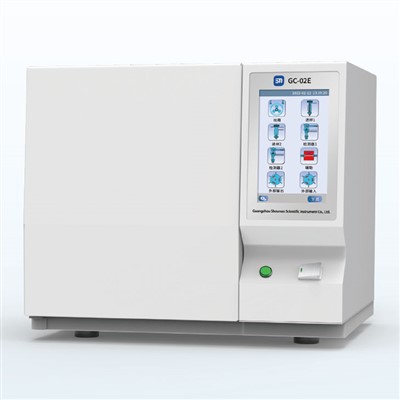
Gas - phase analysis is indeed the most well - known application of GC Analyzers. In industries such as environmental monitoring, petrochemical, and food and beverage, GC Analyzers are widely used to analyze gases. For example, in environmental monitoring, they can detect and quantify pollutants in the air, such as volatile organic compounds (VOCs). In the petrochemical industry, GC Analyzers are used to analyze the composition of natural gas, gasoline, and other petroleum products. The GC - 02E Gas Chromatograph is one of our products that excels in gas - phase analysis, with high sensitivity and accuracy in detecting various gaseous components.
Beyond Gas - Phase Analysis: Liquid and Solid Samples
Contrary to the common perception, GC Analyzers are not limited to gas - phase analysis. They can also be used to analyze liquid and solid samples, with some appropriate sample preparation techniques.
Liquid Samples
Many liquid samples can be analyzed using a GC Analyzer. For instance, in the pharmaceutical industry, GC Analyzers are used to analyze the purity of drugs and to detect impurities in liquid formulations. The sample is typically injected into the GC in its liquid form, but it is vaporized in the injector before entering the column. Our GC Analyzer is equipped with advanced injection systems that can handle a wide range of liquid samples, ensuring accurate and reproducible results.
Another area where GC Analyzers are used for liquid sample analysis is in the flavor and fragrance industry. Liquid extracts from natural sources or synthetic flavor compounds can be analyzed to determine their chemical composition. This helps in quality control, product development, and ensuring compliance with regulatory standards.
Solid Samples
Analyzing solid samples with a GC Analyzer requires more complex sample preparation methods. One common approach is thermal desorption. In thermal desorption, the solid sample is heated in a special device, and the volatile compounds are released as gases. These gases are then transferred to the GC for analysis. This technique is widely used in forensic science, for example, to analyze trace amounts of volatile substances on clothing or other objects.


Another method for analyzing solid samples is pyrolysis - gas chromatography. In pyrolysis, the solid sample is heated to a very high temperature in the absence of oxygen, causing it to break down into smaller volatile fragments. These fragments are then analyzed by the GC. This technique is useful in polymer analysis, where it can provide information about the structure and composition of polymers. Our GC - 05E Gas Chromatograph is suitable for such applications, with its high - temperature capabilities and advanced data analysis software.
Advantages of Using GC Analyzers for Non - Gas - Phase Analysis
There are several advantages to using GC Analyzers for non - gas - phase analysis. Firstly, GC Analyzers offer high sensitivity and selectivity. They can detect trace amounts of components in a sample, even in complex matrices. This is crucial in many industries, such as pharmaceuticals and environmental monitoring, where detecting low - level impurities or pollutants is essential.
Secondly, GC Analyzers provide rapid analysis. The separation and detection process can be completed within a relatively short time, allowing for high - throughput analysis. This is beneficial in industries where large numbers of samples need to be analyzed quickly, such as in quality control laboratories.
Finally, GC Analyzers are highly reproducible. Once the analysis conditions are optimized, the results obtained from different runs are consistent, providing reliable data for decision - making.
Challenges and Solutions in Non - Gas - Phase Analysis
While GC Analyzers can be used for non - gas - phase analysis, there are some challenges associated with it. One of the main challenges is sample preparation. As mentioned earlier, liquid and solid samples require specific preparation techniques, which can be time - consuming and complex. To address this issue, we offer comprehensive training and support to our customers, helping them choose the most appropriate sample preparation method for their specific samples.
Another challenge is the potential for contamination. When analyzing non - gas - phase samples, there is a higher risk of introducing contaminants into the GC system. We have developed advanced cleaning and maintenance procedures to minimize this risk and ensure the long - term performance of our GC Analyzers.
Conclusion
In conclusion, a GC Analyzer is not limited to gas - phase analysis. It can be used to analyze liquid and solid samples with the right sample preparation techniques. The diverse applications of GC Analyzers make them a versatile tool in many industries, from environmental monitoring to pharmaceuticals and forensics.
If you are interested in learning more about our GC Analyzers and how they can be used for your specific analysis needs, whether it is gas - phase, liquid, or solid sample analysis, we invite you to contact us for a detailed discussion. Our team of experts is ready to assist you in choosing the most suitable instrument and providing you with the necessary support for successful analysis.
References
- Snyder, L. R., Kirkland, J. J., & Glajch, J. L. (1997). Practical HPLC method development. John Wiley & Sons.
- McMaster, M. C. (2008). Gas chromatography: A practical approach. Royal Society of Chemistry.
- Harris, D. C. (2010). Quantitative chemical analysis. W. H. Freeman.