The external standard method is a widely used quantitative analysis technique in gas chromatography (GC). As a gas chromatograph supplier, I am well - versed in the principles and applications of this method. In this blog, I will guide you through the process of using the external standard method in gas chromatography, from sample preparation to data analysis.
Understanding the External Standard Method
The external standard method is based on the principle that the peak area or peak height of a compound in a chromatogram is proportional to its concentration in the sample. To use this method, a series of standard solutions with known concentrations of the target compound are prepared. These standards are then injected into the gas chromatograph, and the corresponding peak areas or heights are measured. A calibration curve is constructed by plotting the peak areas or heights against the known concentrations of the standards. Once the calibration curve is established, the concentration of the target compound in an unknown sample can be determined by measuring its peak area or height and referring to the calibration curve.
Step 1: Sample and Standard Preparation
- Selecting the Standard Compounds: Choose pure standard compounds that are representative of the target analytes. The purity of the standards should be as high as possible to ensure accurate results. For example, if you are analyzing volatile organic compounds (VOCs), you can obtain high - purity VOC standards from reliable suppliers.
- Preparing Standard Solutions: Prepare a series of standard solutions with different concentrations. This can be done by diluting a stock solution of the standard compound with an appropriate solvent. For instance, if you are using a non - polar solvent like hexane, make sure the standard compound is soluble in it. The concentrations of the standard solutions should cover the expected concentration range of the target compound in the unknown samples.
- Sample Preparation: The sample preparation process depends on the nature of the sample. For liquid samples, they can be directly injected into the gas chromatograph after appropriate dilution if necessary. For solid samples, they may need to be extracted with a suitable solvent before injection. For example, if you are analyzing a soil sample for pesticides, you can extract the pesticides with an organic solvent like acetone.
Step 2: Instrument Setup
- Column Selection: Choose an appropriate column for the separation of the target compounds. The column should have good selectivity and resolution for the analytes of interest. For example, a capillary column with a specific stationary phase can be selected based on the polarity of the target compounds. If you are analyzing non - polar compounds, a non - polar column like a DB - 1 or HP - 5 column may be suitable.
- Carrier Gas: Select a suitable carrier gas, such as helium or nitrogen. The flow rate of the carrier gas should be optimized to ensure good separation and reproducibility. The flow rate can be adjusted according to the column dimensions and the type of analytes.
- Temperature Program: Set the temperature program for the gas chromatograph. The initial temperature, ramp rate, and final temperature should be optimized to achieve good separation of the compounds. For example, for a complex mixture of compounds with different boiling points, a temperature gradient can be used to elute the compounds in a reasonable time.
Step 3: Injecting the Standards
- Injection Volume: Determine the appropriate injection volume for the standards. The injection volume should be consistent for all injections to ensure accurate results. A common injection volume for gas chromatography is in the range of 0.1 - 10 μL.
- Injection Technique: Use a proper injection technique, such as split or splitless injection. Split injection is suitable for samples with high concentrations, while splitless injection is more appropriate for samples with low concentrations.
- Running the Standards: Inject each standard solution into the gas chromatograph and record the chromatograms. Make sure to run each standard at least three times to ensure reproducibility. Measure the peak areas or heights of the target compound in each chromatogram.
Step 4: Constructing the Calibration Curve
- Data Analysis: Use the peak areas or heights of the standards and their corresponding known concentrations to construct a calibration curve. You can use software provided with the gas chromatograph or other data analysis software to perform linear regression. The calibration curve should have a good linear relationship, usually with a correlation coefficient (R²) close to 1.
- Equation of the Calibration Curve: Once the calibration curve is constructed, obtain the equation of the line in the form of y = mx + b, where y is the peak area or height, x is the concentration, m is the slope, and b is the intercept.
Step 5: Analyzing the Unknown Samples
- Injecting the Unknown Samples: Inject the unknown samples into the gas chromatograph using the same injection volume and technique as for the standards.
- Measuring the Peak Areas or Heights: Measure the peak areas or heights of the target compound in the chromatograms of the unknown samples.
- Determining the Concentration: Use the equation of the calibration curve to calculate the concentration of the target compound in the unknown samples. Substitute the measured peak area or height into the equation and solve for the concentration.
Step 6: Quality Control
- Repeatability: To ensure the reliability of the results, run quality control samples at regular intervals. These samples should have known concentrations and be analyzed in the same way as the unknown samples. The results of the quality control samples should fall within an acceptable range.
- Recovery Tests: Perform recovery tests by spiking known amounts of the target compound into the samples. Calculate the recovery rate, which should be close to 100%. If the recovery rate is outside the acceptable range, there may be issues with the sample preparation or the analysis method.
Our Gas Chromatograph Products
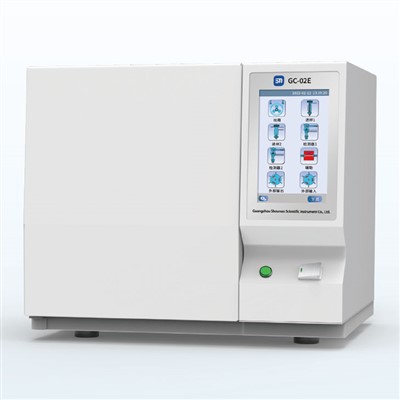
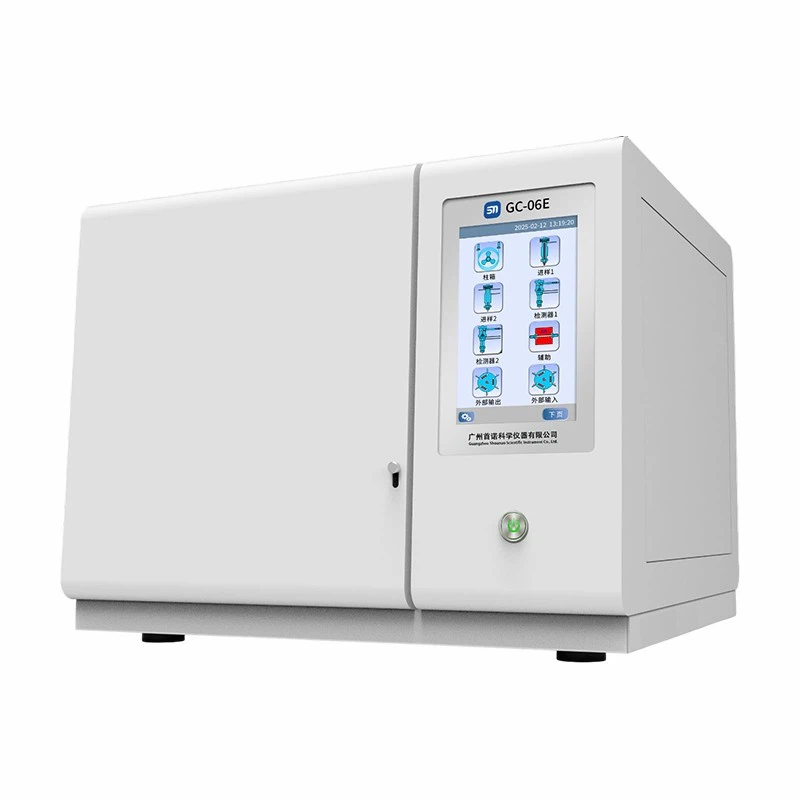
As a gas chromatograph supplier, we offer a wide range of Chromatography Equipment to meet your analytical needs. Our GC - 06E Gas Chromatograph is a high - performance instrument with advanced features such as precise temperature control and high - sensitivity detectors. It is suitable for a variety of applications, including environmental analysis, food safety, and pharmaceutical analysis.
Our GC Analyzer is another excellent product that provides accurate and reliable results. It is easy to operate and maintain, making it a popular choice among users.
Contact Us for Purchase
If you are interested in our gas chromatograph products and would like to learn more about how to use the external standard method in combination with our instruments, or if you have any other questions regarding gas chromatography analysis, please feel free to contact us for a purchase consultation. Our team of experts is ready to assist you in finding the most suitable solution for your analytical needs.

References
- McNair, H. M., & Miller, J. M. (1997). Basic Gas Chromatography. Wiley - Interscience.
- Poole, C. F. (2003). The Essence of Chromatography. Elsevier.