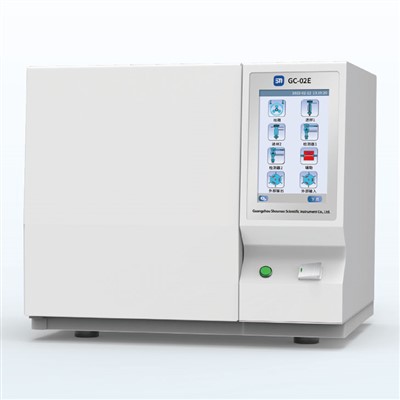
In the field of food safety and quality control, analytical techniques play a crucial role. One such powerful tool is the Gas Chromatography (GC) Machine. As a supplier of GC Machines, I often encounter inquiries about whether these machines can be effectively used for food analysis. In this blog, we will explore the capabilities of GC Machines in the context of food analysis, delving into the principles, applications, and benefits.
Understanding Gas Chromatography
Gas Chromatography is a separation technique that is used to analyze volatile compounds. The basic principle of Gas Chromatography involves injecting a sample into a heated injector, where it is vaporized. The vaporized sample is then carried by an inert gas (the mobile phase) through a column (the stationary phase). Different components of the sample interact differently with the stationary phase, causing them to separate as they travel through the column. These separated components are then detected at the end of the column, and the resulting data is used to identify and quantify the compounds present in the sample.
Why Use GC Machines for Food Analysis?
There are several reasons why GC Machines are well - suited for food analysis. Firstly, food products often contain a wide range of volatile and semi - volatile compounds that contribute to their flavor, aroma, and quality. GC Machines can effectively separate and analyze these compounds, providing valuable information about the composition of the food.
Secondly, food safety is a major concern. GC Machines can be used to detect contaminants such as pesticides, herbicides, and environmental pollutants in food. These contaminants can have serious health implications, and early detection is essential for ensuring the safety of the food supply.
Thirdly, GC Machines can be used for quality control in the food industry. For example, they can be used to monitor the consistency of flavor and aroma in food products during the manufacturing process. By analyzing the volatile compounds in different batches of food, manufacturers can ensure that their products meet the desired quality standards.
Applications of GC Machines in Food Analysis
Flavor and Aroma Analysis
Flavor and aroma are key factors in determining the acceptability of food products. GC Machines, often coupled with mass spectrometry (GC - MS), are widely used to analyze the volatile compounds responsible for flavor and aroma. For example, in the analysis of coffee, GC - MS can be used to identify and quantify the numerous volatile compounds that contribute to its characteristic flavor and aroma. These compounds include aldehydes, ketones, esters, and terpenes. By understanding the composition of these volatile compounds, coffee producers can optimize the roasting process to enhance the flavor and aroma of their coffee.
Pesticide and Herbicide Residue Analysis
Pesticides and herbicides are commonly used in agriculture to protect crops from pests and weeds. However, residues of these chemicals can remain in the food products. GC Machines can be used to detect and quantify these residues at very low levels. For example, in the analysis of fruits and vegetables, GC - MS can be used to detect the presence of organophosphorus, organochlorine, and pyrethroid pesticides. This information is crucial for ensuring that the food products comply with the maximum residue limits set by regulatory authorities.
Fatty Acid Analysis
Fats and oils are important components of food products, and their fatty acid composition can have a significant impact on the nutritional value and stability of the food. GC Machines can be used to analyze the fatty acid composition of fats and oils. By separating and quantifying the different fatty acids, food manufacturers can make informed decisions about the formulation of their products. For example, they can adjust the fatty acid composition to reduce the saturated fat content and increase the unsaturated fat content, which is beneficial for health.
Alcohol Analysis
In the beverage industry, especially in the production of alcoholic beverages such as wine, beer, and spirits, GC Machines are used to analyze the alcohol content and other volatile compounds. For example, in wine analysis, GC can be used to measure the ethanol content, as well as the levels of other volatile compounds such as esters, which contribute to the aroma and flavor of the wine. This information is important for quality control and for ensuring that the wine meets the regulatory requirements.
Advantages of Our GC Machines for Food Analysis
High Sensitivity
Our Gas Chromatography System is designed to have high sensitivity, allowing for the detection of trace amounts of compounds in food samples. This is particularly important in the detection of contaminants and in the analysis of flavor and aroma compounds, which are often present in very low concentrations.


Wide Range of Column Options
We offer a wide range of columns for our GC Machines, which can be selected based on the specific requirements of the food analysis. Different columns have different stationary phases, which can provide different separation characteristics. For example, a polar column may be more suitable for the analysis of polar compounds, while a non - polar column may be better for the analysis of non - polar compounds.
User - Friendly Interface
Our GC Machines are equipped with a user - friendly interface that makes it easy for operators to set up and run the analysis. The interface provides clear instructions and allows for easy data acquisition and analysis. This reduces the training time required for operators and increases the efficiency of the analysis process.
Compatibility with Other Analytical Techniques
Our GC Machines can be easily coupled with other analytical techniques such as mass spectrometry (GC - MS) and flame ionization detection (GC - FID). This allows for more comprehensive analysis of food samples, providing a more detailed understanding of the composition of the food.
Considerations for Using GC Machines in Food Analysis
While GC Machines are powerful tools for food analysis, there are some considerations that need to be taken into account. Firstly, sample preparation is crucial. Food samples often need to be pre - treated before analysis to extract the target compounds and remove any interfering substances. The choice of sample preparation method can have a significant impact on the accuracy and precision of the analysis.
Secondly, the interpretation of the analytical results requires expertise. The data obtained from GC analysis can be complex, and it is important to have a trained analyst who can correctly interpret the results.
Finally, the cost of GC Machines and the associated consumables can be relatively high. However, the benefits of using GC Machines for food analysis, such as improved food safety and quality control, often outweigh the costs in the long run.
Conclusion
In conclusion, GC Machines are highly versatile and powerful tools for food analysis. They can be used for a wide range of applications, including flavor and aroma analysis, pesticide and herbicide residue analysis, fatty acid analysis, and alcohol analysis. As a supplier of Chromatography Equipment, we are committed to providing high - quality GC Machines that meet the needs of the food industry.
If you are interested in using GC Machines for food analysis, we encourage you to contact us for further information. Our team of experts can provide you with detailed information about our products, as well as guidance on sample preparation and data interpretation. We look forward to the opportunity to discuss your specific requirements and help you find the best solution for your food analysis needs.
References
- Bartle, K. D., & Myers, P. A. (1997). Gas Chromatography: Fundamentals and Recent Developments. Royal Society of Chemistry.
- Marriott, P. J., & Shellie, R. A. (2010). High - Resolution Gas Chromatography and Mass Spectrometry: A Practical Guide. Academic Press.
- Watson, J. T., & Sparkman, O. D. (2007). Introduction to Mass Spectrometry: Instrumentation, Applications, and Strategies for Data Interpretation. Wiley - Interscience.