

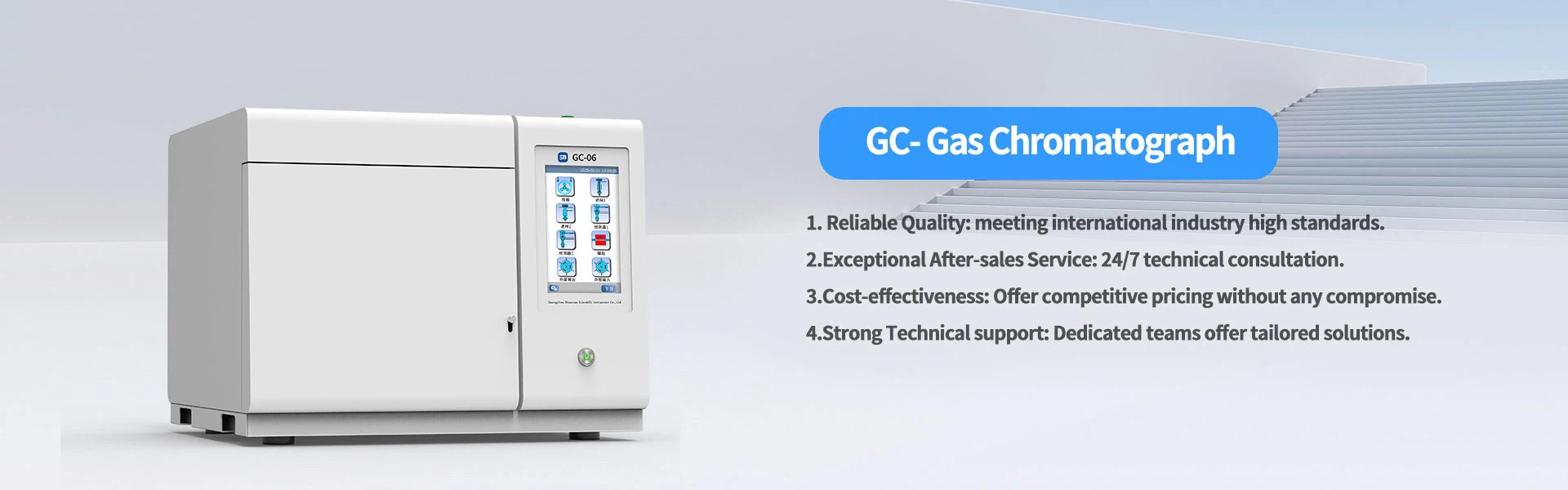
Gas chromatograph is an instrument that uses chromatographic separation and detection techniques to qualitatively and quantitatively analyze complex mixtures of multiple components. It uses gas as the mobile phase and column chromatography technology to separate the various components of the sample gas in the chromatographic column. Then, the chromatographic peaks of each component are converted into electrical signals by a detector, which are then converted into voltage or current output by an electronic amplifier, thereby achieving automatic qualitative and quantitative analysis of the substance being tested.
The core function of gas chromatography is to separate complex chemical mixtures into individual components and perform qualitative and quantitative analysis of each component through detectors. It is like a 'chemical scanner' that can quickly identify the various components in a mixture. The working principle of gas chromatography is based on the different distribution coefficients of different substances in the stationary and mobile phases. When multiple components of the analyte are pushed into the chromatographic column, they will run at different speeds in the column due to their different distribution coefficients, and eventually leave the column in sequence to enter the detector, completing a comprehensive analysis of the analyte.
Gas chromatography can be divided into gas-solid chromatography and gas-liquid chromatography. Gas solid chromatography uses solid substances as stationary phases, such as activated carbon, silica gel, etc; gas liquid chromatography, on the other hand, uses a liquid as the stationary phase, usually by coating an inert material with a layer of liquid, such as squalane, for the separation and determination of impurities in a mixture.


