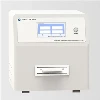
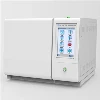
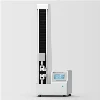
The advantages of a water vapor permeability meter mainly include the following aspects:
High precision measurement: The water vapor permeability meter can provide accurate data to ensure the reliability of test results. For example, the infrared moisture permeability meter can accurately capture small changes in water vapor flow rate through the principle of infrared sensor testing, meeting strict detection requirements.
Multiple testing methods: Modern water vapor permeability meters use various testing methods, such as electrolytic sensor method, infrared absorption method, and humidity sensor method. These methods each have their own advantages and disadvantages, and are suitable for different application scenarios. Users can choose the appropriate method according to their specific needs.
Intelligent operation: Many water vapor permeability meters have intelligent operation functions, with built-in software that can automatically complete data acquisition, processing, and report generation, simplifying user operation processes. In addition, the multi-channel design supports testing multiple samples simultaneously, improving work efficiency and saving costs.
Wide application areas: The water vapor permeability meter has a wide range of applications in multiple fields, including hydraulic engineering, environmental engineering, civil engineering, packaging materials, electronic devices, etc. For example, in hydraulic engineering, it is used to evaluate the anti-seepage performance of geomembranes; in packaging materials, it is used to prevent the contents from getting damp and deteriorating.
Mar 09, 2025
Leave a message
Advantages of Water Vapor Transmittance Meter
Send Inquiry