

What is the thermal conductivity detector in a Gas Chromatography System?
May 15, 2025
Hey there! As a supplier of Gas Chromatography Systems, I often get asked about different components in these systems. One of the most commonly inquired parts is the Thermal Conductivity Detector (TCD) in a Gas Chromatography System. So, let's dive right in and chat about what it is and why it's so important.
What's a Thermal Conductivity Detector?
A Thermal Conductivity Detector, or TCD for short, is a key part of a Gas Chromatography System. It's a type of detector that measures the thermal conductivity of a gas. But what does that mean? Well, thermal conductivity is basically how well a gas can transfer heat. Different gases have different thermal conductivities, and the TCD uses this property to detect and analyze them.
Here's how it works in a nutshell. Inside the TCD, there are heated filaments. When a sample gas mixed with a carrier gas flows over these filaments, the heat transfer from the filaments changes depending on the thermal conductivity of the sample gas. If the sample gas has a different thermal conductivity than the carrier gas, the temperature of the filaments will change. This change in temperature causes a change in the electrical resistance of the filaments, which can be measured and used to create a signal. This signal is then used to identify and quantify the components in the sample gas.
Why is the TCD so Useful?
One of the biggest advantages of the TCD is its universality. It can detect almost any compound that has a different thermal conductivity than the carrier gas. This makes it great for analyzing a wide variety of samples, from simple gas mixtures to more complex organic compounds. Whether you're working in a research lab, an environmental testing facility, or a quality control department in a chemical plant, the TCD can be a valuable tool.
Another plus is its non - destructive nature. Unlike some other detectors in Gas Chromatography Systems, the TCD doesn't destroy the sample during the analysis. This means you can collect the sample after the analysis for further testing if needed.
The TCD is also relatively easy to use and maintain. It doesn't require any special reagents or radioactive materials, which makes it a cost - effective option in the long run. You don't have to worry about dealing with hazardous substances or complex calibration procedures.
How Does the TCD Fit into the Gas Chromatography System?
In a Gas Chromatography System, the TCD is usually placed at the end of the separation column. First, the sample is injected into the system and carried through the column by the carrier gas. As the sample moves through the column, different components in the sample separate based on their interactions with the stationary phase in the column.
Once the separated components reach the TCD, the detector measures their thermal conductivities and generates signals. These signals are then sent to a data system, which creates a chromatogram. The chromatogram is a graph that shows the peaks corresponding to different components in the sample. By analyzing the peaks, such as their height and area, you can determine the identity and quantity of the components in the sample.
Comparing the TCD with Other Detectors
There are several other types of detectors used in Gas Chromatography Systems, like the Flame Ionization Detector (FID), Electron Capture Detector (ECD), and Mass Spectrometer (MS). Each of these detectors has its own strengths and weaknesses.
Compared to the FID, the TCD is more universal. The FID is mainly used for detecting organic compounds that can be ionized in a flame, while the TCD can detect a wider range of compounds, including inorganic gases. However, the FID is more sensitive to organic compounds than the TCD.
The ECD is very sensitive to compounds with electronegative atoms, such as halogens. But it's not as universal as the TCD. The TCD can detect both electronegative and non - electronegative compounds.
The Mass Spectrometer is a very powerful detector that can provide detailed information about the molecular structure of the components in the sample. But it's also more expensive and complex to operate compared to the TCD.
Applications of the TCD
The TCD has a wide range of applications in different industries. In the environmental field, it can be used to analyze air pollutants, such as carbon monoxide, carbon dioxide, and nitrogen oxides. By accurately measuring the levels of these pollutants, we can monitor air quality and take appropriate measures to protect the environment.
In the food and beverage industry, the TCD can be used to analyze the composition of gases in packaging. For example, it can detect the levels of oxygen and carbon dioxide in food packages to ensure the freshness and quality of the products.

In the petrochemical industry, the TCD is used to analyze the components of natural gas, refinery gases, and other hydrocarbon mixtures. This helps in quality control, process optimization, and safety monitoring.
Our Gas Chromatography Systems with TCD
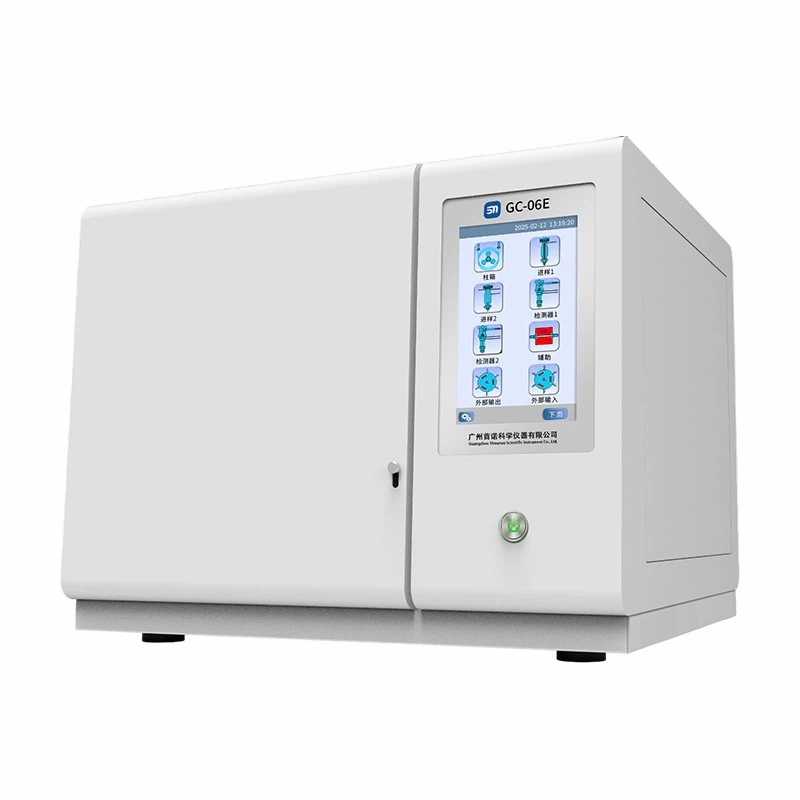
At our company, we offer high - quality Gas Chromatography Systems equipped with state - of - the - art TCDs. Our GC Analyzer is designed to provide accurate and reliable results. It has a user - friendly interface, making it easy for operators to set up and run the analysis.
Our GC Machine is built with advanced technology to ensure high performance and stability. The TCD in our GC Machine is carefully calibrated to provide precise measurements.
We also have a wide range of Chromatography Equipment that can be customized to meet your specific needs. Whether you're looking for a system for small - scale research or large - scale industrial production, we've got you covered.
Wrapping Up and Reaching Out
So, that's a brief overview of what the Thermal Conductivity Detector is in a Gas Chromatography System. It's a versatile and useful detector that plays a crucial role in gas analysis. If you're in the market for a Gas Chromatography System with a reliable TCD, we'd love to have a chat with you. Whether you have questions about our products, need more information, or want to discuss a potential purchase, don't hesitate to reach out. We're here to help you find the perfect solution for your gas analysis needs.
References
- McMaster, M. C. (2008). Gas Chromatography Basics. Wiley - Interscience.
- Harris, D. C. (2016). Quantitative Chemical Analysis. W. H. Freeman and Company.
- Skoog, D. A., West, D. M., Holler, F. J., & Crouch, S. R. (2014). Fundamentals of Analytical Chemistry. Cengage Learning.