

As a supplier of heat seal testers, I often get asked about the role of pressure sensors in these machines. It's a crucial component that many might overlook, but it plays a huge part in ensuring the quality and reliability of the heat sealing process. So, let's dive into what exactly a pressure sensor does in a heat seal tester.
Understanding the Basics of Heat Sealing
Before we get into the pressure sensor, let's quickly go over how heat sealing works. Heat sealing is a process where two or more layers of material are joined together by applying heat and pressure. This is commonly used in packaging industries to seal products in plastic bags, pouches, and containers. A heat seal tester is a device that simulates this process in a controlled environment to test the strength and integrity of the seal.
The Role of the Pressure Sensor
The pressure sensor in a heat seal tester is like the unsung hero. It's responsible for measuring and regulating the pressure applied during the sealing process. Here's a breakdown of its key functions:
1. Precise Pressure Measurement
One of the primary functions of the pressure sensor is to accurately measure the pressure being applied to the sealing area. This measurement is crucial because the right amount of pressure is needed to create a strong and consistent seal. Too little pressure, and the seal might not hold; too much, and it could damage the material or cause it to leak.
The pressure sensor provides real - time data on the pressure, allowing operators to monitor and adjust it as needed. For example, different materials require different pressure levels. A thin plastic film may need a lower pressure compared to a thicker laminate. With the pressure sensor, we can ensure that the pressure is just right for the specific material being tested.
2. Pressure Control and Regulation
Once the pressure is measured, the sensor works in tandem with the control system of the heat seal tester to regulate the pressure. Most modern heat seal testers, like our Heat Seal Tester, are equipped with advanced control systems that can automatically adjust the pressure based on the pre - set parameters.
The pressure sensor sends signals to the control system, which then adjusts the pressure - applying mechanism, such as a pneumatic cylinder or a hydraulic system. This ensures that the pressure remains constant throughout the sealing process, resulting in consistent and reliable seals.
3. Quality Assurance
In the packaging industry, quality is of the utmost importance. A faulty seal can lead to product spoilage, leakage, and customer dissatisfaction. The pressure sensor plays a vital role in quality assurance by ensuring that the seals meet the required standards.
By providing accurate pressure measurements, the sensor helps in detecting any variations or inconsistencies in the sealing process. If the pressure deviates from the set values, it could indicate a problem with the machine or the material. This allows operators to take corrective action immediately, reducing the risk of producing defective seals.
4. Compliance with Industry Standards
Different industries have specific standards and regulations regarding heat sealing. For example, the food industry has strict requirements for package seals to ensure food safety. The pressure sensor helps heat seal testers comply with these standards by providing accurate and traceable pressure data.
The data collected by the pressure sensor can be recorded and used for documentation purposes. This documentation is essential for audits and inspections, as it shows that the sealing process meets the required quality and safety standards.
Impact on Heat Seal Tester Performance
The performance of a heat seal tester is directly influenced by the accuracy and reliability of the pressure sensor. A high - quality pressure sensor can significantly enhance the overall performance of the machine in the following ways:

1. Consistency
Consistency is key in heat sealing. A reliable pressure sensor ensures that each seal is made with the same amount of pressure, resulting in consistent seal strength and quality. This is especially important when testing large batches of packaging materials.
2. Efficiency
With accurate pressure measurement and control, the heat seal tester can operate more efficiently. The machine can quickly reach and maintain the desired pressure, reducing the time required for each test. This not only increases productivity but also saves energy. Our Energy - Efficient Sealer Machine is designed to optimize energy consumption while maintaining high - quality sealing performance, thanks in part to its advanced pressure sensor.
3. Durability
A good pressure sensor is built to last. It can withstand the harsh conditions of the heat sealing environment, such as high temperatures and repeated pressure cycles. This durability ensures that the heat seal tester can operate reliably for a long time, reducing maintenance costs and downtime.
Real - World Applications
The pressure sensor in a heat seal tester has numerous real - world applications. Here are some examples:
1. Food Packaging
In the food industry, heat sealing is used to package a wide range of products, from snacks to fresh produce. The pressure sensor ensures that the seals are strong enough to prevent contamination and spoilage. For example, in the packaging of vacuum - sealed meat, the right pressure is needed to create an airtight seal that keeps the meat fresh for longer.
2. Pharmaceutical Packaging
Pharmaceutical products require high - quality seals to maintain their efficacy and safety. The pressure sensor in a heat seal tester helps in ensuring that the packaging seals meet the strict requirements of the pharmaceutical industry. This is crucial for protecting the integrity of the drugs and preventing any leakage or contamination.
3. Electronics Packaging
Electronics are often packaged in protective plastic bags or containers to prevent damage from moisture, dust, and static electricity. The pressure sensor in a heat seal tester ensures that the seals are tight enough to provide adequate protection for the electronic components.
Choosing the Right Heat Seal Tester with a Good Pressure Sensor
When choosing a heat seal tester, it's important to consider the quality of the pressure sensor. Here are some factors to look for:
1. Accuracy
The pressure sensor should be able to provide accurate measurements within a narrow range. This ensures that the sealing process is precise and consistent.
2. Range
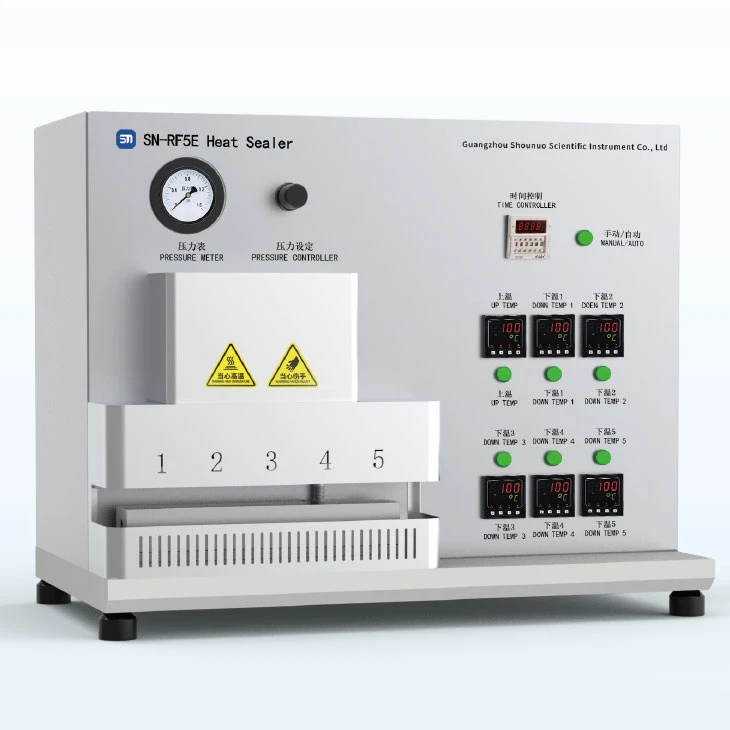
The sensor should have a wide enough pressure range to accommodate different types of materials and sealing requirements. Our SN - RF5E 5 - Point Heat Sealer is designed with a pressure sensor that offers a flexible pressure range, making it suitable for a variety of applications.
3. Compatibility
The pressure sensor should be compatible with the control system of the heat seal tester. This ensures seamless communication and effective pressure regulation.
Conclusion
In conclusion, the pressure sensor in a heat seal tester is an essential component that plays a vital role in the heat sealing process. It provides accurate pressure measurement, control, and regulation, ensuring consistent and reliable seals. The use of a high - quality pressure sensor enhances the performance of the heat seal tester, making it more efficient, durable, and compliant with industry standards.
If you're in the market for a heat seal tester, or if you have any questions about the role of the pressure sensor, don't hesitate to reach out. We're here to help you find the right solution for your heat sealing needs. Contact us to start discussing your requirements and let's work together to ensure the quality of your packaging seals.
References
- Packaging Machinery Manufacturers Institute. (2020). Heat Sealing Technology Handbook.
- ASTM International. (2019). Standard Test Methods for Seal Strength of Flexible Barrier Materials.


