

The sealing width of a heat seal tester is a crucial parameter that significantly influences the quality and effectiveness of heat sealing processes. As a leading heat seal tester supplier, we understand the importance of this factor and are committed to providing in - depth insights into this topic.
Understanding the Concept of Sealing Width
The sealing width refers to the width of the sealed area created by a heat seal tester on a packaging material. It is measured in millimeters or inches, depending on the regional standards and the preferences of the user. This width is determined by the design of the heat sealing jaws of the tester. Different applications require different sealing widths, and understanding these requirements is essential for achieving optimal sealing results.
Factors Affecting Sealing Width
Packaging Material
The type of packaging material plays a vital role in determining the appropriate sealing width. For example, flexible plastic films such as polyethylene (PE) and polypropylene (PP) may require different sealing widths compared to rigid materials like aluminum foil or cardboard. Flexible films often need a narrower sealing width to maintain their flexibility and prevent excessive heat damage. In contrast, rigid materials may require a wider sealing width to ensure a strong and reliable seal.
Product Requirements
The nature of the product being packaged also influences the sealing width. For products that are sensitive to oxygen, moisture, or light, a wider sealing width may be necessary to provide a better barrier. For instance, food products that need to be preserved for an extended period may require a wider seal to prevent spoilage. On the other hand, products that are less sensitive to environmental factors may allow for a narrower sealing width.
Sealing Equipment
The design and capabilities of the heat seal tester itself impact the sealing width. Some heat seal testers are designed to offer adjustable sealing widths, allowing users to customize the seal according to their specific needs. For example, our High - Speed Heat Sealer is equipped with advanced technology that enables precise control of the sealing width, providing users with greater flexibility in their sealing operations.
Importance of Appropriate Sealing Width
Seal Strength
An appropriate sealing width is crucial for ensuring adequate seal strength. A too - narrow seal may not provide enough surface area for the heat - induced molecular bonding between the packaging materials, resulting in a weak seal that can easily break during handling or storage. Conversely, an overly wide seal may cause excessive heat transfer, leading to material degradation and a reduction in seal quality.
Product Protection
The sealing width directly affects the protection of the packaged product. A proper seal width can prevent the ingress of contaminants, such as air, moisture, and microorganisms, which can compromise the quality and safety of the product. For example, in the pharmaceutical industry, a precise sealing width is essential to maintain the integrity of drugs and prevent contamination.
Cost - Efficiency
Selecting the right sealing width can also contribute to cost - efficiency. A narrower seal width may require less packaging material, reducing material costs. Additionally, it can lead to faster sealing cycles, increasing production efficiency and reducing energy consumption.

Measuring and Controlling Sealing Width
Measuring Tools
To ensure the accuracy of the sealing width, various measuring tools can be used. Calipers are commonly used to measure the width of the seal directly. Digital calipers provide high - precision measurements, allowing for accurate assessment of the sealing width. Microscopes can also be used to examine the seal in more detail, especially for applications where a high level of precision is required.
Control Mechanisms
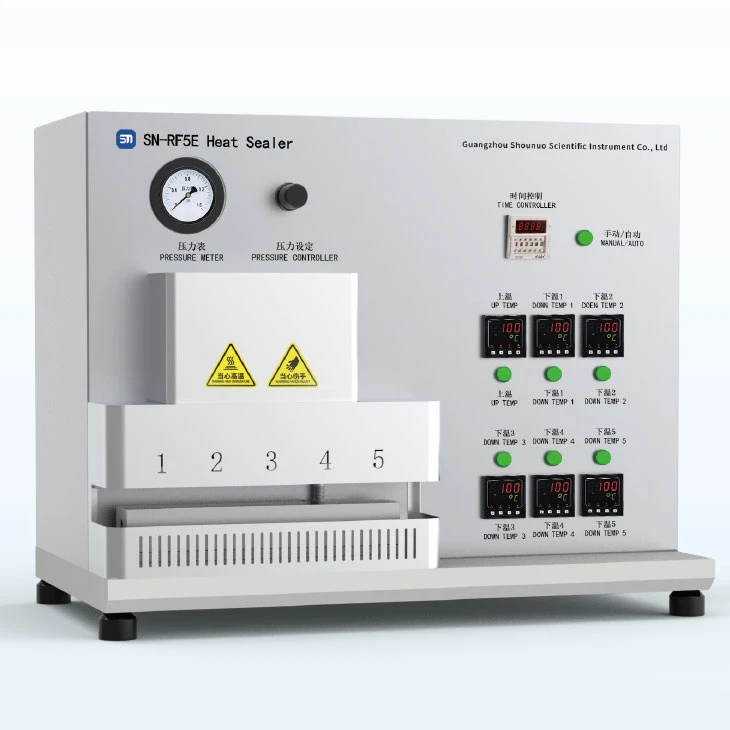
Modern heat seal testers are equipped with advanced control mechanisms to ensure consistent and accurate sealing widths. These mechanisms can include programmable settings that allow users to specify the desired sealing width. For example, our SN - RF5E 5 - Point Heat Sealer features a user - friendly interface that enables easy adjustment of the sealing width, ensuring reliable and repeatable sealing results.
Industry - Specific Considerations
Food Industry
In the food industry, the sealing width is critical for maintaining the freshness and safety of food products. A proper seal width can prevent the entry of oxygen and moisture, which can cause food spoilage. For example, in the packaging of fresh produce, a narrow but strong seal may be required to preserve the product's quality while minimizing the use of packaging material.
Medical Industry
In the medical industry, the sealing width must meet strict regulatory requirements. Medical devices and pharmaceutical products need to be sealed in a way that ensures sterility and product integrity. A wider sealing width may be necessary to provide a more reliable barrier against contaminants. Our SN - RFD1E Heat Sealer is designed to meet the high - standards of the medical industry, offering precise control of the sealing width for optimal product protection.
Conclusion
The sealing width of a heat seal tester is a complex yet essential parameter that requires careful consideration. As a heat seal tester supplier, we are dedicated to providing our customers with high - quality equipment that offers precise control of the sealing width. Whether you are in the food, medical, or any other industry, understanding the importance of the sealing width and selecting the right heat seal tester can significantly improve your packaging processes and product quality.
If you are interested in learning more about our heat seal testers or have specific requirements regarding sealing width, we encourage you to contact us for a detailed consultation. Our team of experts is ready to assist you in finding the most suitable solution for your needs.
References
- Packaging Machinery Manufacturers Institute (PMMI). (20XX). Handbook of Packaging Machinery.
- ASTM International. (20XX). Standards for Heat Sealing Testing.
- European Federation of Pharmaceutical Industries and Associations (EFPIA). (20XX). Guidelines for Pharmaceutical Packaging.


