

Hey there! As a supplier of Drop Ball Impact Testers, I've seen firsthand how the internal structure of a sample can really mess with the test results. So, I thought I'd share some insights on this topic, 'cause it's super important for anyone looking to get accurate data from these testers.
First off, let's talk about what a Drop Ball Impact Tester does. It's a piece of equipment that basically drops a ball onto a sample from a set height to measure how well the sample can withstand impact. This is crucial in industries like plastics, packaging, and automotive, where materials need to be tough enough to handle rough treatment.
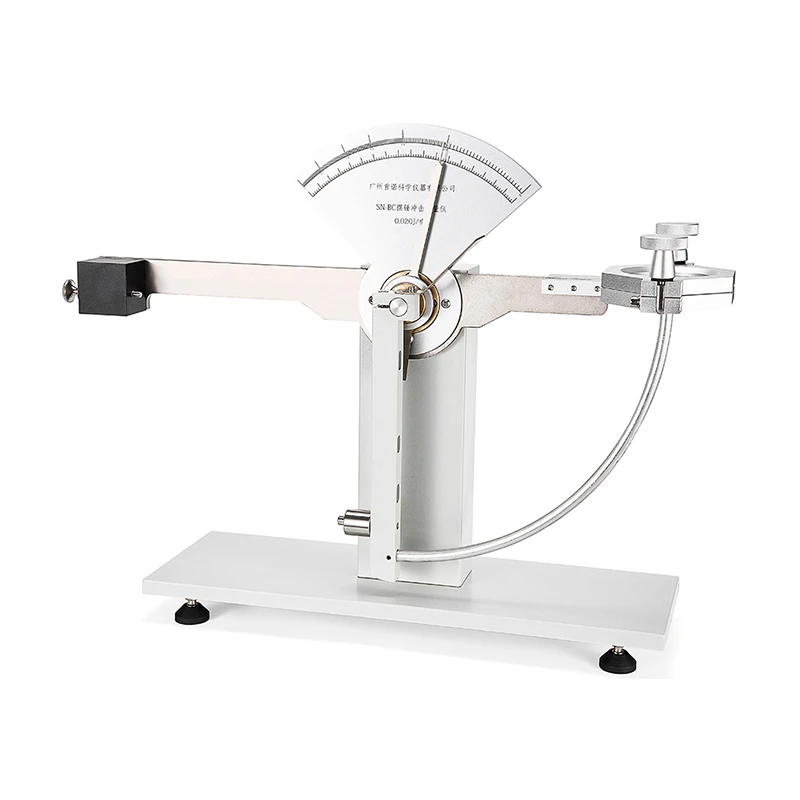

Now, the internal structure of a sample can have a huge influence on these test results. Think of it like a building. If the building's internal structure is weak, it's gonna crumble easily when hit by a strong force, right? The same goes for materials tested with a Drop Ball Impact Tester.
One of the key factors in a sample's internal structure is its density. A sample with a higher density is generally gonna be more resistant to impact. This is 'cause the molecules are packed closer together, making it harder for the ball to break through. For example, a solid piece of metal will usually do better in an impact test than a porous plastic foam. The dense metal can absorb and distribute the impact energy more effectively, while the foam might just collapse under the force of the ball.
Another important aspect is the presence of internal defects. Cracks, voids, or inclusions can act as weak points in the sample. When the ball hits the sample, these defects can cause stress concentrations, which can lead to premature failure. It's like having a weak link in a chain. Even if the rest of the chain is strong, that one weak link can cause the whole thing to break. So, if a sample has internal defects, the test results might show a lower impact resistance than a defect - free sample of the same material.
The orientation of the internal structure also matters. Some materials have a preferred orientation of their molecules or fibers. For instance, in a composite material, the fibers might be aligned in a certain direction. If the impact is applied parallel to the fiber orientation, the sample might be more resistant to impact compared to when the impact is applied perpendicular to the fibers. This is 'cause the fibers can better carry the load when they're in line with the direction of the impact.
Let's take a look at some real - world examples. In the packaging industry, companies use Free - Falling Dart Impact Tester to test the strength of plastic films. If the film has a non - uniform internal structure, maybe due to uneven cooling during the manufacturing process, it can lead to inconsistent test results. A film with a more uniform structure will give more reliable and reproducible results, which is essential for ensuring the quality of the packaging.
Similarly, in the automotive industry, components made from different materials are tested using Film Impact Test Equipment. The internal structure of these components can vary depending on the manufacturing method. For example, parts made by injection molding might have a different internal structure compared to those made by forging. These differences can significantly affect how the parts perform in impact tests, which is crucial for vehicle safety.
Now, as a Drop Ball Impact Tester supplier, we understand the importance of getting accurate results. That's why our testers are designed to be as precise as possible. But it's also up to the users to make sure they're testing samples that are representative of the real - world materials. If you're using samples with inconsistent internal structures, you're not gonna get reliable data.
So, how can you ensure that the internal structure of your samples is as consistent as possible? Well, proper manufacturing processes are key. For example, controlling the temperature and pressure during molding or extrusion can help create a more uniform internal structure. Also, quality control checks during production can help identify and eliminate samples with internal defects.
When it comes to choosing the right Drop Ball Impact Tester for your needs, you should consider the type of samples you'll be testing. If you're mainly testing thin films, a Film Falling Dart Impact Test Machine might be the best option. It's specifically designed to test the impact resistance of films accurately.
In conclusion, the internal structure of a sample has a significant influence on the test results of a Drop Ball Impact Tester. Density, internal defects, and orientation all play important roles in how a sample responds to impact. As a supplier, we're here to help you get the most accurate results possible. Whether you're in the packaging, automotive, or any other industry that needs impact testing, our testers can provide the data you need.
If you're interested in learning more about our Drop Ball Impact Testers or have any questions about how the internal structure of your samples might affect the test results, don't hesitate to reach out. We're always happy to have a chat and help you find the best solution for your testing needs.
References
- ASTM International. (Year). Standard test methods for impact resistance of flat, rigid plastic specimens by means of a falling dart (tup). ASTM D1709.
- ISO. (Year). Plastics - Determination of the impact resistance of thin - walled plastic containers by the free - falling dart method. ISO 7765.


