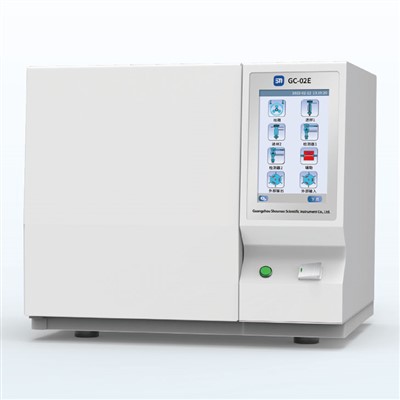
The drop ball impact test is a crucial method for evaluating the impact resistance of various materials, including plastics, ceramics, and glass. As a leading supplier of drop ball impact testers, we have encountered numerous inquiries regarding the influence of sample thickness on test results. In this blog post, we will delve into this topic, exploring the scientific principles and practical implications of sample thickness in drop ball impact testing.
The Basics of Drop Ball Impact Testing
Before discussing the influence of sample thickness, it is essential to understand the basic principles of drop ball impact testing. In this test, a ball with a specific mass and diameter is dropped from a predetermined height onto a sample. The impact energy is transferred from the ball to the sample, causing deformation or fracture. The test measures the ability of the sample to withstand the impact without failure.
The test results are typically expressed in terms of impact energy or impact strength, which is the energy required to break the sample. The impact energy is calculated based on the mass of the ball, the height of the drop, and the velocity of the ball at the moment of impact. The impact strength is the impact energy per unit area of the sample.
Influence of Sample Thickness on Impact Energy
One of the primary factors that affect the impact energy in drop ball impact testing is the sample thickness. In general, as the sample thickness increases, the impact energy required to break the sample also increases. This is because a thicker sample has more material to absorb the impact energy, and it can distribute the stress more evenly across its cross-section.
However, the relationship between sample thickness and impact energy is not always linear. At a certain thickness, the impact energy may reach a maximum value, and further increasing the thickness may not result in a significant increase in impact energy. This is because the sample may become too thick to deform or fracture under the impact, and the excess energy may be dissipated through other mechanisms, such as vibration or heat.
Influence of Sample Thickness on Impact Strength
In addition to impact energy, sample thickness also affects the impact strength of the material. Impact strength is a measure of the material's ability to resist fracture per unit area. As the sample thickness increases, the impact strength may decrease. This is because a thicker sample has a larger cross-sectional area, and the impact energy is distributed over a larger area, resulting in a lower stress concentration at the point of impact.
However, the relationship between sample thickness and impact strength also depends on the material properties and the testing conditions. For some materials, such as brittle materials, the impact strength may increase with increasing sample thickness up to a certain point, and then decrease. This is because a thicker sample can prevent the propagation of cracks, and it can provide more resistance to fracture.
Practical Implications for Material Testing
The influence of sample thickness on impact energy and impact strength has important practical implications for material testing. When selecting a sample thickness for drop ball impact testing, it is important to consider the material properties, the testing requirements, and the intended application of the material.
For materials that are used in thin applications, such as films or coatings, a thinner sample may be more appropriate for testing. This is because the impact behavior of thin materials may be different from that of thick materials, and a thinner sample can better simulate the real-world conditions. Our Film Impact Test Equipment is specifically designed for testing thin films and can provide accurate and reliable results.
On the other hand, for materials that are used in thick applications, such as structural components, a thicker sample may be required to ensure that the testing results are representative of the material's performance. Our SN-LQE Falling Ball Impact Tester and SN-LBE Falling Dart Impact Tester are suitable for testing a wide range of sample thicknesses and can provide precise and consistent results.
Conclusion
In conclusion, sample thickness has a significant influence on the test results of a drop ball impact tester. The impact energy required to break the sample generally increases with increasing sample thickness, but the relationship may not be linear. The impact strength may decrease with increasing sample thickness, depending on the material properties and the testing conditions.


When conducting drop ball impact testing, it is important to select the appropriate sample thickness based on the material properties, the testing requirements, and the intended application of the material. By understanding the influence of sample thickness on test results, you can ensure that the testing results are accurate and reliable, and that they provide valuable information for material selection and product design.
If you are interested in learning more about drop ball impact testing or our range of impact testers, please do not hesitate to contact us. Our team of experts is always ready to assist you with your testing needs and to provide you with the best solutions for your application. We look forward to the opportunity to work with you and to help you achieve your quality and performance goals.
References
- ASTM D1709 - Standard Test Methods for Impact Resistance of Plastic Film by the Free-Falling Dart Method
- ISO 7765 - Plastics - Film and sheeting - Determination of impact resistance by the free-falling dart method