Hey there! As a supplier of gas chromatographs, I often get asked about the flame ionization detector (FID) in a gas chromatograph. So, I thought I'd write this blog to give you a clear and easy - to - understand explanation of what it is, how it works, and why it's so important.
What is a Flame Ionization Detector?
The flame ionization detector, or FID for short, is one of the most commonly used detectors in gas chromatography. Gas chromatography is a technique used to separate and analyze compounds in a sample. The FID is like the "finishing touch" in this process, helping us accurately detect and quantify the various components that have been separated by the gas chromatograph.
Think of a gas chromatograph as a high - tech sorting machine. It takes a mixture of different chemicals and separates them based on how they interact with a stationary phase inside a column. Once these chemicals are separated, the FID comes into play to tell us how much of each chemical is present.
How Does It Work?
The basic principle behind the FID is pretty fascinating. It all starts with a flame. The detector has a small burner where hydrogen gas and air are mixed and ignited to create a hot flame. When the separated compounds from the gas chromatograph column are introduced into this flame, something amazing happens.
Most organic compounds, when burned in the flame, produce ions (charged particles). These ions are then collected by electrodes placed near the flame. The collection of these ions creates an electrical current, and the strength of this current is directly proportional to the amount of the compound that's being burned.
Let me break it down a bit more. The sample that has gone through the gas chromatograph column is carried by a carrier gas (usually helium or nitrogen) and enters the FID. As it hits the flame, the carbon - containing molecules in the sample are broken down. The carbon atoms react with oxygen in the flame to form positively charged ions and electrons. The electrodes in the FID attract these charged particles, and this movement of charges creates an electrical signal.
This electrical signal is then sent to a computer or a recorder. The computer can analyze the signal and create a chromatogram, which is a graph that shows the different peaks corresponding to each compound in the sample. The height or area of these peaks is used to determine the concentration of each compound.
Why Is the FID So Popular?
There are several reasons why the FID is a favorite among scientists and analysts using gas chromatographs.
High Sensitivity: The FID is extremely sensitive to organic compounds. It can detect even very small amounts of these compounds, making it ideal for applications where trace analysis is required. For example, in environmental monitoring, it can detect pollutants in the air or water at very low concentrations.
Wide Dynamic Range: It can measure a wide range of concentrations. Whether you're dealing with a sample that has a high concentration of a particular compound or a very low one, the FID can handle it. This makes it very versatile for different types of analyses.
Stability: The FID is known for its stability. Once it's set up and calibrated correctly, it can provide consistent and reliable results over a long period of time. This is crucial in industries where accurate and repeatable data is essential, such as in the pharmaceutical or food industries.
Simple Operation: Compared to some other detectors, the FID is relatively easy to operate. It doesn't require complex sample preparation or special handling, which makes it accessible to a wide range of users.
Applications of the FID in Gas Chromatography
The FID has a wide range of applications across different industries.
Environmental Analysis: As I mentioned earlier, it's used to detect and measure pollutants in the environment. This includes things like volatile organic compounds (VOCs) in the air, pesticides in water, and oil and grease in soil samples. By accurately measuring these pollutants, we can better understand their impact on the environment and take appropriate measures to control them.
Food and Beverage Industry: In the food industry, the FID is used to analyze the composition of food products. It can detect flavor compounds, additives, and contaminants in food and beverages. For example, it can be used to determine the alcohol content in wine or the presence of preservatives in packaged foods.
Pharmaceutical Industry: The FID plays a crucial role in the development and quality control of pharmaceutical products. It can be used to analyze the purity of drugs, detect impurities, and monitor the synthesis process. This ensures that the drugs are safe and effective for consumers.
Petrochemical Industry: In the petrochemical industry, the FID is used to analyze the composition of petroleum products. It can detect different hydrocarbons in gasoline, diesel, and other fuels, which is important for quality control and product development.
Our Gas Chromatographs with FID
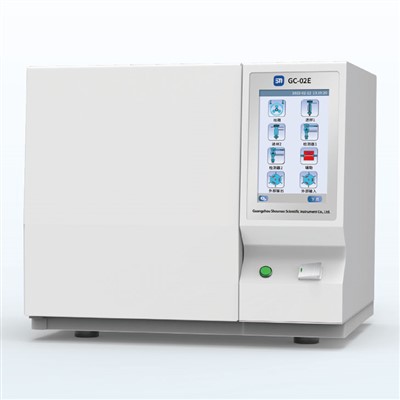
At our company, we offer a range of gas chromatographs equipped with high - quality FIDs. Our GC - 02E Gas Chromatograph is a great choice for small - scale laboratories and research facilities. It's compact, easy to use, and provides accurate results. The FID in the GC - 02E is highly sensitive and can handle a variety of samples.


If you're looking for a more advanced option, our GC Analyzer is a top - of - the - line product. It has a wide dynamic range and can perform complex analyses with high precision. The FID in this analyzer is designed for long - term stability and reliability, making it suitable for high - volume testing.
For larger industrial applications, our GC - 05E Gas Chromatograph is the way to go. It can handle large sample volumes and is capable of analyzing multiple compounds simultaneously. The FID in the GC - 05E is optimized for high - throughput analysis, ensuring that you can get your results quickly and efficiently.
Contact Us for Your Gas Chromatograph Needs
If you're in the market for a gas chromatograph with a reliable FID, we'd love to hear from you. Whether you're a researcher, a quality control analyst, or someone in an industrial setting, we have the right gas chromatograph for your needs. Our team of experts can help you choose the best model, provide training on how to use it, and offer ongoing support. So, don't hesitate to reach out and start a conversation about your gas chromatograph requirements. Let's work together to find the perfect solution for your analysis needs.
References
- Skoog, D. A., West, D. M., Holler, F. J., & Crouch, S. R. (2014). Fundamentals of Analytical Chemistry. Cengage Learning.
- McMaster, M. C. (2008). Gas Chromatography Basics. Wiley - VCH.