

A drop dart impact meter is a crucial piece of equipment used in various industries to measure the impact resistance of materials such as plastics, films, and other packaging materials. As a leading supplier of drop dart impact meters, I am often asked about the main components of these devices. In this blog post, I will delve into the key elements that make up a drop dart impact meter and explain their functions.
1. Dart Assembly
The dart assembly is one of the most important components of a drop dart impact meter. It consists of a dart, which is a weighted object with a specific shape and size, and a holder. The dart is designed to be dropped onto the test specimen from a certain height, and its impact on the specimen is used to evaluate the material's resistance to impact.
There are different types of darts available, each with its own characteristics and applications. For example, hemispherical - shaped darts are commonly used for testing flexible films, as they provide a more uniform distribution of impact force. Conical - shaped darts, on the other hand, are suitable for testing more rigid materials.
The dart holder is responsible for securely holding the dart in place before the drop. It ensures that the dart is released accurately and consistently, minimizing any variations in the test results. The holder is usually designed to be adjustable, allowing for easy installation and removal of different darts.

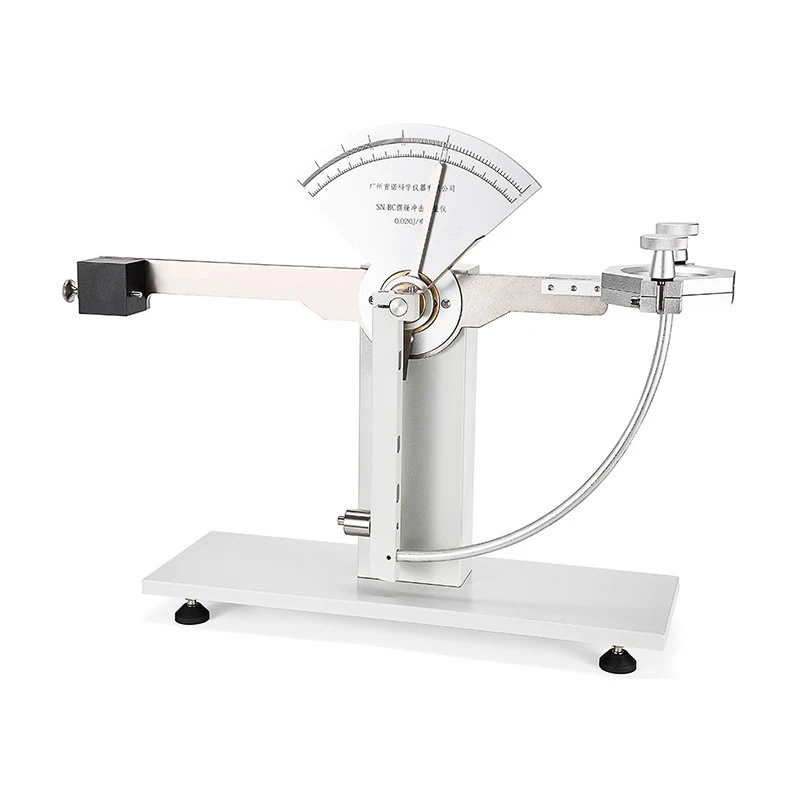
2. Release Mechanism
The release mechanism is another critical component of the drop dart impact meter. It is responsible for releasing the dart from a fixed height in a controlled manner. A reliable release mechanism is essential to ensure the accuracy and repeatability of the test results.
There are several types of release mechanisms used in drop dart impact meters. One common type is the electromagnetic release mechanism. This mechanism uses an electromagnetic field to hold the dart in place and then releases it when a specific signal is sent. It offers a high level of precision and repeatability, as the release is instantaneous and can be accurately timed.
Another type is the mechanical release mechanism, which typically consists of a lever or a latch system. The operator manually operates the lever or releases the latch to drop the dart. While mechanical release mechanisms are generally simpler and more cost - effective, they may be more prone to human error and variations in the release time.
3. Height Adjustment System
The height adjustment system allows the operator to set the height from which the dart is dropped. Different materials may require different drop heights to accurately evaluate their impact resistance. For example, more fragile materials may need a lower drop height, while more robust materials may require a higher drop height.
The height adjustment system can be either manual or automatic. In a manual system, the operator uses a hand - crank or a screw mechanism to adjust the height of the dart holder. This type of system is relatively simple and inexpensive but may require more time and effort to make precise adjustments.
An automatic height adjustment system, on the other hand, uses a motor - driven mechanism to adjust the height. It can be controlled using a digital display or a control panel, allowing for quick and accurate height adjustments. Automatic height adjustment systems are often preferred in high - volume testing environments where efficiency is crucial.
4. Specimen Holder
The specimen holder is used to secure the test specimen in place during the impact test. It ensures that the specimen is properly positioned and does not move or shift during the dart drop. A well - designed specimen holder is essential to obtain accurate and reliable test results.
There are different types of specimen holders available, depending on the type of material being tested. For example, for testing films, a circular specimen holder with a clamping mechanism is commonly used. The clamping mechanism ensures that the film is held taut and flat, preventing any wrinkles or folds that could affect the test results.
For testing rigid materials, a more robust specimen holder may be required. It may use a vice - like mechanism to securely hold the specimen in place. Some specimen holders are also adjustable, allowing for the testing of specimens of different sizes and shapes.
5. Impact Detection System
The impact detection system is responsible for detecting whether the specimen has withstood the impact of the dart or has failed. There are several methods used for impact detection in drop dart impact meters.
One common method is the visual inspection method. After the dart impact, the operator visually examines the specimen to determine if there is any visible damage, such as cracks or holes. While this method is simple and straightforward, it can be subjective and may lead to variations in the test results, especially for minor damages.
Another method is the use of sensors. Some drop dart impact meters are equipped with sensors, such as load cells or accelerometers, to detect the impact force and the response of the specimen. These sensors can provide more objective and accurate data about the impact event. For example, a load cell can measure the force exerted on the specimen during the impact, while an accelerometer can measure the acceleration of the dart and the specimen during the impact.
6. Data Acquisition and Analysis System
In modern drop dart impact meters, a data acquisition and analysis system is often included. This system is used to collect, store, and analyze the test data. It can provide valuable information about the impact resistance of the material, such as the average impact force, the energy absorbed by the specimen, and the failure rate.
The data acquisition system usually consists of a data logger and a software program. The data logger records the data from the sensors, such as the impact force and the time of impact. The software program then analyzes the data and presents it in a user - friendly format, such as graphs and tables.
Some data acquisition and analysis systems also allow for the comparison of test results from different specimens or materials. This can be useful for quality control purposes and for the development of new materials.
7. Safety Features
Safety is of utmost importance when using a drop dart impact meter. Therefore, most drop dart impact meters are equipped with various safety features.
One important safety feature is the protective enclosure. The enclosure surrounds the testing area, preventing the operator from being exposed to the flying dart or the damaged specimen fragments in case of a failure. It also helps to reduce the noise generated during the impact test.
Another safety feature is the emergency stop button. This button allows the operator to immediately stop the testing process in case of an emergency or if something goes wrong. Additionally, some drop dart impact meters are designed with interlock systems, which prevent the dart from being released if the specimen holder is not properly installed or if the protective enclosure is open.
If you are in the market for a high - quality drop dart impact meter, we are here to assist you. Our drop dart impact meters are designed with the latest technology and the highest quality components to ensure accurate and reliable test results. We offer a wide range of models to suit different testing requirements and budgets.
To learn more about our Falling Dart Impact Test Equipment, please visit Falling Dart Impact Test Equipment. If you are specifically interested in testing films, our Film Falling Dart Impact Test Machine is a great choice. And for those who need to test materials using a drop ball method, our Drop Ball Impact Tester is available.
Contact us today to discuss your specific needs and start the procurement process. We look forward to working with you to ensure the quality and reliability of your materials.
References
- ASTM D1709 - Standard Test Methods for Impact Resistance of Plastic Film by the Free - Falling Dart Method.
- ISO 7765 - 1:1988 Plastics -- Film and sheeting -- Determination of impact resistance by the free - falling dart method -- Part 1: Stair - case method.


