

Yo, fellow science enthusiasts! I'm part of a Gas Chromatography System supplier crew, and today, I wanna talk about the awesome applications of a nitrogen - phosphorus detector (NPD) in a Gas Chromatography System.
First off, let's get a quick low - down on what a nitrogen - phosphorus detector is. An NPD is a type of detector used in gas chromatography. It's super sensitive to compounds that contain nitrogen and phosphorus. This sensitivity comes from the way it works. When the sample passes through the detector, the nitrogen and phosphorus - containing compounds interact with a hot rubidium bead or a similar element. This interaction causes a change in the electrical conductivity or ion current, which is then measured and translated into a signal that shows up on the chromatogram.
One of the major applications of an NPD in a Gas Chromatography System is in environmental analysis. You know, the environment is full of all sorts of chemicals, and some of them can be pretty harmful. Nitrogen - and phosphorus - containing pesticides are a big concern. These pesticides are widely used in agriculture to protect crops from pests and diseases. But if they end up in the environment, they can contaminate soil, water, and air.
Using a Gas Chromatography System with an NPD, we can accurately detect and quantify these pesticides in environmental samples. Whether it's water from a river near a farm or soil samples from an agricultural field, the NPD can pick up even trace amounts of these pesticides. For example, organophosphorus pesticides, which are commonly used and are highly toxic, can be easily detected. This helps environmental scientists and regulators to monitor the levels of these pesticides and take appropriate actions to protect the environment and public health. You can check out our GC Analyzer which is well - equipped to handle such environmental analysis tasks.
In the food industry, the NPD in a Gas Chromatography System also plays a crucial role. Food safety is a top priority, and we need to make sure that the food we eat is free from harmful contaminants. Nitrogen - and phosphorus - containing additives and contaminants can find their way into our food. For instance, some food additives might contain nitrogen - based compounds, and if they are used in excessive amounts, they can be a health risk.
Moreover, there's the issue of pesticide residues in food. Just like in environmental analysis, the NPD can detect these residues in fruits, vegetables, grains, and other food products. This allows food manufacturers and regulatory agencies to ensure that the food on the market meets the safety standards. Our GC - 02E Gas Chromatograph is a great choice for food industry applications. It can provide accurate and reliable results, helping to keep our food safe.
Another important area where the NPD shines is in pharmaceutical analysis. Pharmaceuticals are complex chemical compounds, and nitrogen and phosphorus are common elements in many drugs. During the drug development process, it's essential to analyze the purity and quality of the drug substances. The NPD in a Gas Chromatography System can be used to detect impurities that contain nitrogen or phosphorus.
For example, in the synthesis of some antibiotics, there might be by - products or impurities that have nitrogen - containing functional groups. By using an NPD, pharmaceutical chemists can identify and quantify these impurities, ensuring that the final drug product is of high quality and safe for use. Our GC - 05E Gas Chromatograph is well - suited for these types of pharmaceutical analysis tasks, with its high - precision NPD technology.
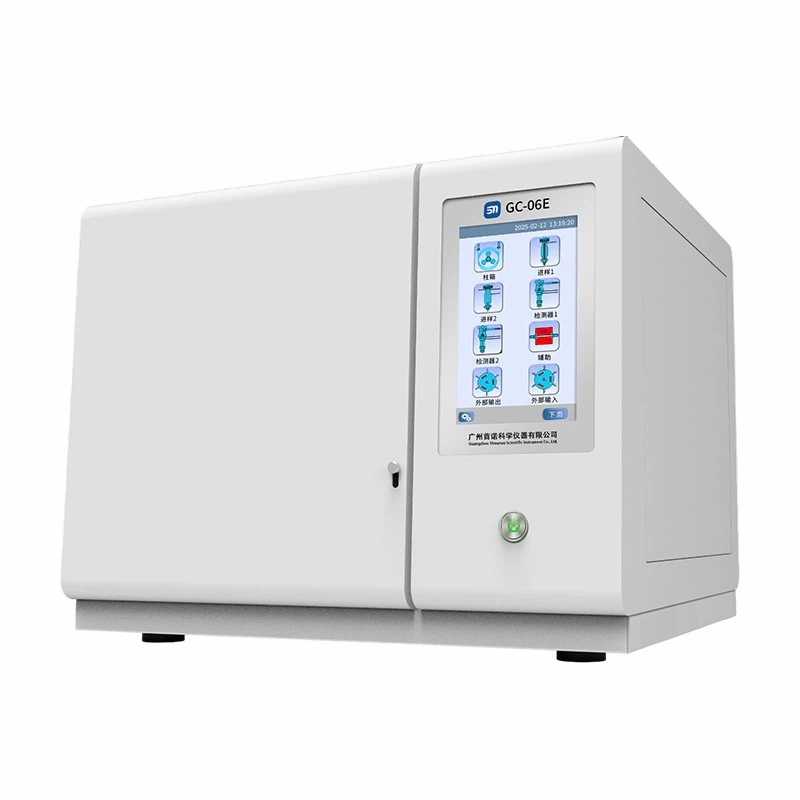

In the field of forensic science, the NPD in a Gas Chromatography System can also be a valuable tool. In criminal investigations, there are often cases where the analysis of chemical substances is required. For example, some drugs and explosives contain nitrogen - and phosphorus - based compounds.
When law enforcement agencies need to identify and analyze these substances at a crime scene, a Gas Chromatography System with an NPD can come in handy. It can quickly and accurately detect the presence of these substances in samples such as powders, liquids, or residues. This helps forensic scientists to build a case and provide evidence in court.
The NPD also has applications in the petrochemical industry. In the production and refining of petroleum products, nitrogen - and phosphorus - containing compounds can be present as impurities. These impurities can affect the quality and performance of the petroleum products. For example, in gasoline, the presence of certain nitrogen - containing compounds can lead to engine knocking and reduced fuel efficiency.
Using a Gas Chromatography System with an NPD, petrochemical engineers can analyze the composition of petroleum products and detect these impurities. This allows them to take steps to remove or reduce these impurities, improving the quality of the products.
Now, if you're in need of a Gas Chromatography System with a high - performance NPD for any of these applications or others, we're here to help. Our systems are designed to be reliable, accurate, and easy to use. Whether you're an environmental scientist, a food industry professional, a pharmaceutical chemist, a forensic scientist, or someone in the petrochemical industry, we've got the right solution for you.
If you're interested in learning more about our Gas Chromatography Systems and how they can benefit your work, don't hesitate to reach out to us. We're more than happy to have a chat about your specific needs and provide you with the best options. Let's work together to make your analysis tasks easier and more accurate.
References
- McMaster, M. C. (2017). Gas Chromatography Basics. Wiley - VCH.
- Skoog, D. A., West, D. M., Holler, F. J., & Crouch, S. R. (2014). Fundamentals of Analytical Chemistry. Cengage Learning.


