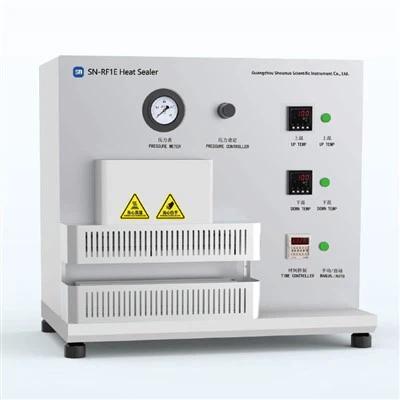
Hey there! I'm a supplier of Five - point Heat Sealers, and today I'm gonna share with you how to use a Five - point Heat Sealer to seal multi - side packages. It's a nifty tool that can make your packaging process a whole lot easier and more efficient.
Understanding the Five - point Heat Sealer
First things first, let's talk a bit about what a Five - point Heat Sealer is. It's a specialized machine designed to create strong, reliable seals on various types of packaging materials. Unlike some other sealers, it has five heating points, which allows for more even and secure sealing, especially on multi - side packages. You can check out our Five - point Heat Sealer on our website for more details.
Preparing the Sealer
Before you start sealing those multi - side packages, you need to get your Five - point Heat Sealer ready. Here's a step - by - step guide:
-
Placement: Find a stable and flat surface to place your sealer. It should be close to an electrical outlet because, well, it runs on electricity! Make sure there's enough space around it so you can easily maneuver your packages.
-
Power On: Plug in the sealer and switch it on. You'll usually see a light indicating that it's powered up. Now, it's time to let it heat up. This usually takes a few minutes, depending on the model. Some sealers have adjustable temperature settings, so you can set it according to the type of packaging material you're using. For example, thinner materials might require a lower temperature, while thicker ones need more heat.
-
Check the Sealing Heads: Inspect the five sealing heads to make sure they're clean and free from any debris or residue. If there's anything on them, you can use a soft, dry cloth to wipe them gently. A clean sealing head ensures a better seal.
Preparing the Multi - side Packages
Now that your sealer is all set, it's time to get your packages ready.
- Material Selection: Choose the right packaging material for your product. Common materials include plastic films, laminates, and foils. Make sure the material is compatible with your sealer. You don't want to end up with a melted mess!
- Cutting: Cut your packaging material to the appropriate size and shape for your multi - side package. Leave a little extra margin around the edges for sealing.
- Folding: Fold the material to form the multi - side package. You can use a ruler or a template to get nice, straight folds. Make sure the edges are aligned properly.
Sealing the Multi - side Packages
Here comes the fun part - sealing the packages!
- Positioning: Place the folded multi - side package between the sealing heads of the Five - point Heat Sealer. Make sure the edges you want to seal are directly under the heating points. You might need to adjust the position a few times to get it just right.
- Pressing: Once the package is in position, gently press down on the sealer's handle or foot pedal (depending on the model). Apply even pressure across all five sealing heads. Hold it for a few seconds - the exact time depends on the material and the sealer's settings. Usually, it's around 1 - 3 seconds for most common materials.
- Releasing: After the set time, release the pressure. Lift the handle or release the foot pedal. You'll see that the package is now sealed at five points. Check the seal to make sure it's strong and continuous. If it looks weak in some areas, you might need to adjust the temperature or the sealing time.
Tips for Sealing Different Sides
Sealing multi - side packages often means you need to seal different sides one by one. Here are some tips:


- Keep the Edges Straight: When you're sealing each side, make sure the edges of the package remain straight. You can use your fingers or a tool to hold them in place. A straight edge results in a neater and stronger seal.
- Seal in Order: It's a good idea to seal the sides in a logical order. For example, start with the bottom, then the two sides, and finally the top. This way, you can easily keep track of which sides are already sealed.
- Overlap: If you need to seal overlapping edges, make sure the overlap is even and not too thick. Too much overlap can cause uneven sealing or even damage the sealer.
Troubleshooting
Sometimes, things don't go as smoothly as planned. Here are some common problems you might encounter and how to fix them:
- Weak Seals: If the seals are weak, it could be due to a few reasons. First, check the temperature. It might be too low. Increase it slightly and try again. Also, make sure you're applying enough pressure and holding the sealer down for the right amount of time.
- Burned Seals: A burned seal usually means the temperature is too high. Lower the temperature setting and test it on a scrap piece of material first before trying it on your actual package.
- Uneven Seals: This could be because the sealing heads are dirty or not aligned properly. Clean the heads as mentioned earlier and check if they're level. You might need to adjust them if they're off - center.
Other Types of Heat Sealers
While the Five - point Heat Sealer is great for multi - side packages, there are other types of sealers you might be interested in. Our Multi - Point Heat Sealer has more than five sealing points, which can be useful for larger or more complex packages. And if you're looking for high - volume production, our High - Speed Heat Sealer is a great option. It can seal packages much faster, saving you time and increasing efficiency.
Conclusion
Using a Five - point Heat Sealer to seal multi - side packages is a straightforward process once you know the steps. With a little practice, you'll be able to create strong, professional - looking seals every time. Whether you're a small business owner or a large - scale manufacturer, our Five - point Heat Sealer can be a valuable addition to your packaging line.
If you're interested in purchasing a Five - point Heat Sealer or any of our other products, feel free to reach out to us for more information and to start a purchase negotiation. We're here to help you find the best sealing solution for your needs.
References
- Packaging Machinery Handbook
- Industry - specific packaging material guidelines