As a supplier of GC machines, I understand the importance of setting the temperature programming correctly for these instruments. Gas chromatography (GC) is a powerful analytical technique used in various industries, including pharmaceuticals, environmental science, and food and beverage. The temperature programming of a GC machine plays a crucial role in separating and analyzing different components in a sample. In this blog post, I will guide you through the process of setting the temperature programming for a GC machine, providing you with the knowledge and tips to optimize your GC analysis.
Understanding Temperature Programming in GC
Temperature programming in gas chromatography involves changing the temperature of the column during the analysis. This technique allows for better separation of compounds with different boiling points. In isothermal analysis, where the column temperature remains constant throughout the run, it can be challenging to separate a wide range of compounds effectively. Temperature programming overcomes this limitation by increasing the column temperature gradually, which helps elute high - boiling - point compounds more efficiently.
There are two main types of temperature programming: linear and multi - step. Linear temperature programming involves a constant rate of temperature increase, for example, 5°C per minute. Multi - step programming, on the other hand, consists of different segments with varying temperature ramps and hold times. The choice between linear and multi - step programming depends on the nature of the sample and the separation requirements.
Factors to Consider Before Setting Temperature Programming
Before setting the temperature programming for your GC machine, several factors need to be considered:
Sample Characteristics
The boiling points of the compounds in the sample are the most critical factor. If your sample contains a mixture of low - boiling and high - boiling compounds, temperature programming is essential. For example, in a sample of volatile organic compounds (VOCs), some compounds may have boiling points below 100°C, while others may have boiling points above 200°C. A well - designed temperature program can ensure that all compounds are eluted and separated properly.
Column Type
Different columns have different temperature limits and separation capabilities. Capillary columns are commonly used in GC, and they come in various stationary phases. The stationary phase affects the retention of compounds on the column. For example, a non - polar column is suitable for separating non - polar compounds, while a polar column is better for polar compounds. The maximum temperature of the column should not be exceeded during temperature programming to avoid damage to the column.
Detector Requirements
The detector used in the GC system also influences the temperature programming. Some detectors, such as flame ionization detectors (FIDs), are relatively insensitive to temperature changes. However, other detectors, like thermal conductivity detectors (TCDs), may require specific temperature conditions for optimal performance.
Steps to Set Temperature Programming
Step 1: Initial Temperature Selection
The initial temperature should be set based on the boiling points of the lowest - boiling compounds in the sample. For a sample with many low - boiling VOCs, an initial temperature of 30 - 50°C may be appropriate. This allows the low - boiling compounds to be eluted quickly and separated from each other.
Step 2: Temperature Ramp Rate
The ramp rate determines how quickly the column temperature increases. A slow ramp rate (e.g., 1 - 5°C per minute) provides better separation but may result in longer analysis times. A fast ramp rate (e.g., 10 - 20°C per minute) can reduce the analysis time but may sacrifice some separation efficiency. You need to find a balance between separation and analysis time based on your specific requirements.
Step 3: Hold Times
Hold times are periods during which the column temperature remains constant. Hold times can be used at the beginning, during the ramp, or at the end of the temperature program. A hold time at the initial temperature can ensure that all low - boiling compounds are fully eluted before the temperature starts to increase. A hold time at a specific temperature during the ramp can help separate closely eluting compounds. At the end of the program, a hold time at a high temperature can ensure that all high - boiling compounds are eluted from the column.
Step 4: Final Temperature
The final temperature should be high enough to elute all the high - boiling compounds in the sample. However, it should not exceed the maximum temperature limit of the column. For most capillary columns, the final temperature can be set between 250 - 320°C.
Example of Temperature Programming for Different Samples
Analysis of Volatile Organic Compounds (VOCs)
For a sample of VOCs, a typical temperature program could be:
- Initial temperature: 30°C, hold for 2 minutes
- Temperature ramp: 10°C per minute to 200°C
- Final temperature: 200°C, hold for 5 minutes
This program allows the low - boiling VOCs to be eluted quickly at the beginning and then gradually elutes the higher - boiling compounds.
Analysis of Fatty Acid Methyl Esters (FAMEs)
FAMEs are commonly analyzed in the food and lipid industries. A suitable temperature program for FAME analysis could be:
- Initial temperature: 100°C, hold for 1 minute
- Temperature ramp: 4°C per minute to 250°C
- Final temperature: 250°C, hold for 10 minutes
This program provides good separation of the different FAMEs with varying chain lengths.
Using Our GC Machines for Temperature Programming
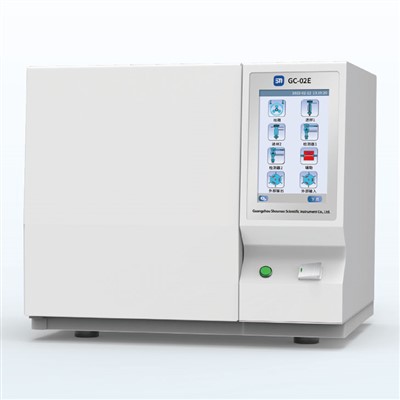
Our company offers a range of high - quality GC machines, such as the GC - 06E Gas Chromatograph and the GC - 05E Gas Chromatograph. These machines are equipped with advanced temperature control systems that allow for precise and flexible temperature programming. The user - friendly interface makes it easy to set up and modify temperature programs according to your specific needs.
In addition to our GC machines, we also provide a wide range of Chromatography Equipment to support your GC analysis. Our technical support team is always ready to assist you with any questions regarding temperature programming or other aspects of GC operation.
Conclusion and Call to Action
Setting the temperature programming correctly is crucial for achieving accurate and efficient GC analysis. By considering the sample characteristics, column type, and detector requirements, and following the steps outlined in this blog post, you can optimize the temperature program for your GC machine.
If you are interested in purchasing a GC machine or need more information about our chromatography equipment, we encourage you to contact us for a detailed discussion. Our sales team can provide you with customized solutions based on your specific application and budget. Let us help you take your GC analysis to the next level.


References
- McNair, H. M., & Miller, J. M. (1997). Basic Gas Chromatography. Wiley - Interscience.
- Poole, C. F. (2003). The Essence of Chromatography. Elsevier.