

A gas chromatograph (GC) machine is a powerful analytical instrument widely used in various industries, such as environmental monitoring, food safety, and pharmaceutical research. One of the most common and effective detectors used in GC machines is the flame ionization detector (FID). In this blog post, I'll explain how a flame ionization detector works in a GC machine, and as a GC machine supplier, I'll also touch on the significance of this technology in our offerings.
The Basics of Gas Chromatography
Before delving into the details of the flame ionization detector, it's essential to understand the basic principles of gas chromatography. A GC machine separates and analyzes volatile compounds in a sample. The process begins when a sample is injected into the GC machine. The sample is then vaporized and carried by an inert gas, usually helium or nitrogen, through a column. Inside the column, the different components of the sample interact with the stationary phase of the column at different rates, causing them to separate as they travel through the column.

Once the components are separated, they exit the column and enter the detector. The detector's role is to convert the separated components into electrical signals, which can be recorded and analyzed. Different types of detectors are available for GC machines, each with its own advantages and limitations. The flame ionization detector is one of the most popular choices due to its high sensitivity, wide linear range, and reliability.
How a Flame Ionization Detector Works
A flame ionization detector operates on the principle of ionizing organic compounds in a hydrogen-air flame. Here's a step-by-step breakdown of how it works:
1. Gas Supply
The FID requires a supply of three gases: hydrogen, air, and the carrier gas from the GC column. The carrier gas, which carries the separated sample components from the column, enters the detector along with hydrogen. Air is also introduced into the detector to support combustion.
2. Combustion Chamber
The hydrogen and air are mixed in a combustion chamber, where they are ignited to form a flame. The temperature of the flame is typically around 2000°C. When the sample components, which are carried by the carrier gas, enter the flame, they are pyrolyzed (broken down into smaller fragments) due to the high temperature.
3. Ionization
Organic compounds contain carbon atoms. When these compounds are pyrolyzed in the flame, they produce ions and free radicals. The high-energy environment of the flame causes the carbon atoms in the organic compounds to lose electrons, forming positively charged ions. The most common ions produced are CHO⁺ and H₃O⁺.
4. Collection of Ions
Above the flame, there is a collector electrode, which is maintained at a positive potential relative to a reference electrode. The positively charged ions produced in the flame are attracted to the collector electrode. As the ions reach the collector electrode, they create a small electrical current.
5. Signal Detection and Amplification
The electrical current generated by the collected ions is extremely small, typically in the range of picoamperes. This current is amplified by a high-sensitivity electrometer. The amplified signal is then sent to a data system, where it is recorded as a chromatogram. The height or area of the peaks in the chromatogram is proportional to the amount of the corresponding compound in the sample.
Advantages of Flame Ionization Detectors
The flame ionization detector offers several advantages that make it a popular choice for GC analysis:
High Sensitivity
FIDs are highly sensitive to organic compounds, with detection limits in the range of picograms to nanograms. This makes them suitable for detecting trace amounts of analytes in a sample.
Wide Linear Range
The FID has a wide linear range, which means that it can accurately measure analyte concentrations over several orders of magnitude. This is important for analyzing samples with a wide range of analyte concentrations.
Good Reproducibility
FIDs are known for their good reproducibility, which means that the results obtained from repeated analyses of the same sample are consistent. This is crucial for reliable quantitative analysis.
Universal Detection for Organic Compounds
The FID responds to most organic compounds, making it a versatile detector for a wide range of applications. It can be used to analyze hydrocarbons, alcohols, esters, and many other types of organic compounds.
Applications in Our GC Machines
As a GC machine supplier, we understand the importance of providing high-quality detectors that meet the needs of our customers. Our Chromatography Equipment is equipped with state-of-the-art flame ionization detectors to ensure accurate and reliable analysis.
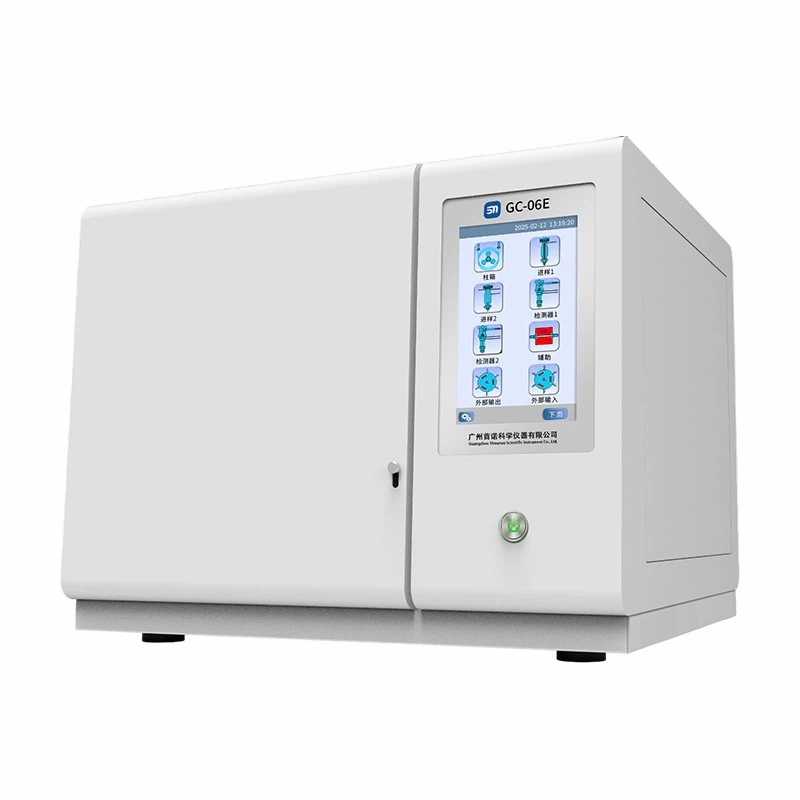
For example, our GC-06E Gas Chromatograph is a compact and user-friendly instrument that is suitable for a variety of applications, including environmental monitoring, food and beverage analysis, and pharmaceutical quality control. The FID in the GC-06E provides high sensitivity and excellent reproducibility, allowing users to obtain accurate and reliable results.
Our GC Analyzer is another powerful instrument that is designed for more advanced applications. It features a high-performance FID that can detect trace amounts of analytes in complex samples. The GC Analyzer is widely used in research laboratories, industrial quality control departments, and regulatory agencies.
Contact Us for Procurement
If you're in the market for a GC machine with a flame ionization detector, we'd love to hear from you. Our team of experts can help you choose the right instrument for your specific needs and provide you with comprehensive support and training. Whether you're a small research laboratory or a large industrial facility, we have the solutions to meet your requirements.
Contact us today to start the procurement process and take advantage of our high-quality GC machines and excellent customer service.
References
- McMaster, M. C. (2012). Gas Chromatography Basics. Wiley.
- Poole, C. F. (2003). The Essence of Chromatography. Elsevier.
- Harris, D. C. (2010). Quantitative Chemical Analysis. W. H. Freeman and Company.


