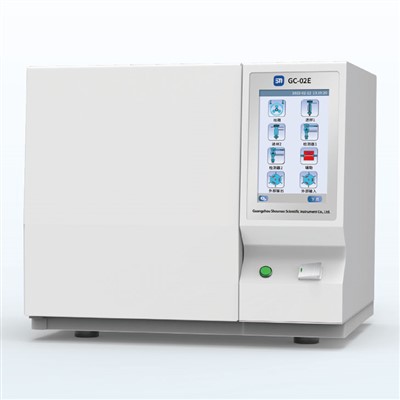
In recent years, serverless architectures have become all the rage in the tech world. More and more companies are turning to them for their flexibility, cost - effectiveness, and scalability. As a supplier of GC Analyzer, folks often ask me if our GC Analyzer can support applications with serverless architectures. Let's dig into this subject together.
Understanding Serverless Architectures
First things first, let's get a quick low - down on serverless architectures. Contrary to what the name might suggest, it doesn't mean there are no servers involved. Instead, it's a cloud - computing execution model where the cloud provider manages the infrastructure, and you, as a developer or a business, only pay for the actual compute time you use.
Serverless architectures rely heavily on functions as a service (FaaS) platforms. These platforms allow your application to execute in response to specific events, be it an HTTP request, a file upload, or a database change. The beauty of this setup is that it can scale up or down based on the incoming workload, without you having to worry about provisioning or managing servers.
The Role of GC Analyzer
Before we talk about the compatibility of GC Analyzer with serverless architectures, let's understand what a GC Analyzer does. Our GC Analyzer is a powerful tool used for gas chromatography. It helps in separating and analyzing different components in a gas mixture. It's widely used in industries like environmental monitoring, food and beverage, and pharmaceuticals to ensure quality control and compliance.


In a more traditional application setup, the GC Analyzer is integrated into a long - running process. Data is collected from the analyzer, processed, and then stored or analyzed further. But with serverless architectures, the game changes a bit.
Compatibility Challenges
One of the main concerns when considering using a GC Analyzer in a serverless environment is the nature of serverless functions. These functions are designed to be short - lived and stateless. They spin up quickly, do their job, and then spin down. On the other hand, a GC Analyzer often requires a continuous connection and a stable environment to perform accurate analyses.
For example, the data collection from a GC - 06E Gas Chromatograph might be a time - consuming process. It could take several minutes or even hours to complete a single analysis. Serverless functions, by their very nature, are not well - suited for such long - running tasks. If a function times out before the analysis is complete, you'll lose all the data and have to start over.
Another challenge is the state management. In serverless architectures, functions are supposed to not rely on any internal state. But GC Analyzer data analysis often involves storing intermediate results and previous analysis data to make sense of new data. Maintaining this state in a serverless environment can be tricky.
Our Solutions
Despite these challenges, we at our company have been working hard to make our GC Analyzer work smoothly in serverless architectures.
We've developed a modular approach for data collection and analysis. Instead of having one long - running function, we break the process into smaller, bite - sized functions. Each function is responsible for a specific task, like data pre - processing, peak detection, or result storage. This way, we can take advantage of the scalability of serverless functions.
To deal with the state management issue, we've integrated with cloud - based storage solutions. These storage solutions allow our functions to save and retrieve data easily, ensuring that the analysis process can continue even if a function restarts or fails.
We've also optimized the way our GC Analyzer communicates with other parts of the serverless application. We use lightweight protocols and event - driven mechanisms, which are in line with the principles of serverless architectures.
Real - World Examples
We've had quite a few clients who've successfully used our GC Analyzer in serverless applications. One of our clients in the environmental monitoring industry wanted to analyze air samples from multiple remote locations. They set up a serverless architecture where their devices were collecting data from Chromatography Equipment and sending it to the cloud.
Our GC Analyzer was integrated into this setup, and with the modular approach we mentioned earlier, they were able to process the data in real - time. The serverless functions scaled up during peak data collection times and scaled down during off - peak hours, saving them a significant amount of money in cloud computing costs.
The Future
The future looks bright for using GC Analyzers in serverless architectures. As cloud providers continue to improve their offerings for long - running and stateful functions, we'll be able to further optimize our integration. We're also planning to add more AI and machine learning capabilities to our GC Analyzer, which can be easily integrated into serverless applications to provide more accurate and efficient analyses.
Wrapping Up and Call to Action
So, to answer the initial question: Yes, our GC Analyzer can support applications with serverless architectures. We've overcome the major challenges and have real - world success stories to back it up.
If you're interested in exploring how our GC Analyzer can fit into your serverless application, we'd love to have a chat. Whether you're in the food and beverage industry, pharmaceuticals, or environmental monitoring, we're confident we can provide a solution that meets your needs. Reach out to us to start a conversation about your specific requirements and how we can help you achieve your goals.
References
- General knowledge of serverless architectures from various cloud computing blogs and forums.
- Internal research and development reports on the integration of GC Analyzer with serverless architectures.