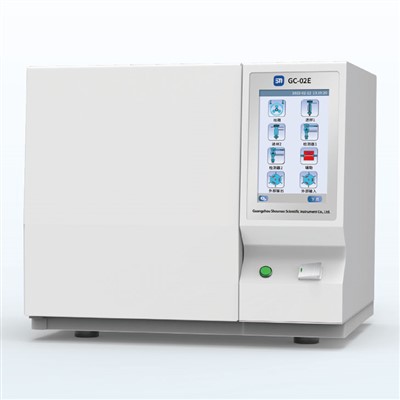
The spectral range of a gas transmittance meter is a crucial parameter that determines its functionality and applicability in various industries. As a leading supplier of gas transmittance meters, we understand the importance of this concept and its implications for our customers. In this blog post, we will delve into the details of the spectral range of a gas transmittance meter, exploring its definition, significance, and how it relates to our products.
Understanding the Spectral Range
The spectral range of a gas transmittance meter refers to the range of wavelengths of light that the meter can effectively measure the transmittance of gas samples. Different gases absorb light at specific wavelengths due to their molecular structures. By measuring the transmittance of light through a gas sample at these characteristic wavelengths, we can determine the concentration of the gas.
For example, carbon dioxide (CO₂) has strong absorption bands in the infrared region, particularly around 2.7, 4.3, and 15 micrometers. A gas transmittance meter designed to measure CO₂ concentrations would need to have a spectral range that includes these wavelengths to accurately detect and quantify the gas.
The spectral range of a gas transmittance meter is typically determined by the type of light source and the detector used in the instrument. Light sources can include incandescent lamps, lasers, or light - emitting diodes (LEDs), each with their own emission spectra. Detectors, such as photodiodes or photomultiplier tubes, are sensitive to specific wavelength ranges. The combination of these components defines the overall spectral range of the meter.
Significance of the Spectral Range
The spectral range is of utmost importance because it directly affects the accuracy and selectivity of the gas transmittance meter. If the spectral range does not cover the absorption wavelengths of the target gas, the meter will not be able to detect the gas effectively.
Accuracy: A well - defined spectral range that matches the absorption characteristics of the target gas ensures that the meter can accurately measure the transmittance and, consequently, the gas concentration. For instance, in environmental monitoring applications where precise measurement of greenhouse gases like methane (CH₄) is required, a gas transmittance meter with a spectral range covering the absorption bands of CH₄ (around 3.3 and 7.7 micrometers) is essential.
Selectivity: Different gases may have overlapping absorption bands in some wavelength regions. A gas transmittance meter with a narrow and appropriate spectral range can be more selective in detecting the target gas, reducing interference from other gases. This is particularly important in industrial settings where multiple gases may be present simultaneously.
Our Gas Transmittance Meters and Their Spectral Ranges
At our company, we offer a wide range of gas transmittance meters with carefully selected spectral ranges to meet the diverse needs of our customers.
Gas Permeability Testing Instrument
Our Gas Permeability Testing Instrument is designed to measure the gas permeability of various materials. It has a spectral range optimized for detecting common gases such as oxygen (O₂), nitrogen (N₂), and carbon dioxide (CO₂). The spectral range of this instrument is carefully calibrated to ensure accurate measurement of gas transmittance through different types of films, membranes, and packaging materials. This makes it an ideal choice for industries such as food packaging, pharmaceuticals, and electronics, where gas permeability is a critical factor in product quality and shelf - life.
Gas Transmission Rate Tester
The Gas Transmission Rate Tester is another product in our portfolio. It is used to measure the rate at which gases pass through a material. The spectral range of this tester is tailored to the specific gases being measured, allowing for precise determination of gas transmission rates. Whether you are testing the gas barrier properties of a new polymer or evaluating the performance of a building insulation material, our Gas Transmission Rate Tester can provide accurate and reliable results.
Gas Permeability Analyzer
Our Gas Permeability Analyzer is a high - end instrument designed for in - depth analysis of gas permeability. It offers a wide spectral range that can be adjusted according to the requirements of the application. This flexibility allows users to measure a variety of gases, including rare gases and volatile organic compounds (VOCs). The analyzer is equipped with advanced detection technology and software algorithms to ensure accurate and repeatable measurements.
Factors Affecting the Spectral Range
Several factors can influence the spectral range of a gas transmittance meter.
- Light Source Characteristics: As mentioned earlier, the type of light source used in the meter plays a significant role in determining the spectral range. Incandescent lamps emit a broad spectrum of light, but their intensity may vary across different wavelengths. Lasers, on the other hand, emit light at a specific wavelength or a narrow range of wavelengths, providing high - intensity and monochromatic light. LEDs are also popular due to their energy efficiency and the ability to emit light at specific wavelengths.
- Detector Sensitivity: The detector in a gas transmittance meter must be sensitive to the wavelengths within the desired spectral range. Different detectors have different spectral response curves, which define their sensitivity to different wavelengths. For example, silicon photodiodes are commonly used for visible and near - infrared wavelengths, while mercury - cadmium - telluride (MCT) detectors are more suitable for mid - infrared wavelengths.
- Optical Components: The optical components in the meter, such as lenses, filters, and mirrors, can also affect the spectral range. Filters can be used to select specific wavelengths or to block unwanted wavelengths, thereby narrowing or expanding the effective spectral range of the instrument.
Applications Based on Spectral Range
The spectral range of a gas transmittance meter determines its suitability for different applications.


- Environmental Monitoring: In environmental monitoring, gas transmittance meters are used to measure the concentration of pollutants and greenhouse gases in the atmosphere. For example, meters with a spectral range covering the absorption bands of sulfur dioxide (SO₂), nitrogen oxides (NOₓ), and ozone (O₃) are used to monitor air quality. The ability to accurately measure these gases is crucial for understanding the impact of human activities on the environment and for implementing effective pollution control measures.
- Industrial Process Control: In industrial settings, gas transmittance meters are used to monitor and control gas concentrations in various processes. For instance, in the chemical industry, meters with a spectral range suitable for detecting flammable gases such as hydrogen (H₂) and propane (C₃H₈) are used to ensure safety. In the semiconductor industry, meters are used to measure the concentration of process gases such as ammonia (NH₃) and silane (SiH₄) to maintain the quality of the manufacturing process.
- Medical Applications: Gas transmittance meters are also used in medical applications, such as measuring the concentration of anesthetic gases in a patient's breathing circuit. Meters with a spectral range optimized for detecting anesthetic gases like isoflurane and sevoflurane are used to ensure the safe and effective delivery of anesthesia during surgical procedures.
Contact Us for Your Gas Transmittance Meter Needs
If you are looking for a reliable gas transmittance meter with the right spectral range for your specific application, look no further. Our team of experts is ready to assist you in selecting the most suitable product from our comprehensive range. We offer high - quality instruments, excellent customer service, and competitive pricing. Contact us today to start a discussion about your gas transmittance meter requirements and let us help you find the perfect solution for your business.
References
- Smith, J. (2018). Gas Analysis Techniques. Academic Press.
- Jones, A. (2019). Spectroscopy for Gas Detection. Wiley - VCH.
- Brown, R. (2020). Industrial Gas Monitoring: Principles and Applications. CRC Press.