

When it comes to heat seal testers, one crucial aspect that often gets overlooked is the heat distribution pattern. As a heat seal tester supplier, I've seen firsthand how the heat distribution can make or break the sealing process. In this blog, I'll dive into the ins and outs of heat distribution patterns in heat seal testers, why they matter, and how you can ensure you're getting the best results.
Why Heat Distribution Matters
Before we get into the nitty - gritty of heat distribution patterns, let's talk about why it's so important. A heat seal tester is used to create a seal between two materials, usually plastic films. The quality of this seal depends on how evenly the heat is distributed across the sealing area.
If the heat is unevenly distributed, you might end up with a seal that's too weak in some areas and over - sealed in others. A weak seal can lead to product leakage, which is a huge no - no in industries like food packaging, pharmaceuticals, and electronics. On the other hand, an over - sealed area can cause the materials to become brittle and break easily, also compromising the integrity of the package.
Types of Heat Distribution Patterns
There are several common heat distribution patterns in heat seal testers, and each has its own pros and cons.
Uniform Heat Distribution
This is the holy grail of heat distribution in heat seal testers. Uniform heat means that every part of the sealing area receives the same amount of heat. When you have uniform heat distribution, you can expect consistent seal quality across the entire sealing surface.
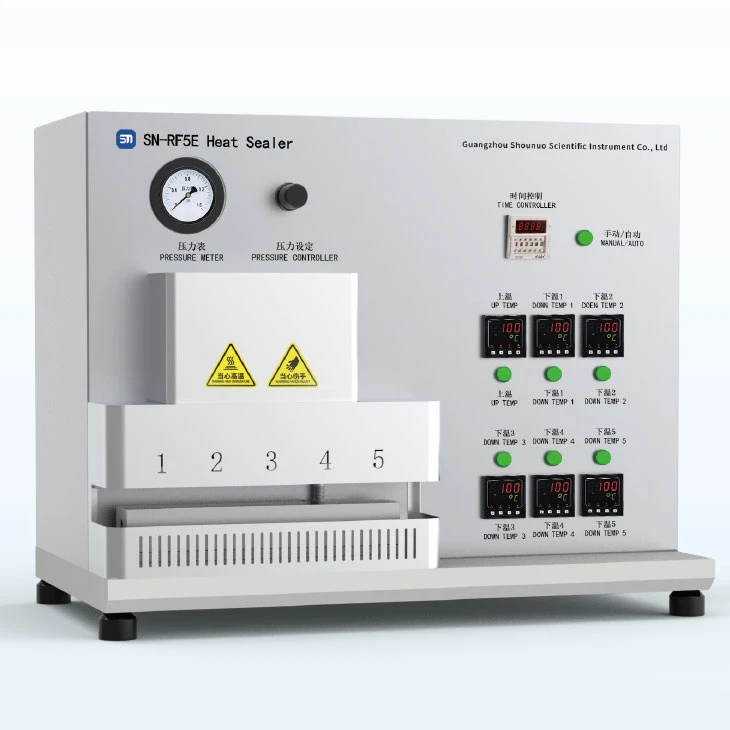
For instance, in a Five - point Heat Sealer, a well - designed heating system can achieve uniform heat distribution. The five points are strategically placed to ensure that the heat spreads evenly, creating a strong and reliable seal. This type of sealer is great for applications where you need a precise and consistent seal, like in small - scale packaging of high - value items.
Gradient Heat Distribution
In some cases, a gradient heat distribution might be more appropriate. This means that the heat is higher in one area and gradually decreases towards another. Gradient heat can be useful when sealing materials with different thicknesses or when you want to create a seal that has different strengths in different parts of the package.
For example, if you're sealing a package with a thick base and a thin lid, a gradient heat distribution can ensure that both parts are sealed properly. The higher heat at the thick base can melt the material enough to form a strong bond, while the lower heat at the thin lid prevents it from melting too much and becoming damaged.
Zoned Heat Distribution
Zoned heat distribution involves dividing the sealing area into different zones, each with its own temperature control. This allows you to have more flexibility in the sealing process. You can set different temperatures for different zones based on the requirements of the materials being sealed.
A High - Speed Heat Sealer might use zoned heat distribution to speed up the sealing process while maintaining high - quality seals. By adjusting the temperature in each zone, you can optimize the sealing time and energy consumption, making it more efficient for large - scale production.
Factors Affecting Heat Distribution
Now that we know the different types of heat distribution patterns, let's look at the factors that can affect them.
Heating Element Design
The design of the heating element plays a major role in heat distribution. A well - designed heating element should be able to transfer heat evenly across the sealing area. Some heating elements are made in a way that they have a more even resistance, which helps in distributing the heat uniformly.

For example, a flat - shaped heating element can provide a more consistent heat source compared to a coiled one in some cases. The coiled element might have hot spots in the areas where the coils are closer together, leading to uneven heat distribution.
Sealing Pressure
The pressure applied during the sealing process also affects heat distribution. If the pressure is not evenly distributed, it can cause the heat to be concentrated in some areas more than others. This can lead to uneven seals.
Make sure that your heat seal tester has a mechanism to apply even pressure across the sealing area. Some testers use pneumatic or hydraulic systems to ensure that the pressure is consistent, which helps in achieving a better heat distribution.
Material Properties
The properties of the materials being sealed, such as their thickness, thermal conductivity, and melting point, can also impact heat distribution. Thicker materials might require more heat and a longer sealing time to achieve a proper seal. Materials with low thermal conductivity might take longer to transfer the heat, leading to uneven heating.
When selecting a heat seal tester, it's important to consider the materials you'll be working with and choose a tester that can accommodate their specific properties. Our SN - RF5E 5 - Point Heat Sealer is designed to handle a variety of materials, thanks to its advanced heat distribution and control features.
How to Ensure Optimal Heat Distribution
Here are some tips to ensure that you're getting the best heat distribution in your heat seal tester.
Regular Maintenance
Regularly clean and inspect your heat seal tester, especially the heating elements. Over time, dirt and debris can accumulate on the heating elements, which can affect their ability to distribute heat evenly. Make sure to follow the manufacturer's maintenance instructions to keep your tester in top condition.
Calibration
Periodically calibrate your heat seal tester to ensure that the temperature settings are accurate. Inaccurate temperature settings can lead to uneven heat distribution and poor seal quality. You can use a temperature sensor or a calibration device to check and adjust the temperature as needed.
Testing and Monitoring
Before starting a large - scale production run, conduct some test seals to check the heat distribution and seal quality. You can use a heat - sensitive film or a thermal camera to visualize the heat distribution pattern. This will allow you to make any necessary adjustments to the temperature, pressure, or other settings.
Conclusion
Understanding the heat distribution pattern in a heat seal tester is essential for achieving high - quality seals. Whether you need a uniform, gradient, or zoned heat distribution, there are heat seal testers available that can meet your specific requirements. As a heat seal tester supplier, we're here to help you find the right solution for your business.
If you're in the market for a heat seal tester or want to learn more about how our products can improve your sealing process, don't hesitate to reach out. Our team of experts is ready to assist you with any questions and guide you through the purchasing process. Let's work together to take your packaging quality to the next level!
References
- Packaging Machinery Handbook, Third Edition, by Wilmer E. Apling.
- Fundamentals of Heat and Mass Transfer, by Theodore L. Bergman, Adrienne S. Lavine, Frank P. Incropera, and David P. DeWitt.


